The Best Sci-Fi Novels of the 21st Century
Eighteen science fiction novels published since 2000, ranked by how much of the century's argument each one carries. Vote the order into better shape. Everything here is a standalone novel: no collections, no novellas, and no trilogy crammed into a single slot, so where a series matters the strongest volume takes the place and the entry says why. Twentieth-century classics are out by definition, which is why there is no Dune and no Neuromancer. Stature comes first, meaning what the field and the wider reading world have actually settled on, with ties broken by which one I would hand you first. Border cases that lean into fantasy, horror or literary fiction are allowed and flagged in the item copy. Translations count, and the translator is named where the English owes them something. Left out on purpose: Ted Chiang, whose best work this century is short fiction, and the Murderbot books, which start life as novellas.
Cixin Liu — The Three-Body Problem (2008) is #1 on “The Best Sci-Fi Novels of the 21st Century”.
- 1
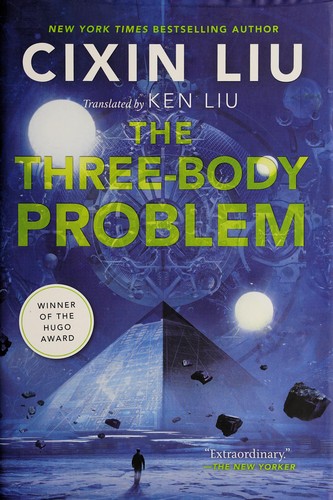
Cixin Liu — The Three-Body Problem (2008)
Serialized in Science Fiction World from 2006 and issued as a Chinese book in 2008, it reached English in 2014 through Ken Liu's translation and took the 2015 Hugo for Best Novel, the first won by an Asian writer. Recruitment runs through a VR game called Three Body, where players watch a civilisation burn under three suns; the sophons, supercomputers folded into single protons, then freeze human physics where it stands.
 三体刘慈欣
三体刘慈欣 - 2
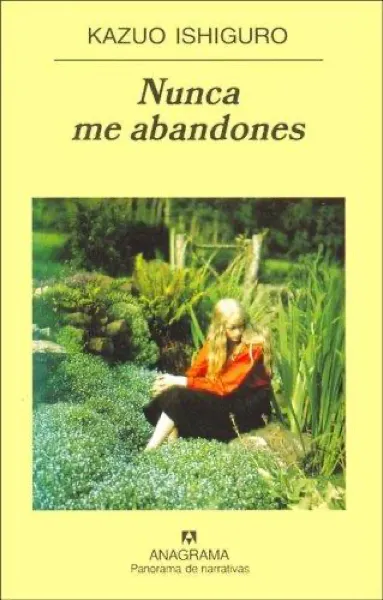
Kazuo Ishiguro — Never Let Me Go (2005)
Hailsham teaches drawing and poetry to children raised for their organs, and the horror sits entirely in the vocabulary: carers, donors, and 'completing' for the fourth donation that kills you. Shortlisted for the 2005 Man Booker Prize and for the Arthur C. Clarke Award the following year, it declines every escape scene you keep waiting for. Border case: literary fiction running on a cloning premise.
 Never Let Me GoKazuo Ishiguro
 - 3
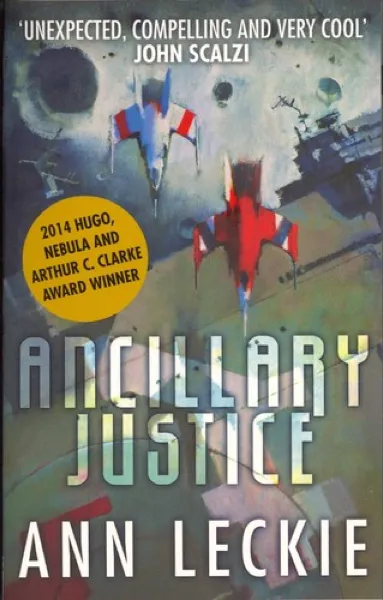
Ann Leckie — Ancillary Justice (2013)
Orbit put it out in 2013, and it remains the only novel to have taken the Hugo, the Nebula and the Arthur C. Clarke Award. Breq is what survives of the troopship Justice of Toren, one ancillary body carrying a warship's grudge across two decades. Radchaai marks no gender, so everyone is 'she', and the effect is not a gimmick: you stop noticing, then notice that you stopped.
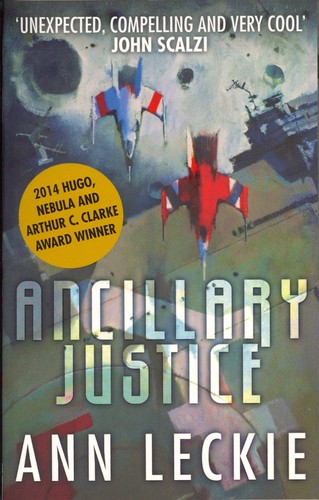 Ancillary JusticeAnn Leckie
 - 4
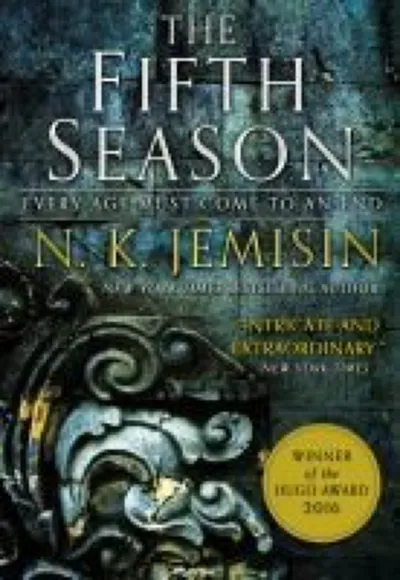
N. K. Jemisin — The Fifth Season (2015)
Winning the 2016 Hugo for Best Novel began a run nobody had managed before: three consecutive wins, one for each volume of the Broken Earth. Its cruellest invention is the node maintainers, orogenes mutilated and lobotomised as children, left barely conscious and wired into stations along the Stillness to damp earthquakes in their sleep. Border case: science fantasy, with obelisks and dead-civilisation technology under the geology.
 The Fifth SeasonN. K. Jemisin
 - 5
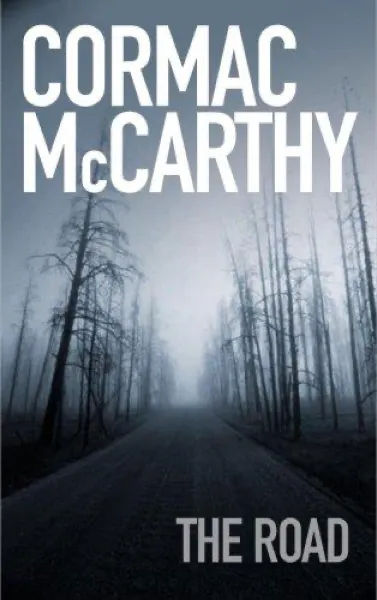
Cormac McCarthy — The Road (2006)
Pulitzer Prize for Fiction in 2007, and every comma looks like it survived an argument. A father and son push a supermarket cart south through ash, and the one thing holding the boy's moral world upright is a phrase the father keeps repeating: they are carrying the fire. Border case: post-apocalyptic literary fiction with no interest whatsoever in explaining its catastrophe, which is exactly why it lands.
 The RoadCormac McCarthy
 - 6
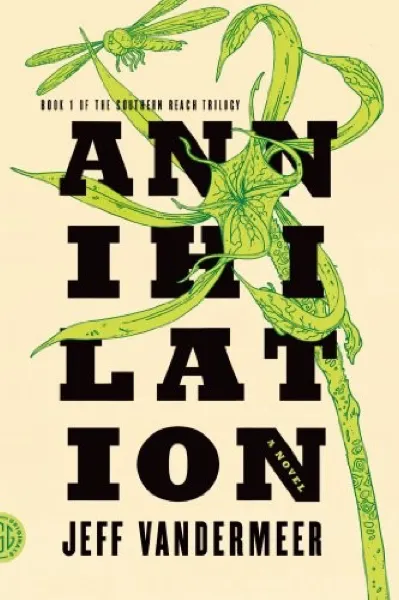
Jeff VanderMeer — Annihilation (2014)
Farrar, Straus and Giroux shipped the entire Southern Reach trilogy inside eight months in 2014, and this first volume took that year's Nebula. Four unnamed women walk into Area X; the biologist finds a staircase going down, insists on calling it the Tower, and reads a sentence that never ends, the words growing out of the wall in living fungus. Border case: SF pulled hard toward horror.
 AnnihilationJeff VanderMeer
 - 7
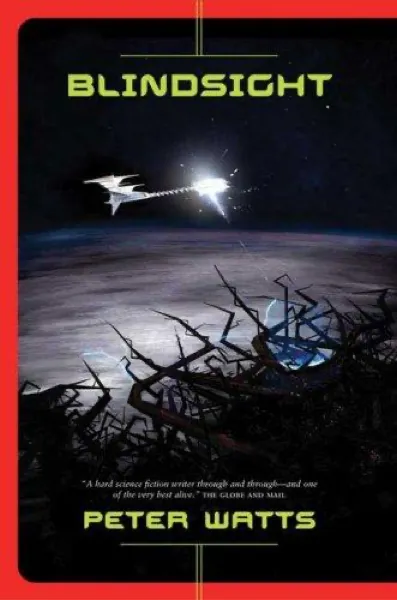
Peter Watts — Blindsight (2006)
Free online under a Creative Commons license since Tor released the hardcover in 2006, which is how most readers actually found it. Command of the starship Theseus falls to Jukka Sarasti, a resurrected Pleistocene predator kept manageable with drugs, and the argument underneath is that Sarasti thinks better precisely because consciousness is not involved. Hardest hard SF on the list, and the least consoling book on it.
 BlindsightPeter Watts
 - 8
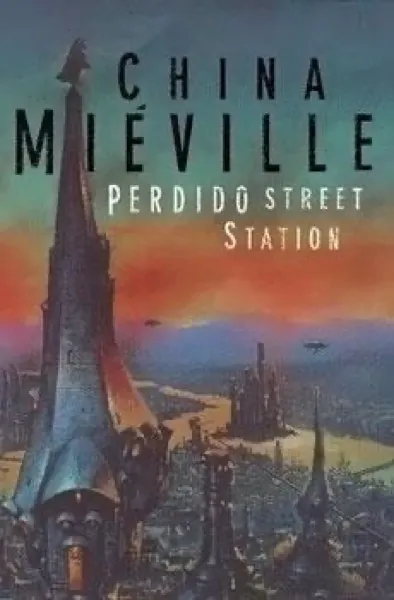
China Miéville — Perdido Street Station (2000)
Macmillan published it in 2000, and New Crobuzon is why it lasts: a city with its own economics, its own bigotries, and the Remade, criminals sentenced to have machinery and animal parts grafted onto them. Then the slake-moths escape, drink minds through hypnotic wings, and leave the bodies breathing. Border case: weird fiction, where the line between SF and fantasy stops being worth defending.
 Perdido Street StationChina Miéville
 - 9
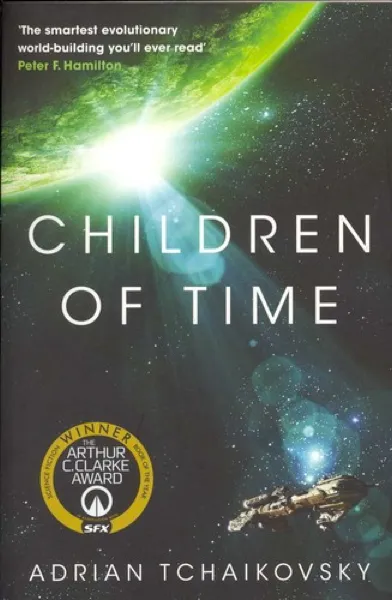
Adrian Tchaikovsky — Children of Time (2015)
Out on 4 June 2015 and winner of the 2016 Arthur C. Clarke Award. A terraforming project seeds a world with an uplift nanovirus intended for monkeys; the monkeys die in transit and the spiders take it instead, generation after generation, while the human ark ship Gilgamesh crawls toward the same planet full of sleepers. Watching arachnids invent radio is far more moving than that sentence suggests.
 Children of TimeAdrian Tchaikovsky
 - 10
Robert Charles Wilson — Spin (2005)
Hugo winner for Best Novel in 2006, and the premise is spent in the first chapter: three children watch the stars go out. A membrane wraps the Earth, and 3.17 years pass outside it for every second within, so the sun will swallow the planet inside one human lifetime. Wilson keeps the camera on Tyler, Jason and Diane rather than the physics, and that is the whole trick.
 SpinRobert Charles Wilson
 - 11
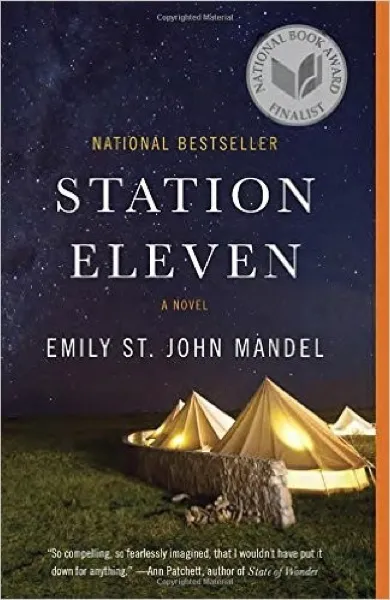
Emily St. John Mandel — Station Eleven (2014)
Knopf brought it out in 2014; it was a National Book Award finalist that year and took the Arthur C. Clarke Award the following May. Twenty years after the Georgia Flu, a Travelling Symphony hauls Shakespeare around the Great Lakes, and a stranded airport becomes the Museum of Civilization, where a curator shelves dead iPhones and laptops as exhibits. Border case: literary fiction using a pandemic as engine.
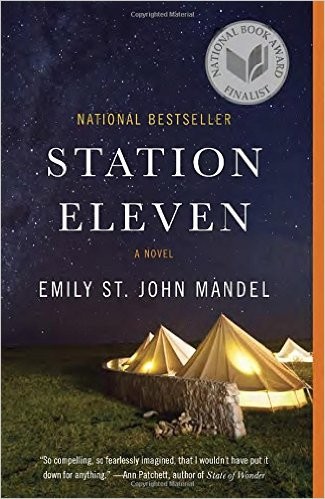 Station ElevenEmily St. John Mandel
 - 12
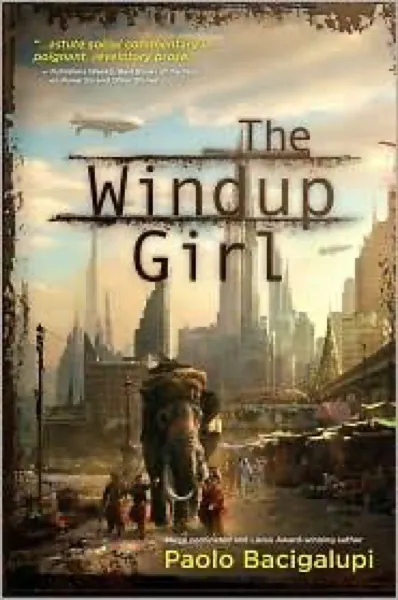
Paolo Bacigalupi — The Windup Girl (2009)
Night Shade Books published it in September 2009; it tied the 2010 Hugo with China Miéville's The City & the City and took that year's Nebula outright. Calorie companies own the seed stock, kink-springs hold the energy, and Emiko, engineered obedient and then abandoned in Bangkok, moves with a stutter built into her joints so everyone can see exactly what she is.
 The Windup GirlPaolo Bacigalupi
 - 13
Margaret Atwood — Oryx and Crake (2003)
McClelland and Stewart published it in 2003 and the Man Booker shortlist arrived the same year. Jimmy, renamed Snowman, is the last human babysitting the species engineered to replace him. What sticks afterwards is the pigoons, pigs grown to farm human transplant organs and quite clever enough to become a problem later. Border case: Atwood argues for speculative fiction over SF, and the corporate compounds make her case.
 Oryx and CrakeMargaret Atwood
 - 14
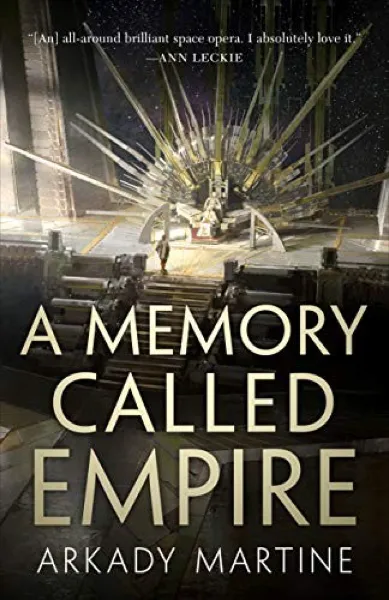
Arkady Martine — A Memory Called Empire (2019)
Winner of the 2020 Hugo for Best Novel. Mahit Dzmare arrives from a mining station as ambassador, carrying an imago machine in her skull, a recorded copy of her predecessor already fifteen years out of date before the sabotage starts. Teixcalaan is the best-built empire in recent SF because the pull of a culture that would happily erase you is written to feel like love.
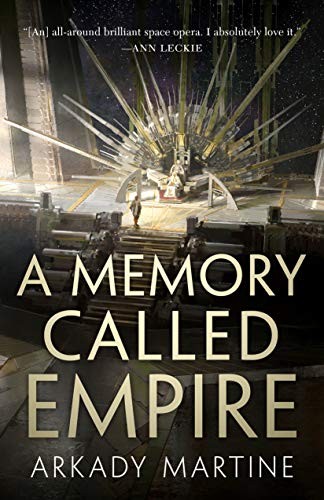 A Memory Called EmpireArkady Martine
 - 15
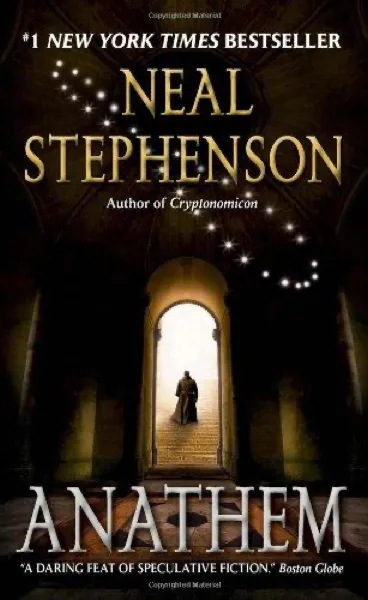
Neal Stephenson — Anathem (2008)
William Morrow published it in 2008 and it took the 2009 Locus Award for Best Science Fiction Novel. Scholars called avout live sealed inside concents whose gates open once every one, ten, hundred or thousand years, and you are made to learn a vocabulary, with a glossary and three philosophical appendices titled Calca, before any plot shows up. The first two hundred pages are a toll. Pay it.
 AnathemNeal Stephenson
 - 16
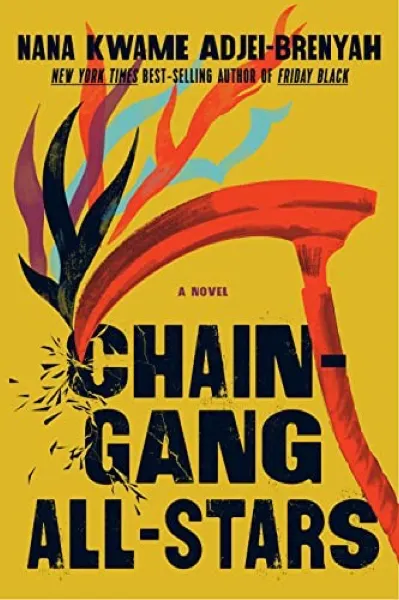
Nana Kwame Adjei-Brenyah — Chain-Gang All-Stars (2023)
Prisoners fight televised death matches for Criminal Action Penal Entertainment, and Loretta Thurwar and Hamara Hurricane Staxxx are the programme's stars and each other's partners outside the ring as well as in it. Pantheon published it on 2 May 2023 and it was a National Book Award for Fiction finalist that year. Border case, flagged: near-future satire rather than hard SF. A novel and not a fix-up: the premise began as a story in the 2018 collection Friday Black and outgrew the form.
 Chain Gang All StarsNana Kwame Adjei-Brenyah
 - 17
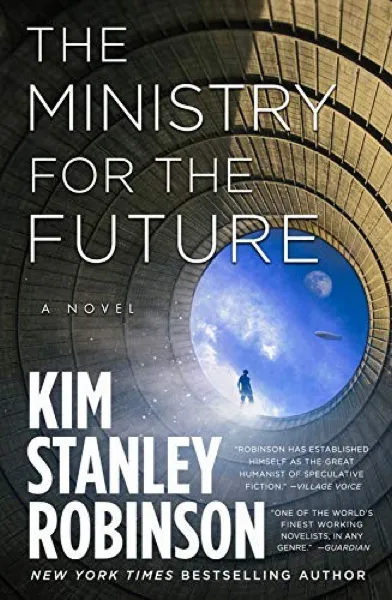
Kim Stanley Robinson — The Ministry for the Future (2020)
Orbit published it in October 2020 and Barack Obama named it one of his favorite books of that year. It opens on a wet-bulb heat wave in India that kills millions in a week, and nothing later lets you off that hook, least of all the carbon coin, a currency minted for leaving fossil carbon in the ground. Border case: half novel, half policy document, deliberately.
 The Ministry for the FutureKim Stanley Robinson
 - 18
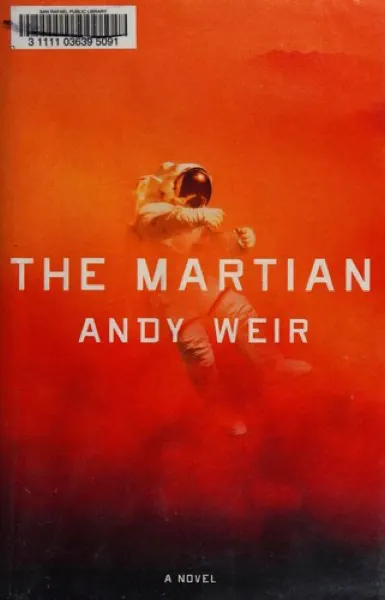
Andy Weir — The Martian (2011)
Self-published as a blog serial in 2011, then 35,000 Kindle copies in three months, after which Crown bought the rights and reissued it in 2014. Mark Watney grows potatoes in the Hab and makes their water by cracking hydrazine over an iridium catalyst, with the arithmetic printed on the page where you can check it. Engineering as suspense, narrated by a man who will not stop joking.
 The MartianAndy Weir
How this list was ranked
Readers rank this list by voting items up and down. Items are ordered by reader votes.