The Best Dystopian Novels Ever Written
Sixteen dystopias, ranked by how much of the form each one invented and how much later writing still runs through it. Vote the order into better shape. The line I drew is this: a dystopia needs an organized human power doing the harm, a state, a church, a company or a market that claims to be improving things. That keeps out pure catastrophe, which is why Station Eleven and the plague novels are absent, and it lets The Road in, because the marauders there have built a food system. Twelve of the sixteen predate 2000, because ever written ought to mean it. Translations count and the translators are named: Gregory Zilboorg carried Zamyatin into English in 1924, before the Russian text existed in print anywhere, and Stephen Snyder carried Ogawa across in 2019. Ties broke on which one I would press on you first.
George Orwell — Nineteen Eighty-Four (1949) is #1 on “The Best Dystopian Novels Ever Written”.
- 1
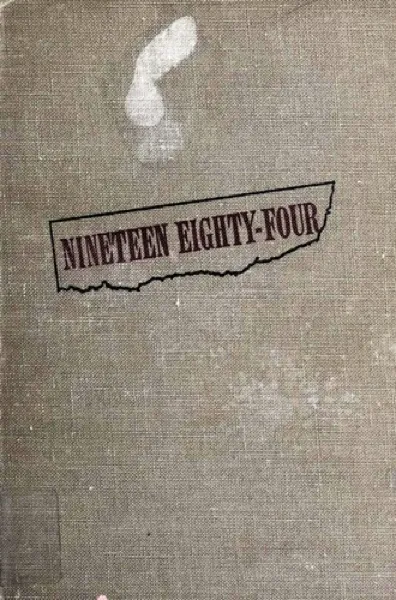
George Orwell — Nineteen Eighty-Four (1949)
Secker & Warburg published it on 8 June 1949, and the part people forget is the appendix. The Principles of Newspeak is written in the past tense, as a historical account of a language that used to exist, which means somebody outlived the Party to write it down. Room 101 takes all the attention; that quiet grammatical slip is the more radical thing in the book.
 Nineteen Eighty-FourGeorge Orwell
 - 2

Yevgeny Zamyatin — We (1924)
Written in 1920 and 1921, banned at home, and printed first in English in New York in 1924 in Gregory Zilboorg's translation; the Russian text waited until 1952, the Soviet Union until 1988. D-503 builds the Integral for the One State inside the Green Wall. Orwell reviewed it in Tribune on 4 January 1946, from the French edition, and argued Brave New World must be partly derived from it; Huxley denied the derivation in 1962.
 МыЕвгений Иванович Замятин
 - 3
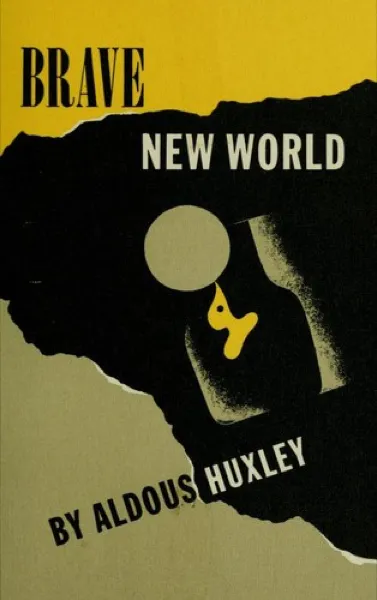
Aldous Huxley — Brave New World (1932)
Chatto & Windus published it in London in 1932, and Huxley said he began by pulling the leg of H. G. Wells and then got caught up in his own ideas. Bokanovsky's Process splits one fertilized egg into as many as ninety-six identical people; hypnopaedia finishes the job while they sleep. Nobody is coerced here. Soma and comfort do the work, which is why it has aged better than the boot.
 Brave New WorldAldous Huxley
 - 4
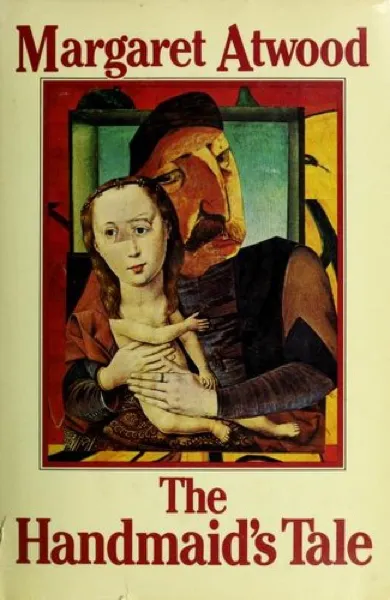
Margaret Atwood — The Handmaid's Tale (1985)
Winner of the Governor General's Award in 1985 and the first book ever to take the Arthur C. Clarke Award, in 1987. Atwood's stated rule was that she put in nothing humans had not already done somewhere, and it holds up. What readers misremember is the ending: an epilogue called Historical Notes, in which academics of the far future discuss Gilead as a curiosity and get several things wrong.
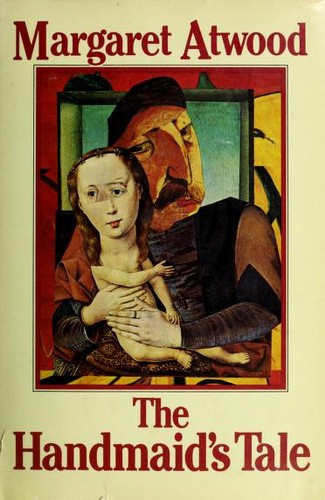 The Handmaid's TaleMargaret Atwood
 - 5
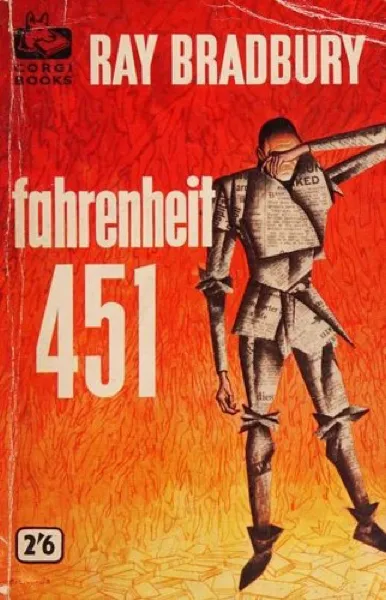
Ray Bradbury — Fahrenheit 451 (1953)
Ballantine Books published it in October 1953, expanded from a novella called The Fireman that ran in Galaxy Science Fiction in February 1951. Everyone remembers the burning; fewer remember the cause. Nobody banned the books, people stopped wanting them, and the parlour walls filled with a televised cast the viewers call the family. The Mechanical Hound is the state's afterthought, not its instrument.
 Fahrenheit 451Ray Bradbury
 - 6
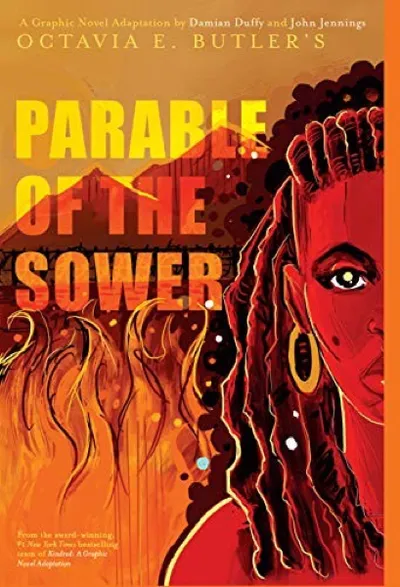
Octavia E. Butler — Parable of the Sower (1993)
Four Walls Eight Windows published it in 1993; the Nebula nomination followed in 1995. It clears the rule on Olivar, the coastal town KSF buys outright and runs as a company town, with lower wages, rent owed to the employer, and a debt trap Lauren's father names before anyone signs. Hyperempathy makes her feel the pain she witnesses; Earthseed, the religion she writes, starts from one line. God is Change.
 Parable of the SowerOctavia E. Butler
 - 7
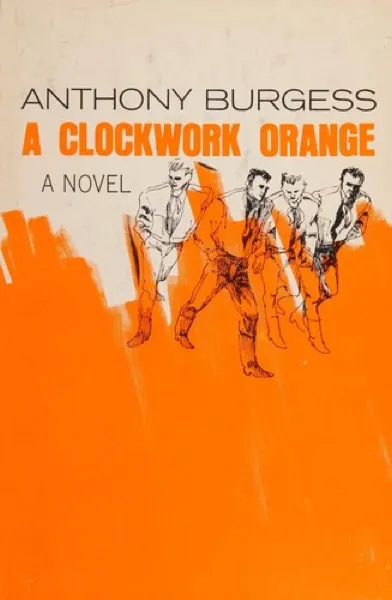
Anthony Burgess — A Clockwork Orange (1962)
Published on 17 March 1962 in twenty-one chapters, three parts of seven, and American editions cut the last of them until 1986, which turned a book about whether reform is possible into a book insisting it is not. Nadsat, Alex's slang, is assembled from Russian and Cockney and makes you learn it as you go. The Ludovico Technique makes him good by making him incapable.
 A Clockwork OrangeAnthony Burgess
 - 8

Kazuo Ishiguro — Never Let Me Go (2005)
Ranked ninth on the New York Times list of the hundred best books of the 21st century in 2024, and Time called it the best novel of 2005 when it appeared. Hailsham's children make art for the Gallery, which Madame collects and carries away; the reason offered much later is that the work was meant to prove they had souls. Nobody rebels, and that is the argument.
 Never Let Me GoKazuo Ishiguro
 - 9
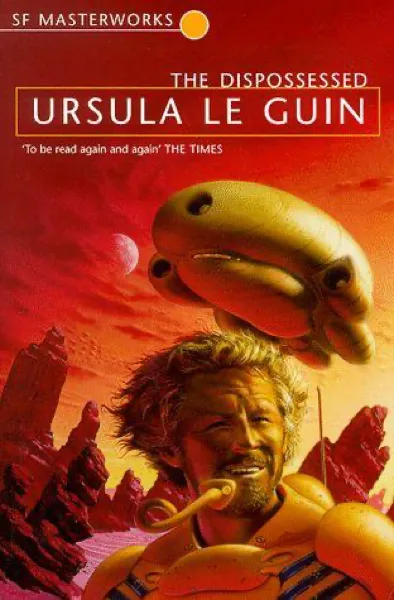
Ursula K. Le Guin — The Dispossessed (1974)
Subtitled An Ambiguous Utopia, and the ambiguity does real work: Shevek's anarchist Anarres has no state at all and still finds ways to punish him for his General Temporal Theory. Harper & Row published it in 1974; it took the Hugo, the Nebula and the Locus the following year. It opens on a low wall around a spaceport that means opposite things from either side.
 The DispossessedUrsula K. Le Guin
 - 10

Philip K. Dick — Do Androids Dream of Electric Sheep? (1968)
Doubleday published it in 1968, and the machinery that matters is not the bounty hunting. Owning a live animal is the status marker in a poisoned world, so Rick Deckard's electric sheep is a lie he keeps up for the neighbors. Mercerism, the state religion, asks you to grip an empathy box and share a stranger's suffering: a mandatory feeling, issued centrally, and probably counterfeit.
 Do Androids Dream of Electric Sheep?Philip K. Dick
 - 11

Yōko Ogawa — The Memory Police (1994)
First published in Japan by Kodansha in 1994 as Hisoyaka na Kesshō, then translated by Stephen Snyder for Pantheon in 2019, after which it was a National Book Award for Translated Literature finalist and made the 2020 International Booker shortlist. Objects vanish from the island in sequence, among them hats, perfume, birds, ribbon, calendars and novels, and the islanders forget them on schedule. Losing the words hurts worse than losing the things.
 密やかな結晶小川洋子
 - 12

Margaret Atwood — Oryx and Crake (2003)
McClelland and Stewart published it in 2003; the Man Booker shortlist arrived that year and the Orange Prize shortlist in 2004. Jimmy grows up sealed inside corporate compounds, OrganInc Farms first and then the plusher HelthWyzer, after NooSkins headhunts his father, and he and Crake play a trivia game called Extinctathon. BlyssPluss is sold as health and happiness and is quietly a sterilisation programme. Second Atwood here, and she earns it.
 Oryx and CrakeMargaret Atwood
 - 13
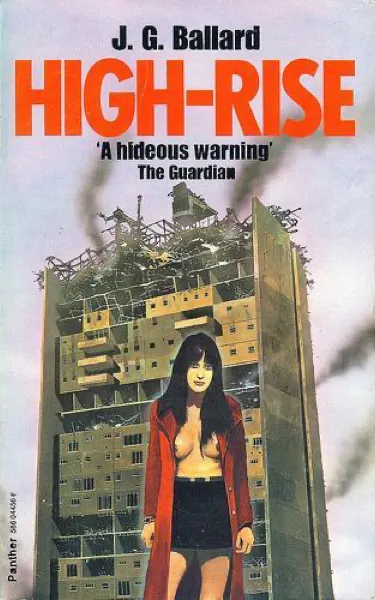
J. G. Ballard — High-Rise (1975)
Jonathan Cape published it in 1975, and the power here is the architect. Anthony Royal designed the forty-story block and lives at the top of it, with class mapped straight onto altitude: Dr Robert Laing's flat on the twenty-fifth puts him above the midpoint and well below the people who matter. Residents stop caring about the outside world first, then about each other. It is tyranny by floor plan.
 High-RiseJ. G. Ballard
 - 14
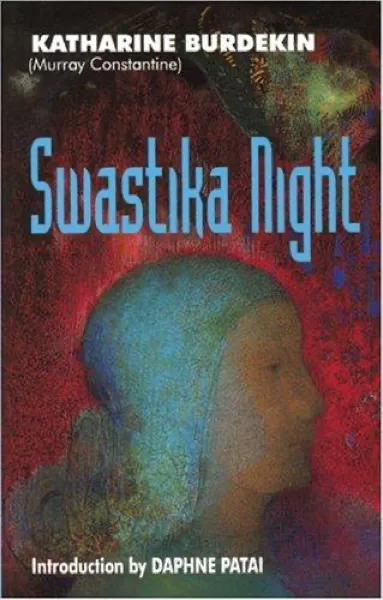
Katharine Burdekin — Swastika Night (1937)
Victor Gollancz published it in 1937 under the pseudonym Murray Constantine, twelve years ahead of Nineteen Eighty-Four and two years ahead of the war it imagines losing. Women are kept in fenced quarters with shaved heads, valued only for breeding; Hitler is worshipped as a blond giant god and the record of everything else has been rewritten. The Feminist Press brought it back in 1985, which is how anybody reads it now.
 Swastika NightKatharine Burdekin
 - 15
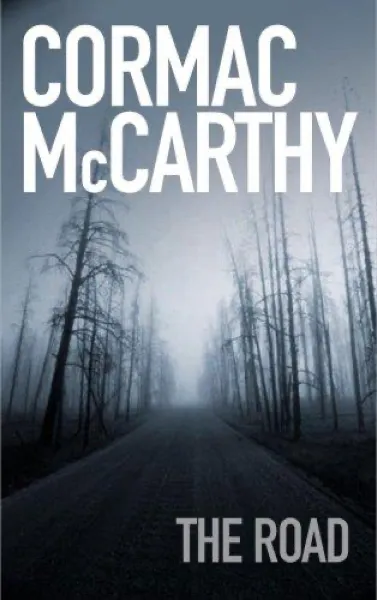
Cormac McCarthy — The Road (2006)
Boundary case, and the one a reader will challenge: it looks like pure catastrophe, but the marauders have organized, and the cellar of the big house holds living people being eaten by the week. That is a food system, not chaos. James Tait Black Memorial Prize in 2006, Pulitzer in 2007, Oprah's Book Club that March. Order is being rebuilt on the worst available principle.
 The RoadCormac McCarthy
 - 16
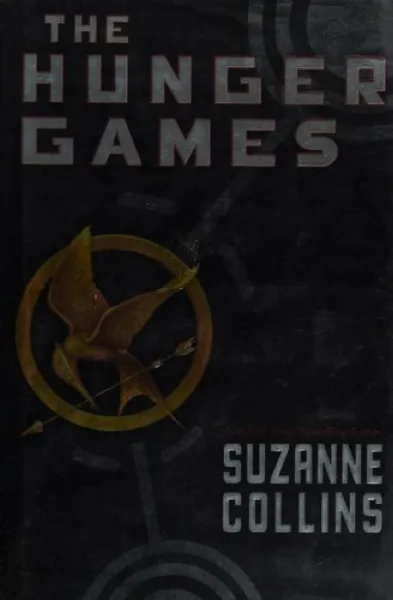
Suzanne Collins — The Hunger Games (2008)
Scholastic Press published it on 14 September 2008 with a first printing of 50,000 copies, raised twice to 200,000 before release, per Publishers Weekly that June. Panem takes one boy and one girl aged twelve to eighteen from each of twelve districts by lottery and televises the result. Everything the 2010s did with young-adult dystopia begins here, and the original still has the sharpest political machinery of the lot.
 The Hunger GamesSuzanne Collins
How this list was ranked
Readers rank this list by voting items up and down. Items are ordered by reader votes.