The Best Museums in Europe
Fourteen European museums ranked on the collection, meaning what is actually in the rooms. Vote the order into the shape you would defend. The building breaks ties and does nothing else: where two collections come out level, the one in the better building goes higher, which is why the Uffizi sits above the Rijksmuseum and the Borghese above the Van Gogh Museum. Ten of the fourteen are in five cities: Paris, London, Amsterdam, Madrid and Florence take two each, so this is a ranking of collections rather than a tour of the continent, and nothing was shuffled to spread the pins out. Several entries are complexes rather than buildings: the Hermitage runs to six along one embankment and the Vatican Museums are a group, so the pins mark main entrances. Museums shut for long rebuilds are out. The bottom four are where this order is softest.
Louvre is #1 on “The Best Museums in Europe”.
- 1
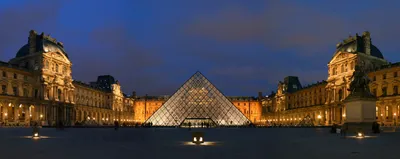
Louvre
Opened on 10 August 1793 with an exhibition of 537 paintings, most of them royal or confiscated church property, it was a fortress before it was a palace: Philip II raised it in the late 12th to 13th century, and Francis I moved the French kings in during 1546. The fortress remnants are still in the basement. I. M. Pei's glass pyramid in the Cour Napoléon is the entrance that stuck; its underground lobby opened on 30 March 1989.
View on Google Maps - 2
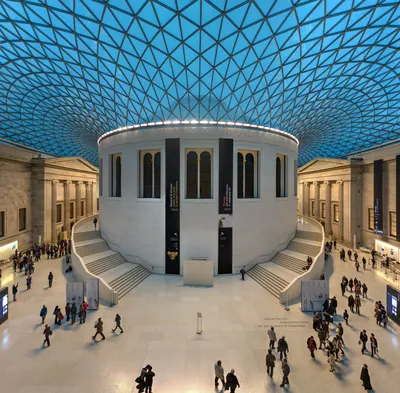
British Museum
The Parthenon sculptures, in Bloomsbury since the British Museum Act 1816, are still the argument this institution cannot put down. Established in 1753 as the world's first public national museum, it opened to the public in 1759 in Montagu House, on the site of the current building. The 2025 count was 6,440,120 visitors, which explains the crush at the front steps and nothing else about the place.
View on Google Maps - 3
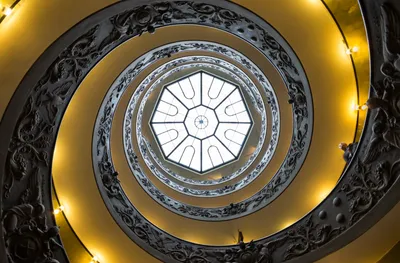
Vatican Museums
Give it a morning and accept that you will be moving in a line. Pope Julius II founded the museums in the early 16th century, and the visitor route now runs through the Stanze di Raffaello and the Sistine Chapel. In 2024 that was 6.8 million people. Giuseppe Momo's 1932 double spiral staircase is the other thing everyone photographs, two ramps coiled together so the crowds never cross.
View on Google Maps - 4
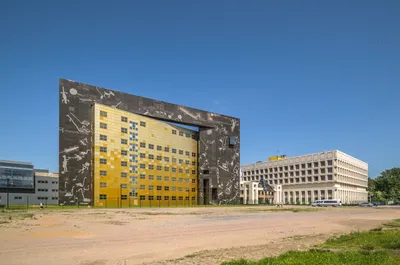
Hermitage Museum
Catherine the Great bought the founding collection in 1764 from the Berlin merchant Johann Ernst Gotzkowsky, and Rembrandt's Danaë of 1636 came with it. What grew out of that purchase is the largest collection of paintings in the world, spread across six historic buildings along Palace Embankment in St Petersburg, the Winter Palace among them. Pavilion Hall in the Small Hermitage, designed by Andrei Stackenschneider in 1858, is the room people photograph before they have looked at a painting.
View on Google Maps - 5
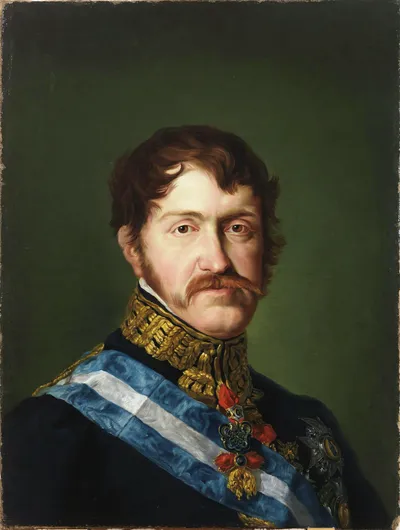
Museo Nacional del Prado
November 1819 is when the doors first opened, in a building Juan de Villanueva had designed back in 1785. Bosch's The Garden of Earthly Delights hangs here and so does Goya's The Family of Charles IV, but Las Meninas by Velázquez is the one people cross Madrid for. Stand back far enough and you work out that Velázquez has painted you into the room he is looking at.
View on Google Maps - 6
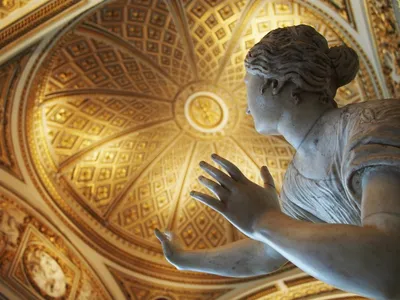
Uffizi Gallery
Offices, literally: Giorgio Vasari began the complex in 1560 for Cosimo I de' Medici to gather Florence's committees and guilds under one roof, and uffizi is what the word means. It opened to the public officially in 1769 and formally became a museum in 1865. Buontalenti's octagonal Tribuna, completed in 1584, was built to hold a set of masterpieces in a single room, and it still explains what the rest of the building is for.
View on Google Maps - 7
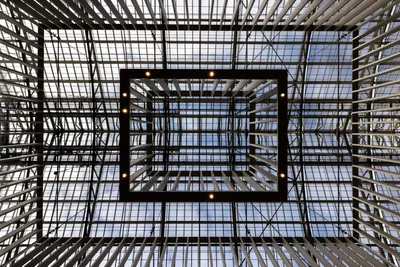
Rijksmuseum
When the main building reopened on 13 April 2013, ten years and €375 million after it shut, Queen Beatrix did the honors on a Pierre Cuypers design that had first opened in 1885. The Night Watch went back to the Night Watch Room at the end of the Hall of Fame, which is the right way round: you walk the length of the hall and it is waiting at the far end, sized for exactly that approach.
View on Google Maps - 8
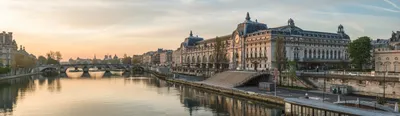
Musée d'Orsay
A railway station got there first, the Gare d'Orsay, built from 1898 to 1900 for that year's Exposition Universelle to designs by Lucien Magne, Émile Bénard and Victor Laloux. Demolition was approved in 1970 and blocked by the culture minister Jacques Duhamel. Gae Aulenti took the interior in 1981, and the central nave made out of the old train platforms still organizes the whole visit. The museum opened in December 1986.
View on Google Maps - 9
National Gallery
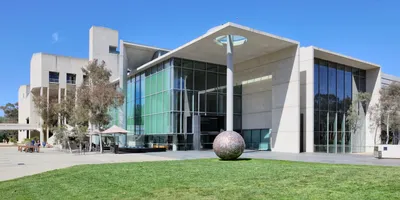
Smaller than many European national galleries, and encyclopedic anyway, running from Giotto to Cézanne. The foundation was thirty-eight paintings, bought by the British government from the heirs of John Julius Angerstein in 1824. William Wilkins designed the Trafalgar Square building; the Sainsbury Wing, Robert Venturi and Denise Scott Brown's 1991 extension, is to the west. Entry to the main collection is free of charge, so twenty minutes with Titian's Death of Actaeon, bought in 1972, counts as a visit.
View on Google Maps - 10
Kunsthistorisches Museum
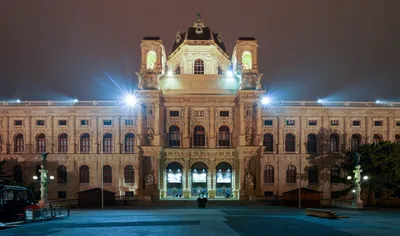
Somebody stole the Cellini Salt Cellar on 11 May 2003; it came back on 21 January 2006, out of a box buried in a forest near Zwettl. Gottfried Semper and Karl von Hasenauer put the building up between 1871 and 1891, facing its twin across Maria-Theresien-Platz. Most people climb straight past the grand stairway, with paintings by Gustav Klimt and Hans Makart, on the way to the picture gallery.
View on Google Maps - 11
Galleria Borghese
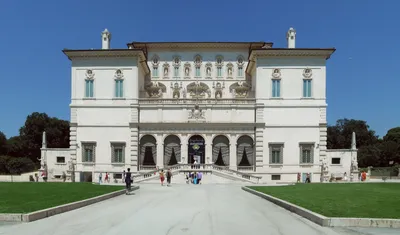
Losing the Borghese Gladiator to the Louvre hurt this place less than it should have. Camillo Borghese was forced to sell the Roman sculptures and antiquities to the Emperor in 1808, and the Borghese Hermaphroditus went the same way. What stayed is denser than what left: Bernini's Apollo and Daphne in the third hall, caught at the point where the bark reaches her fingers, and one hall holding six Caravaggios with David and the Head of Goliath among them.
View on Google Maps - 12
Van Gogh Museum
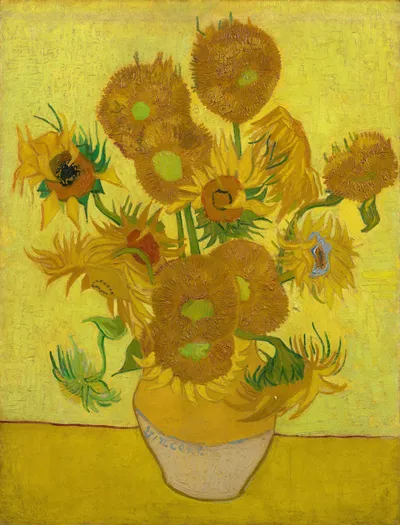
Chronology does the curating: on the first floor, where the Van Goghs are grouped in order, a decade of a painter changing his mind arrives in sequence instead of as a greatest-hits wall. The Dutch government commissioned Gerrit Rietveld's design in 1963 and the museum opened on 2 June 1973; Kisho Kurokawa's exhibition wing arrived when Martien van Goor renovated the building in 1998 and 1999. The Rietveld building still holds the permanent collection.
View on Google Maps - 13
Museo Reina Sofía
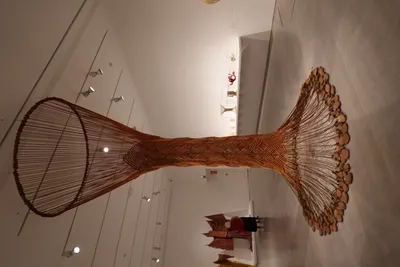
Picasso's Guernica of 1937 is the most famous thing in the building, though the building itself was an 18th-century hospital designed by José de Hermosilla and Francisco Sabatini. Ian Ritchie's three glass circulation towers went onto the outside in 1989; Jean Nouvel's €92 million expansion opened in October 2005. Ride a tower up and work down. The main site took 1,601,732 visitors in 2025, 4.2 percent up on 2024.
View on Google Maps - 14
Galleria dell'Accademia
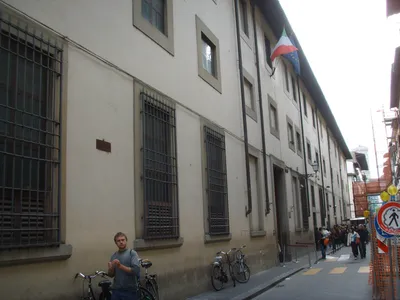
Since 1873 the original David has stood indoors here rather than outside on Piazza della Signoria, and that move is the whole reason for the queue on Via Ricasoli. Pietro Leopoldo, Grand Duke of Tuscany, founded the gallery in 1784. The four unfinished Prisoners, cut for the tomb of Pope Julius II, are the better sculpture, figures half out of the block with the tooling still on them.
View on Google Maps
How this list was ranked
Readers rank this list by voting items up and down. Items are ordered by reader votes.