The Best Christmas Markets in Europe
Thirteen named Christmas markets across Europe, ranked oldest first by how far back each market's own documented history runs. Vote them into a different order if you read it differently. The measure is the earliest year a market's record gives for itself: a city ledger entry, a dated museum object, a founding date. Where two share a year, the one whose square carries the older Christmas tradition goes ahead. Germany dominates this list, and against any other single country it isn't close. That is where the tradition is oldest and the civic record deepest: Dresden's first mention dates to 1434, Stuttgart's city records to 1692. Medieval start dates here sit in Bavaria, Hesse and Saxony, while the newest entries are Nordic, Baltic and British. Left out: markets that have stopped running, and city-wide roundups covering a capital rather than one named event. These pack up again every year, on different calendars. Most end on or just before Christmas Eve, several carry on past it, and Tallinn's article puts its season after Christmas altogether. Check this year's dates before booking.
Christkindlmarkt at Marienplatz is #1 on “The Best Christmas Markets in Europe”.
- 1
Christkindlmarkt at Marienplatz
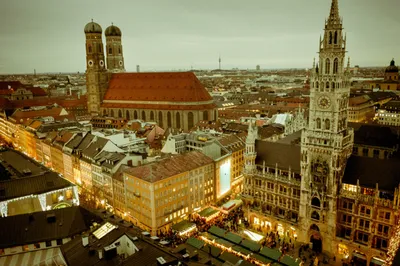
Munich's oldest market was first documented in 1310, and back then it was a Nikolaimarkt; the renaming to Christmarkt came in 1806. Around 140 stands now fill the square under the town hall, with a nearly 30-meter tree in front of it. The part to hunt out is the Kripperlmarkt, more than ten stands around the Richard Strauss fountain selling nativity figures and the accessories that go with them.
 Christkindlmarkt at Marienplatz - Wikipediahttps://en.wikipedia.org/wiki/Christkindlmarkt_at_Marienplatz
 - 2
Frankfurt Christmas Market (Frankfurt am Main)
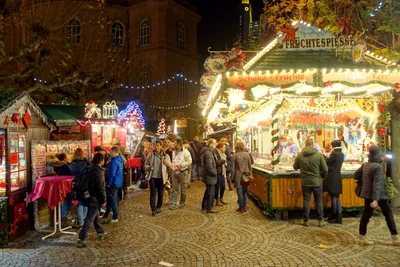
Origins here run back to 1393, and the market still takes over a wide stretch of the old town. Römerberg at the southern end is where to aim; from there it runs north through Paulsplatz to the Hauptwache and down to the Mainkai. Roughly three million people turn up each year, between late November and 22 December. Affiliated markets exist elsewhere, and the Birmingham entry further down this list is one.
 Frankfurt Christmas Market - Wikipediahttps://en.wikipedia.org/wiki/Frankfurt_Christmas_Market
 - 3
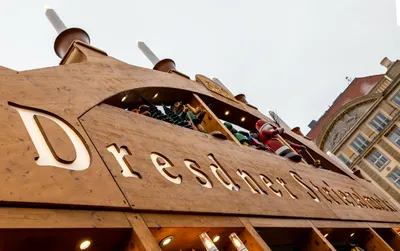
Striezelmarkt
First mentioned in 1434, under Friedrich II, Elector of Saxony, when it ran on the Altmarkt on the Monday before Christmas. The name comes from Strüzel, a cake you now buy as Stollen. Stand under the 14-meter Erzgebirge Christmas pyramid, then find the Christmas arch beside it, 13.5 meters across and billed as the largest usable one anywhere.
 Striezelmarkt - Wikipediahttps://en.wikipedia.org/wiki/Striezelmarkt
 - 4
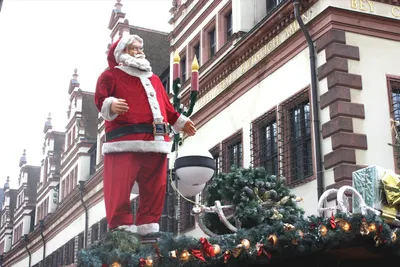
Leipzig Christmas Market
History going back to 1458 buys a certain confidence, and this one runs from the market square into the streets around it, about 300 stalls, and over 2.8 million visitors in 2019. Walk two minutes off the Markt to Nikolaikirchhof for an Ore Mountains Christmas pyramid 8 meters tall, with a roughly 20-meter spruce standing over the stalls back on the square.
 Leipzig Christmas Market - Wikipediahttps://en.wikipedia.org/wiki/Leipzig_Christmas_Market
 - 5
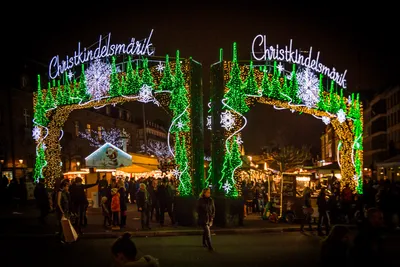
Christkindelsmärik (Strasbourg)
Running around the cathedral since 1570, under a dialect name that means Market of the Christ Child. Stalls take the Place Kléber, the Place Broglie and the Place du Marché aux cochons de lait, and the season stretches from 29 November to 31 December. What carries across the Place Kléber is the smell of vin chaud, and roughly two million people come for it.
 Christkindelsmärik, Strasbourg - Wikipediahttps://en.wikipedia.org/wiki/Christkindelsm%C3%A4rik,_Strasbourg
 - 6
Christkindlesmarkt of Nuremberg
The oldest hard evidence is a wooden box in the Germanic National Museum, inscribed zum Kindles-Marck überschickt 1628. Opening night still belongs to the Christkind, who delivers a prologue from the balcony of the Frauenkirche, a part filled since 1969 by an elected local girl aged 16 to 19, chosen every second year.
 Christkindlesmarkt, Nuremberg - Wikipediahttps://en.wikipedia.org/wiki/Christkindlesmarkt,_Nuremberg
 - 7
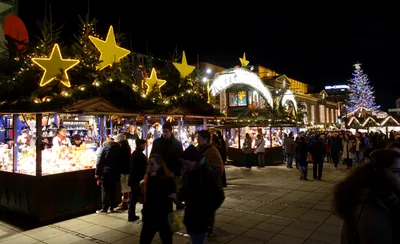
Stuttgart Christmas Market
City records first mention it in 1692, and describe it even then as a traditional Stuttgart event. Around 200 stands now, and about 3.6 million people a year. It opens on the last Thursday in November and finishes on Christmas Eve. Take children to Schlossplatz, where the fairytale land runs a miniature railway and an ice rink beside the stalls.
 Christmas Market, Stuttgart - Wikipediahttps://en.wikipedia.org/wiki/Christmas_Market,_Stuttgart
 - 8
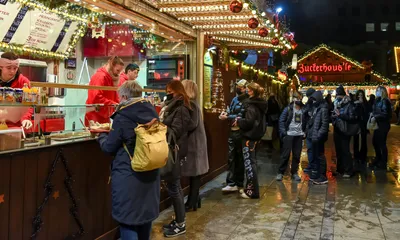
Dortmund Christmas Market
Nothing here is medieval. The origin date is 1878, and the draw is well over 3.5 million visitors across 300 stalls. The centerpiece is a 45-meter tower assembled from 1,700 spruce trees out of the Sauerland, wearing 48,000 lights, 20 large candles and a four-meter angel at the top. It runs on to about 30 December.
 Dortmund Christmas Market - Wikipediahttps://en.wikipedia.org/wiki/Dortmund_Christmas_Market
 - 9
Christkindlesmarkt of Passau
By the standards of this list, 1924 is recent history. Around 60 stands, most of them selling food, spread across roughly 3,500 square meters of the Domplatz, meaning the whole square, in front of St Stephen's Cathedral. The tree at the far end carries lights and nothing else on it, with no balls or toys. Short run, too: 26 November to 22 December.
 Christkindlesmarkt, Passau - Wikipediahttps://en.wikipedia.org/wiki/Christkindlesmarkt,_Passau
 - 10
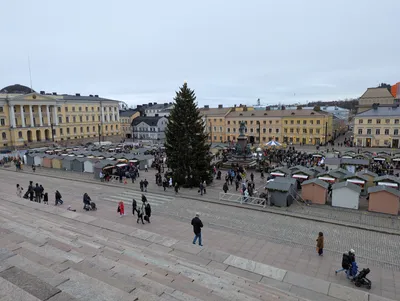
Helsinki Christmas Market
Since 1994 this has been an annual fixture, and it left Esplanadi Park for the Senate Square, the better address by a distance. Close to 100 artisans and small producers come from around Finland, plus more than 20 delicacy sellers. Ride the vintage-styled carousel, free to anyone at the market. Dates are fixed here: 1 December to 22 December.
 Helsinki Christmas Market - Wikipediahttps://en.wikipedia.org/wiki/Helsinki_Christmas_Market
 - 11
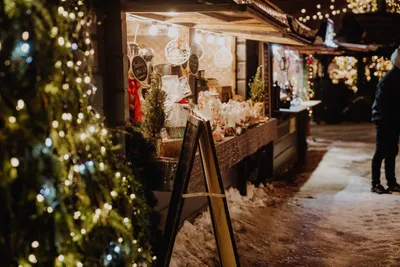
Riga Christmas Market
The revival here dates to 2000, on Dome Square beside Riga Cathedral, and the season runs from late November into early January, later than the German markets above it. Gingerbread and mulled wine are the standard order, but the one to ask for is the Riga Black Balsam, a local specialty the market sells alongside them.
Riga Christmas Market - Wikipediahttps://en.wikipedia.org/wiki/Riga_Christmas_Market - 12
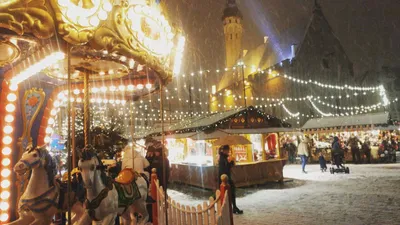
Tallinn Christmas Market
Paul Oberschneider founded the modern market in 2001, on the Town Hall Square where the Brotherhood of Blackheads raised a tree in 1441, recorded as the first public Christmas tree displayed in Europe. That older date is what puts it above Birmingham, which also started in 2001. Cabins on the square sell handicrafts, hot wine and souvenirs. Its own article dates the season from Christmas Day to Epiphany, out of step with every market above it.
 Tallinn Christmas Market - Wikipediahttps://en.wikipedia.org/wiki/Tallinn_Christmas_Market
 - 13
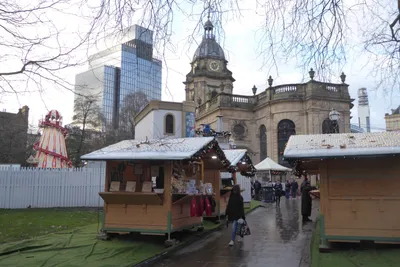
Frankfurt Christmas Market, Birmingham
Two cities, one market name: this one is affiliated with the Frankfurt am Main market higher up the list, and Birmingham is twinned with Frankfurt. It started in 2001 with 24 stalls and is now billed as the largest of its kind outside Germany and Austria, with over 5.5 million visitors in 2014. Bratwurst and Glühwein on New Street and Victoria Square, with Hosen Brass opening it since 2018.
 Frankfurt Christmas Market, Birmingham - Wikipediahttps://en.wikipedia.org/wiki/Frankfurt_Christmas_Market,_Birmingham
How this list was ranked
Readers rank this list by voting items up and down. Items are ordered by reader votes.