The Best Free Things to Do in New York City
Fifteen New York places that cost nothing to walk into, ranked by how good the free part is on its own. Vote the order into whatever you would hand a friend. That axis does real work. Somewhere free end to end outranks somewhere whose free portion is the forecourt, which is why a cemetery sits fourth and Rockefeller Center, with its public plaza and its ticketed views, sits last. Free here means free at the door on any day the doors are open, with no residency test and no minimum hiding under a suggested donation. The Hispanic Society suggests $15 and asks for nothing. Two of the museums are shut early in the week, so check the day before you travel. The roster runs seven parks, a cemetery, a working commuter terminal, a library building, a cathedral, three museums and one office complex you use at street level.
Central Park is #1 on “The Best Free Things to Do in New York City”.
- 1
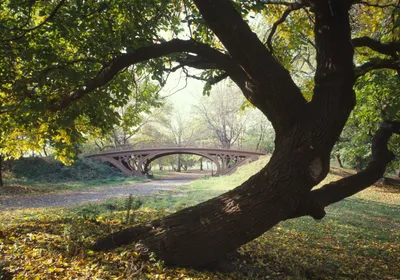
Central Park
The Lake, south of the 79th Street transverse, was the first piece to open, in December 1858, and the commissioners had picked Frederick Law Olmsted and Calvert Vaux's Greensward Plan only that April. Forty-two million people visited in 2016, and almost none of them arrive before eight in the morning. Get there first and the water is yours for an hour.
View on Google Maps - 2
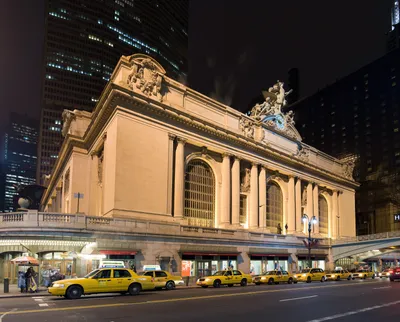
Grand Central Terminal
Opened in 1913 on the site of two similarly named predecessors, the terminal came from Reed and Stem, with Warren and Wetmore handling the cosmetic work inside and out. The whole building is free, which is unusual for an interior this good. Find the four-sided brass clock on the information booth, then walk down to the whispering gallery under the ramp arches, where a person in the diagonally opposite corner can hear you murmur.
View on Google Maps - 3
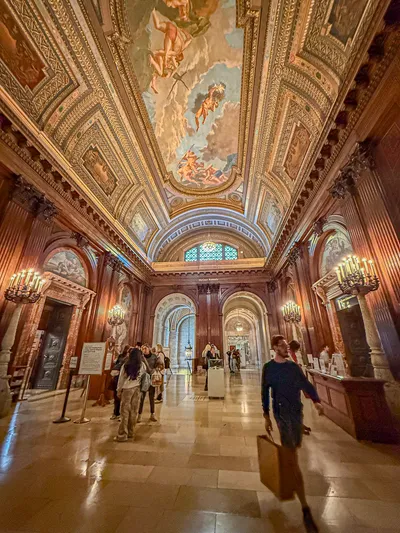
Stephen A. Schwarzman Building
Carrère and Hastings put a Beaux-Arts palace where the obsolete Croton Reservoir had stood, and it opened on May 23, 1911. Inside sits the Main Reading Room, 78 by 297 feet under a 52-foot ceiling, a room that makes people lower their voices without being asked. On the way in, the two stone lions on the Fifth Avenue steps are called Patience and Fortitude, south and north respectively.
View on Google Maps - 4
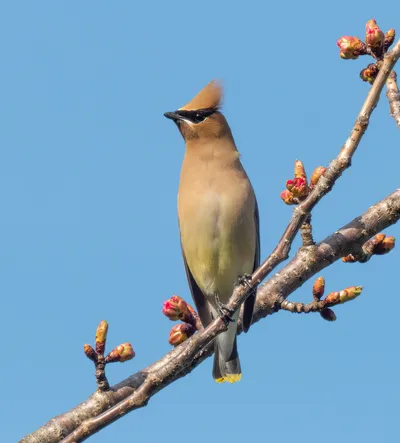
Green-Wood Cemetery
Nobody thinks of a cemetery as a day out, and by the 1840s this one was drawing 30,000 visitors a season. Founded in 1838 when the city's churchyards were filling up, all 478 acres of it became a National Historic Landmark in 2006, and Battle Hill, at roughly 216 feet, is the highest point in Brooklyn. Stop at the 25th Street entrance for the monk parakeets in the spires of Richard M. Upjohn's Gothic Revival gate.
View on Google Maps - 5
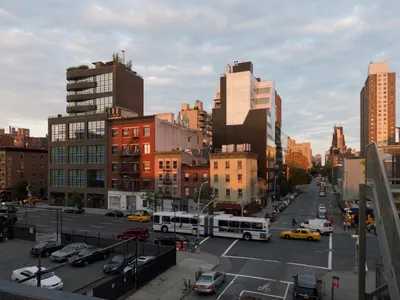
High Line
A freight viaduct became a park in stages: the first section, Gansevoort Street to 20th Street, opened on June 8, 2009, and a ribbon-cutting opened the second on June 7, 2011. James Corner Field Operations, Diller Scofidio + Renfro and Piet Oudolf designed it together, and Oudolf's planting looks best in the scruffy weeks of late autumn. The Tenth Avenue Square, an amphitheater at 17th Street, aims its seats straight down the avenue.
View on Google Maps - 6
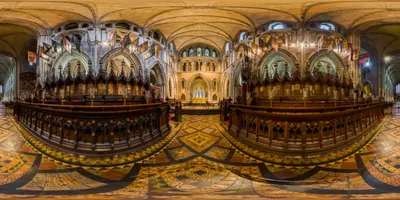
St. Patrick's Cathedral
Fifth Avenue goes quiet about ten feet inside the doors. James Renwick Jr. designed the building, the cornerstone went down on August 15, 1858, it opened on May 25, 1879, and the spires reached 329.5 feet when their last stones went up in October 1888. Look up for the rose window, 26 feet across and designed by Charles Connick. The guided tour is the paid option, and you do not need it.
View on Google Maps - 7
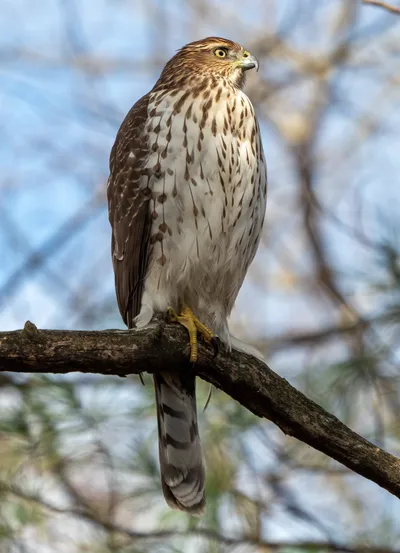
Prospect Park
Brooklyn's park was the second draft, and plenty of people here will tell you the second draft came out better. First proposed in legislation passed in 1859, laid out by Frederick Law Olmsted and Calvert Vaux, it opened in 1867 and was not substantially complete until 1873. The 90-acre Long Meadow is the piece to walk, because it runs far enough that the city drops out of earshot.
View on Google Maps - 8
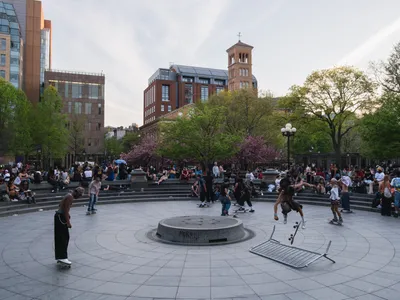
Washington Square Park
Before the arch and the fountain, the ground here was farmland, sold to the Common Council in April 1797 for a potter's field and re-appropriated as a military parade ground after 1826. The Parks Department took charge in 1871 and bent the secondary paths into curves. Head for the chess and scrabble playing area, where the games are quick, the players are ruthless and the commentary comes free.
View on Google Maps - 9
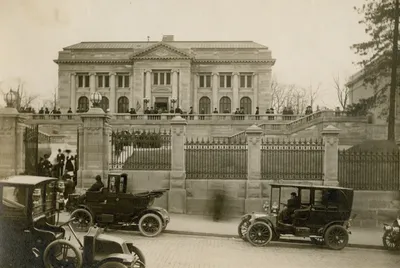
Hispanic Society of America
Free admission was written into the founder's trust in 1904, and the desk still asks only for a suggested donation of $15 for adults and $5 for students, with no obligation either way. Archer M. Huntington's 1908 Beaux-Arts building on Audubon Terrace holds more than 18,000 works and opens Thursday to Sunday. Give the Sorolla Room and its 14 Vision of Spain canvases the time they need; he commissioned them in 1911.
View on Google Maps - 10
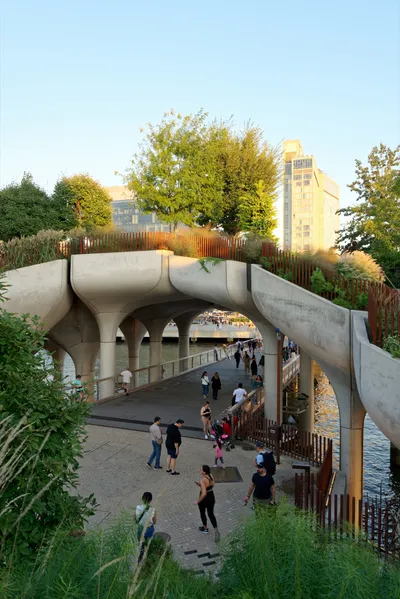
Little Island at Pier 55
One hundred and thirty-two pot-shaped concrete tulips stand on 280 pilings driven into the riverbed, holding 2.4 acres of park above the Hudson. Heatherwick Studio designed it, and it opened on May 21, 2021. Because the pot-shaped concrete tulips, 15 to 62 feet above the waterline, all top out at different heights, the paths climb and dip, and the river keeps arriving from a new angle.
View on Google Maps - 11
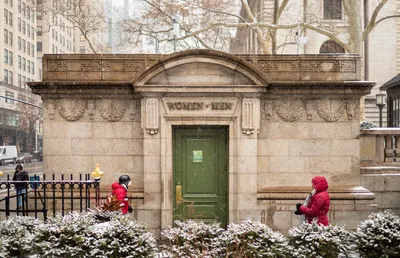
Bryant Park
Ownership and management are split here: the city owns the ground, and the Bryant Park Corporation, a private not-for-profit founded in 1980, runs it. Renamed in 1884 for the abolitionist and journalist William Cullen Bryant, the square was rebuilt in 1933–34 to a plan by Lusby Simpson. The 2,000 movable chairs placed in the 1988 redesign came from sociologist William H. Whyte's advice, so sit wherever you like, and move the chair when the sun does.
View on Google Maps - 12
The Battery
Gun batteries built in the late 17th century to protect the fort and the settlement behind them gave the place its name. Castle Clinton, the early 19th-century fort sitting in the middle of the lawn, spent part of its life as an aquarium. Twenty-five acres, with Battery Place and State Street at your back and New York Harbor and the Hudson in front, and the ferry traffic does most of the entertaining.
View on Google Maps - 13
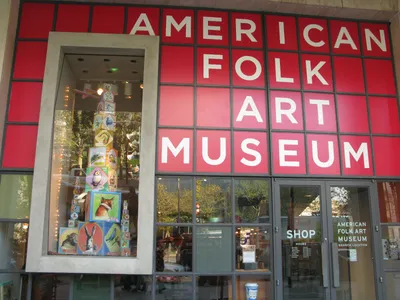
American Folk Art Museum
Charter in hand since 1961, the museum sits at 2 Lincoln Square, opposite Lincoln Center, and an hour does it properly. At the center is the largest collection of archival material from the self-taught artist Henry Darger, while quilts, schoolgirl needlework and weathervanes fill out the rest, with Ammi Phillips portraits and works by Bill Traylor among them. Nothing in the building costs anything.
View on Google Maps - 14

Bronx Museum of the Arts
Twelve years in the rotunda of the Bronx County Courthouse came first: the museum opened there on May 11, 1971, then moved in May 1983 into a vacant synagogue the city had bought on the Grand Concourse. Admission ended on March 29, 2012, after applying on every day but Friday, and attendance quadrupled afterwards. A pleated aluminum facade, seven irregular vertical panels linked by fritted glass, folds like a paper fan. Open Wednesday to Sunday.
View on Google Maps - 15
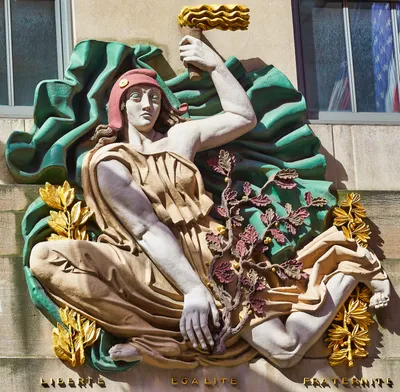
Rockefeller Center
Go at street level and none of it costs anything; go any higher and all of it does. John D. Rockefeller Jr. leased the site from Columbia University in 1928, Raymond Hood led the architects, and the first buildings opened in 1933. Walk the Channel Gardens between the British Empire Building and La Maison Francaise down to the sunken plaza and the Prometheus statue, in place since May 1934, and the last free thing here.
View on Google Maps
How this list was ranked
Readers rank this list by voting items up and down. Items are ordered by reader votes.