The Best Graphic Novels for First-Timers
Fourteen graphic novels and complete collected runs for a reader who has never opened one, ranked by how well book one lands cold. Vote it into the order you would actually hand a friend. Every entry links the volume to start with rather than the omnibus, and says how long the whole thing runs. Ongoing superhero continuity is out: nothing here asks you to know what happened in some other comic first, which is why Watchmen and All-Star Superman qualify and the monthly Batman does not. The spread is deliberate, across memoir, literary, manga, superhero and all-ages, with manga capped at three and the translator named for each, because a translation is the edition you are actually holding. Left off on purpose: Jimmy Corrigan and Building Stories, which teach comics grammar by making you fail at it first, and Saga, which is not finished.
Marjane Satrapi — Persepolis (2003) is #1 on “The Best Graphic Novels for First-Timers”.
- 1
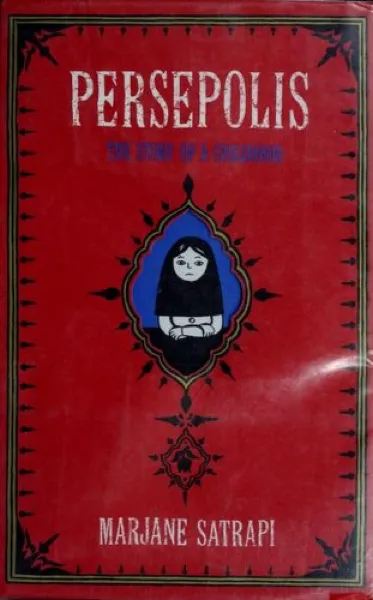
Marjane Satrapi — Persepolis (2003)
Pantheon published the English translation in 2003, Blake Ferris and Mattias Ripa folding the first two French volumes into one book. Satrapi draws herself at six arguing with God, a bearded old man on a cloud who visits her bedroom at night, and then losing him as the Revolution takes her uncle. The cartooning is flat black and white, and it asks no visual homework of you. Persepolis 2 followed in 2004, translated by Anjali Singh, and the two finish the story.
 Persepolis 1 & 2Marjane Satrapi
 - 2
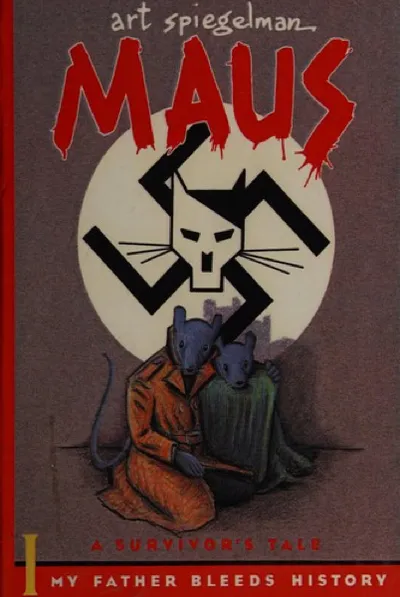
Art Spiegelman — Maus I (1986)
Cats hunt mice and the mice are Jews, a device that ought to collapse and instead makes Vladek's testimony bearable to sit with. Collecting the first six chapters, the 1986 volume is what brought the work mainstream attention; in 1992 it became the first graphic novel to win a Pulitzer Prize. Vladek pedalling his exercise bike while narrating Auschwitz is the image that stays. Two volumes total.
 Maus IArt Spiegelman
 - 3
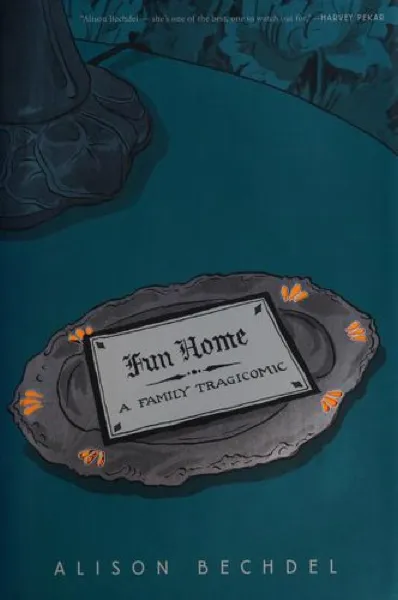
Alison Bechdel — Fun Home (2006)
Houghton Mifflin published it on 8 June 2006 and Time named it the best book of that year; it took the Eisner for Best Reality-Based Work in 2007. Bechdel circles the same Pennsylvania funeral home and the same father over and over, each pass adding what she has since worked out: that he was closeted, and that his death may not have been an accident. Dense with Joyce, and it earns the references. Standalone; there is no second volume.
 Fun HomeAlison Bechdel
 - 4
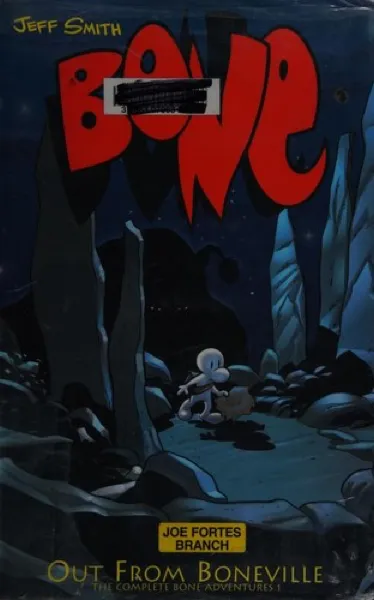
Jeff Smith — Out From Boneville (2005)
Fifty-five issues from 1991 to 2004, collected in nine volumes; Scholastic's Graphix imprint began reissuing them in full color by Steve Hamaker in 2005, and that is the edition to put in front of a newcomer. Three cousins are run out of town and land in a valley where the slapstick slowly turns into a war. Fone Bone hauling his copy of Moby-Dick through the valley is the joke that proves the book is smarter than it looks.
 Out From BonevilleJeff Smith
 - 5
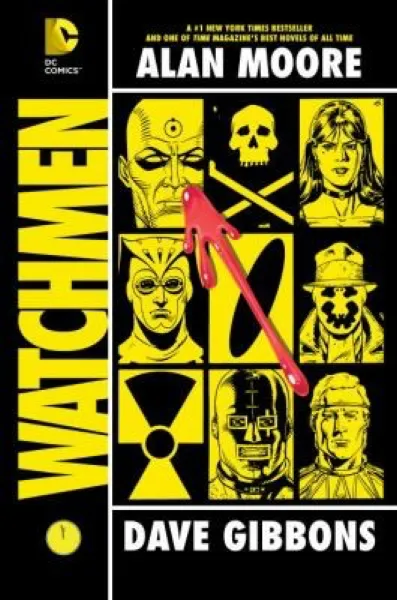
Alan Moore & Dave Gibbons — Watchmen (1987)
Twelve issues cover-dated September 1986 to October 1987, and a Hugo Award in the Other Forms category in 1988. Nothing outside the covers matters, and there is no continuity homework, which is exactly why it clears the bar here and an ongoing cape run does not. Rorschach's inkblot mask, shifting shape as he talks, does work a costume normally cannot, and the rigid nine-panel grid keeps the rhythm steady. One volume, complete.
 WatchmenAlan Moore
 - 6
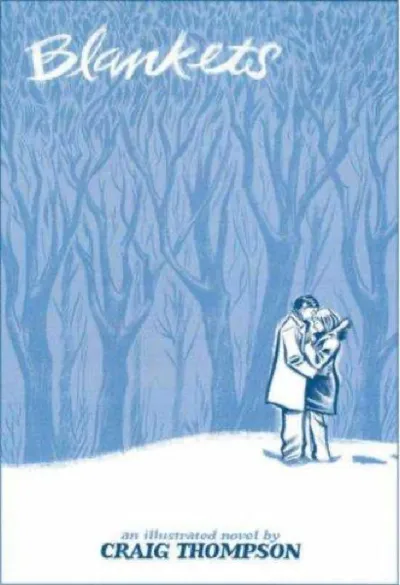
Craig Thompson — Blankets (2003)
Top Shelf Productions put out 592 pages in 2003 and it won the Eisner for Best Graphic Album the following year. First love, evangelical Wisconsin, a bed shared with his younger brother Phil; the drawing carries so much of it that the book reads far faster than its length. Raina's quilt, kept in the attic of his childhood home after everything else she gave him is destroyed, is what the title means. Complete in that one volume.
 BlanketsCraig Thompson
 - 7
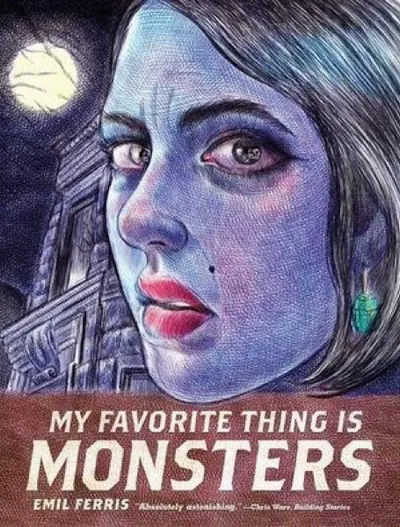
Emil Ferris — My Favorite Thing Is Monsters (2017)
Fantagraphics published it on 14 February 2017 as the fictional graphic diary of ten-year-old Karen Reyes, drawn in ballpoint on ruled notebook paper, who sets out to solve the murder of her upstairs neighbor Anka Silverberg, a Holocaust survivor. Late-sixties Chicago, rendered through pulp monster-magazine covers. Book Two arrived in May 2024, so the story now has an ending. Nothing else here looks remotely like it.
 My Favorite Thing Is Monsters, vol 1Emil Ferris
 - 8
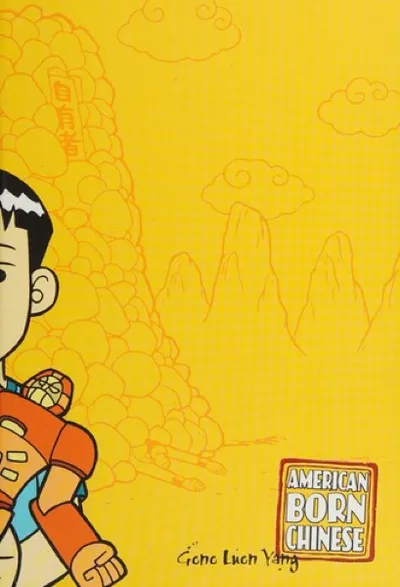
Gene Luen Yang — American Born Chinese (2006)
Three strands run in parallel: the Monkey King out of Journey to the West, a Chinese-American boy at a white suburban school, and a sitcom built around a grotesque cousin called Chin-Kee. The third one is the trap. First Second published it in 2006; it won the 2007 Michael L. Printz Award and was a National Book Award finalist. Two hundred and forty-six pages, one volume, done.
 American Born ChineseGene Luen Yang
 - 9

Naoki Urasawa — Pluto, Vol. 1 (2009)
Eight volumes, finished, translated for Viz Media by Jared Cook and Frederik L. Schodt. Urasawa rebuilds Osamu Tezuka's Astro Boy arc The Greatest Robot on Earth as a police procedural: Gesicht, a German robot inspector at Europol, works a string of killings in which objects are positioned by each victim's head to imitate horns. Reading right to left is the only adjustment a newcomer has to make.
 Pluto, Vol. 1Osamu Tezuka
 - 10
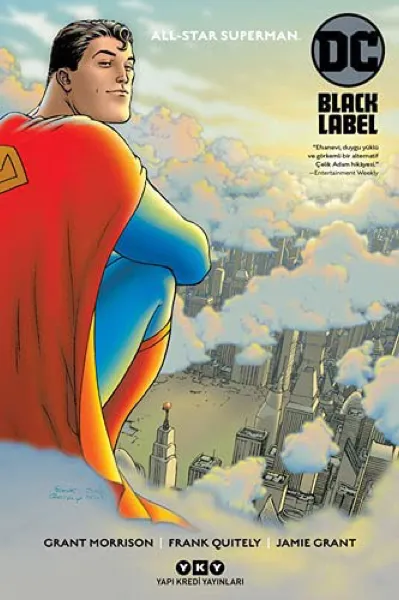
Grant Morrison — All-Star Superman (2008)
Dying of the solar radiation he absorbed rescuing Leo Quintum's sabotaged sun mission, Superman spends the run completing the Twelve Labours, one per issue, across twelve issues from November 2005 to October 2008, with an Eisner for Best New Series in 2006. Frank Quitely's art is calm where cape comics are usually loud. Self-contained, so no continuity is required, which is the whole reason it is admissible here.
 All-Star SupermanGrant Morrison
 - 11
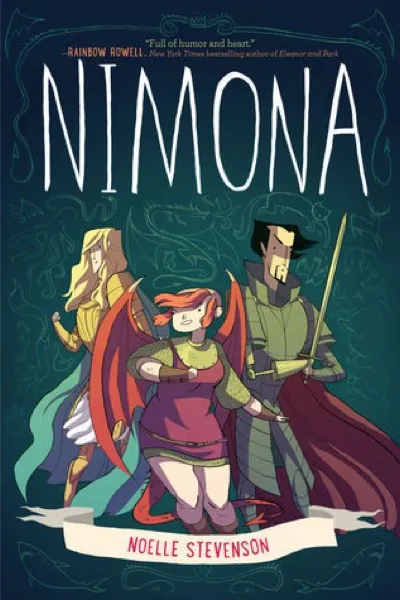
ND Stevenson — Nimona (2015)
Begun as a webcomic and printed by HarperCollins in 2015, and a National Book Award nominee that year. A shapeshifting girl talks her way into becoming sidekick to the disgraced knight Ballister Blackheart, who wants to bring down the Institute; the gag curdles into something much sadder about a third of the way through. One volume, no sequel. Netflix animated it on 30 June 2023.
 NimonaN.D. Stevenson
 - 12
Nick Drnaso — Sabrina (2018)
Longlisted for the Booker Prize, the first graphic novel ever to be, and published in May 2018 by Drawn & Quarterly. A woman vanishes in Chicago; video of her death is posted to news agencies by her killer and spreads; her boyfriend Teddy hides out with Calvin, an airman on an isolated Colorado base, while forums decide none of it happened. Faces drawn flat, like passport photographs. One volume; it ends there.
 SabrinaNick Drnaso
 - 13

Shigeru Mizuki — Showa 1926–1939 (2013)
Drawn & Quarterly published the first of four volumes in 2013, 560 pages, translated by Zack Davisson. Two books run side by side: a textbook account of Japan's slide toward war, and Mizuki's own hungry childhood in a seaside town. Photorealistic backgrounds carry the history while cartoon figures carry the memoir, and that collision is the argument. Later volumes took Eisner Awards in 2015 and 2016.
 Showa 1926–1939Shigeru Mizuki
 - 14
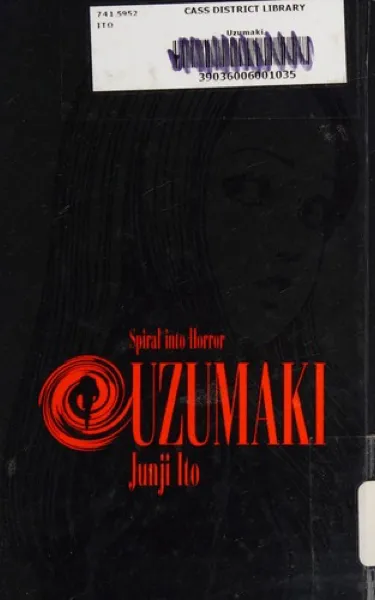
Junji Ito — Uzumaki, Vol. 1 (1998)
Serialized in Big Comic Spirits from 1998 to 1999 and collected into three volumes, translated for Viz Media by Yuji Oniki. Volume one runs 208 pages from Viz and drops Kirie Goshima and her boyfriend Shuichi Saito into fogbound Kurouzu-cho, where the curse is a pattern rather than a monster: the spiral, in hair, in a corpse folded into a bathtub. Last here because it will repel some readers outright, not because it is the weakest.
 UzumakiJunji Itō
How this list was ranked
Readers rank this list by voting items up and down. Items are ordered by reader votes.