The Best Fantasy Series for Newcomers
Twelve fantasy series you can genuinely start cold, ranked by how kindly book one treats a newcomer. Vote the order into the shape you'd hand a friend. Three tests: the first book has to work on its own, the run has to be finished or reliably delivered, and the payoff has to repay the miles. Every entry links the series' first book and says how long the road is. The order runs from the smoothest modern on-ramps down to the classics that need a flag or two. Left out on purpose: The Kingkiller Chronicle and A Song of Ice and Fire, both unfinished with no end in sight; Malazan and The Stormlight Archive, which are nobody's first rodeo; and The Lord of the Rings, one novel in three volumes rather than a series you climb into gradually. Grimdark appears exactly once, clearly labeled at the door.
Brandon Sanderson — Mistborn (The Final Empire, 2006) is #1 on “The Best Fantasy Series for Newcomers”.
- 1
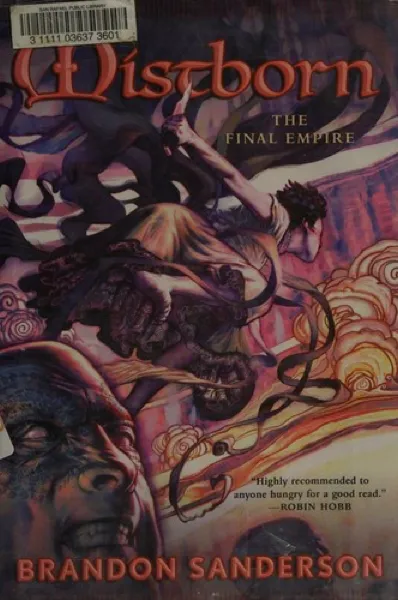
Brandon Sanderson — Mistborn (The Final Empire, 2006)
Ask the internet where to start with fantasy and this trilogy is the most common answer, for good reason. Tor published The Final Empire on 17 July 2006: Vin, a street thief, joins a crew planning to rob and topple a Lord Ruler who has reigned for a thousand years. Allomancy, which means swallowing and burning metals for specific powers, is taught to her on the page, so the reader learns the rules exactly as she does. Three books, finished, and the ending is earned.
 The Final EmpireBrandon Sanderson
 - 2
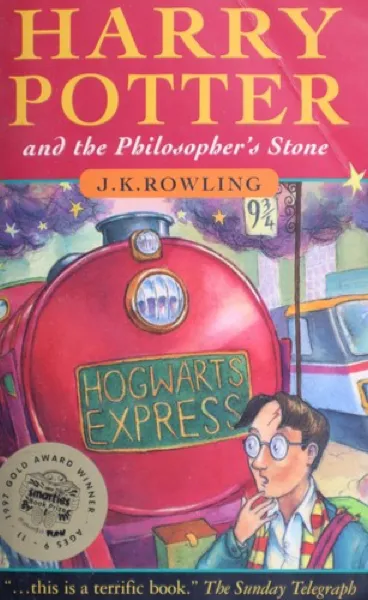
J. K. Rowling — Harry Potter (Harry Potter and the Philosopher's Stone, 1997)
Bloomsbury's first print run on 26 June 1997 was 500 copies, 300 of them sent to libraries. Seven books that age with their reader, from a hidden train platform at King's Cross to a genuinely grim war story. Six of the seven run to a school year each, and that term-time scaffolding is what holds the magic steady for a newcomer; the last one leaves the school behind, by which point you no longer need it.
 Harry Potter and the Philosopher's StoneJ. K. Rowling
 - 3
Ursula K. Le Guin — Earthsea (A Wizard of Earthsea, 1968)
Magic here is language: everything has a true name, knowing it gives power over it, and wizards guard their own names accordingly. Parnassus Press published A Wizard of Earthsea in 1968 and it took the Boston Globe–Horn Book Award the following year. Six slim books across 33 years, and the first is a school story that ends with Ged hunting the shadow he himself loosed. The chapters are short, the sentences plain, and no homework is required.
 A Wizard of EarthseaUrsula K. Le Guin
 - 4
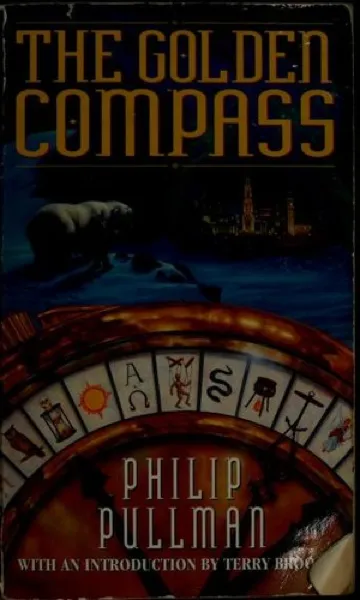
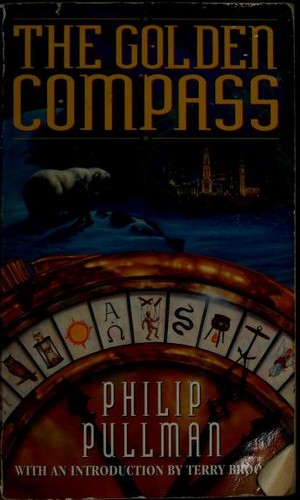
Philip Pullman — His Dark Materials (Northern Lights, 1995)
Every human in this world has a daemon, their soul walking beside them in animal form, and the plot turns on what it would mean to cut one away. Northern Lights won the 1995 Carnegie Medal and was voted the Carnegie of Carnegies in 2007; Americans know it as The Golden Compass. Three books, complete, opening as an adventure with armored bears and closing as an argument with God. It is readable at eleven and rereadable at forty.
 Northern LightsPhilip Pullman
 - 5
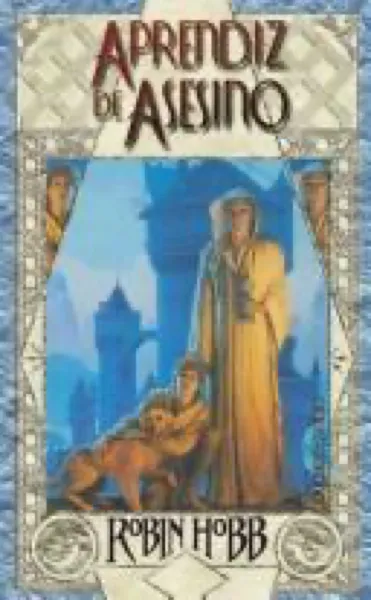
Robin Hobb — The Farseer Trilogy (Assassin's Apprentice, 1995)
Bantam published Assassin's Apprentice in 1995: Fitz, a royal bastard, is trained as the king's poisoner while hiding the Wit, a distrusted magic that lets him bond with animals, first with a puppy, Smithy, and the cost of that bond lands hard. First-person, one voice, one castle: the easiest structure in epic fantasy to follow. Three books complete the trilogy; the sixteen-book Realm of the Elderlings waits behind it for anyone hooked.
 Assassin's ApprenticeRobin Hobb
 - 6
Joe Abercrombie — The First Law (The Blade Itself, 2006)
Grimdark with a stand-up's timing. Gollancz published The Blade Itself in 2006, and its best invention is Sand dan Glokta, a crippled torturer for the Inquisition who narrates his own workday with appalling good humor. Flagged on-ramp: people are awful here and endings refuse to console, so skip ahead if you want comfort. But the trilogy runs just three books, finished by 2008, with three standalones waiting once it has you.
 The Blade ItselfJoe Abercrombie
 - 7
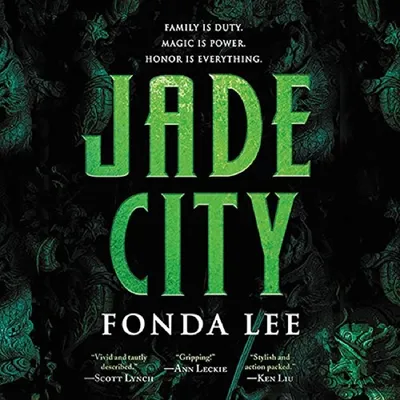
Fonda Lee — The Green Bone Saga (Jade City, 2017)
Pitch it in five words, the Godfather with magic jade, and the book delivers exactly that. Orbit published Jade City in 2017 and it won the 2018 World Fantasy Award: on the island of Kekon, jade amplifies trained fighters into superhuman Green Bone warriors, and two clans run the country the way crime families run cities. Modern prose, gang politics, and no medieval furniture anywhere. Three books, done by 2021, and the finale spans generations without dropping anyone.
 Jade CityFonda Lee
 - 8
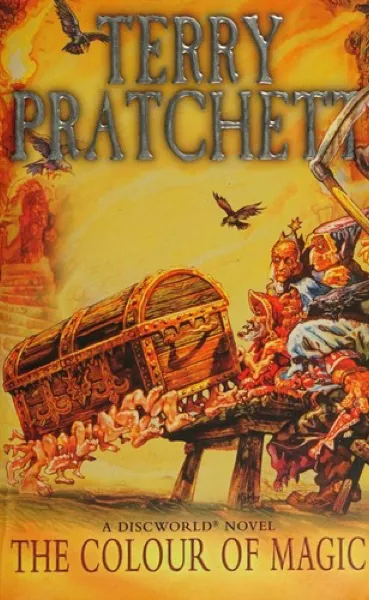
Terry Pratchett — Discworld (The Colour of Magic, 1983)
Forty-one novels, and almost any can be your first, which is exactly why newcomers freeze. Convention links where it began: Colin Smythe printed 506 copies of The Colour of Magic in 1983. Honest flag: the early parody is the weakest stretch, and most readers do better entering at Mort or Guards! Guards!, then circling back. A flat world riding four elephants on a giant turtle, used for three decades of moral philosophy disguised as jokes.
 The Colour of MagicTerry Pratchett
 - 9
Robert Jordan — The Wheel of Time (The Eye of the World, 1990)
Fourteen volumes is the honest warning, so here is the honest case. Tor published The Eye of the World on 15 January 1990, and the opening still reads like the friendliest possible Tolkien on-ramp: village, pursuit, wonder. The One Power splits into a male and a female half, and the male half drives its users mad, a single fact that powers the whole plot. Jordan died in 2007; Brandon Sanderson finished the series in 2013. Doorstopper flag firmly attached.
 The Eye of the WorldRobert Jordan
 - 10
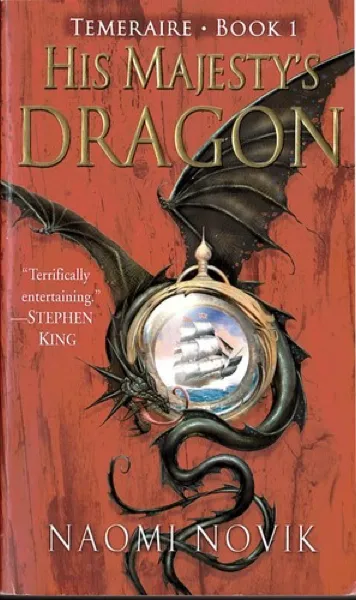
Naomi Novik — Temeraire (His Majesty's Dragon, 2006)
Napoleonic naval fiction plus dragons, played completely straight: a Royal Navy captain accidentally bonds a hatchling and is drafted into Britain's Aerial Corps. His Majesty's Dragon, titled Temeraire in the UK, won the 2007 Compton Crook Award for best debut. Nine books, complete as of 2016, and it suits newcomers because half its furniture is borrowed from sea stories rather than fantasy: manners, duty, prize money, and one extremely opinionated dragon.
 His Majesty's DragonNaomi Novik
 - 11
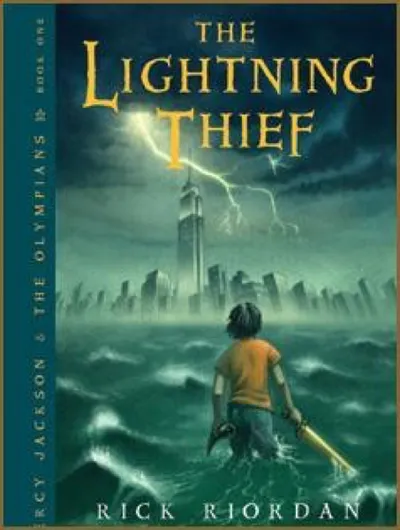
Rick Riordan — Percy Jackson & the Olympians (The Lightning Thief, 2005)
Start here if the newcomer is twelve, or lives with someone who is. The Lightning Thief appeared in 2005 and the original series wrapped at five books in 2009: Greek mythology relocated to modern America, where demigod kids train at Camp Half-Blood on Long Island. Riordan wrote Percy hyperactive and dyslexic for his son Haley, who had both diagnoses, and the fast first-person jokes are a delivery system for genuinely real mythology.
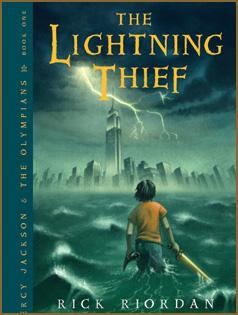 The Lightning ThiefRick Riordan
 - 12
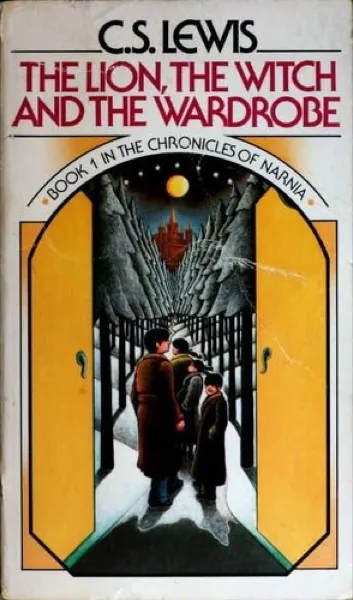
C. S. Lewis — The Chronicles of Narnia (The Lion, the Witch and the Wardrobe, 1950)
Seven short books published between 1950 and 1956, the first five by Geoffrey Bles and the last two by The Bodley Head, with Pauline Baynes's illustrations still attached. A wardrobe in a spare room opens onto a country where it is always winter and never Christmas, still one of the great first doors in children's fantasy. Two flags for grown newcomers: the Christian allegory is load-bearing, and on the reading-order argument this list votes publication order, always, wardrobe first.
The Lion, the Witch and the WardrobeC. S. Lewis
How this list was ranked
Readers rank this list by voting items up and down. Items are ordered by reader votes.