The Best Cozy Reads for Winter
Fourteen books for reading indoors in the dark half of the year, ranked by how much the comfort in them has been paid for. Vote the order around. What got cut is the argument: sentimentality without craft, and anything whose warmth depends on nothing being at stake, which is why there is no Wodehouse. A book is here only if it knows about cold, debt, illness or loneliness and pulls up a chair anyway. Counting strictly, by the whole book rather than one snowy chapter, four are set in winter: Moominland Midwinter, A Christmas Carol, Ali Smith's Winter and Wintering. Four are nonfiction or essay. Nine were published before 1980, because a list of the last five years' comfort reads would miss what the category is. Cosy crime is held to two. Translators are named in the copy: Thomas Warburton, Stephen Snyder, Thomas J. Harper and Edward Seidensticker.
Tove Jansson — Moominland Midwinter (1957) is #1 on “The Best Cozy Reads for Winter”.
- 1
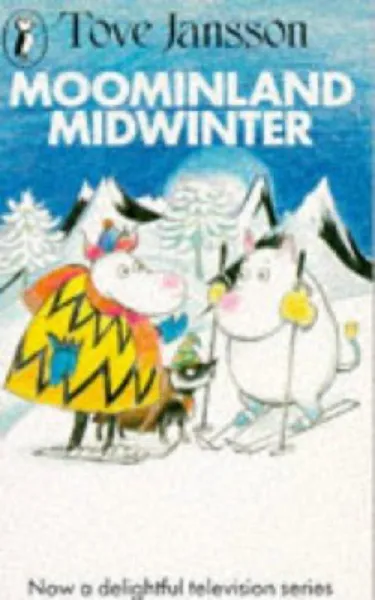
Tove Jansson — Moominland Midwinter (1957)
Moomintroll wakes in January while his family sleeps out the hibernation, and finds the Valley has been handed over to creatures who were never mentioned to him. Thomas Warburton's English translation followed in 1958 from Ernest Benn, a year after the Swedish Trollvinter. Too-ticky, camped in the family bathing house and refusing to explain the Lady of the Cold, is the whole argument for reading it in December.
 TrollvinterTove Jansson
 - 2
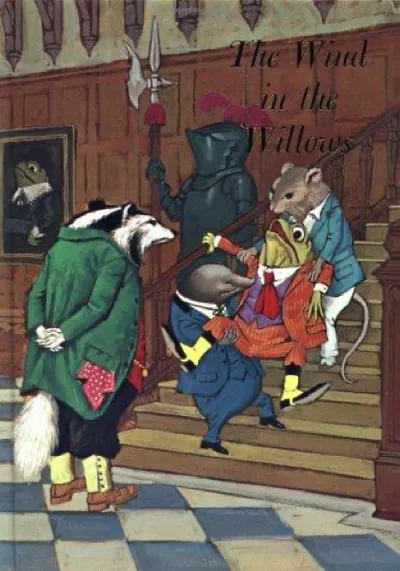
Kenneth Grahame — The Wind in the Willows (1908)
Methuen published it in 1908, and the chapter people forget is the third one, where Mole gets lost in falling snow and cuts his shin on a door-scraper that turns out to be Badger's. Two chapters later the field-mice arrive at Mole's door singing carols. E. H. Shepard's illustrations, the ones everybody pictures, were not added until 1931.
 The Wind in the WillowsKenneth Grahame
 - 3
Barbara Pym — Excellent Women (1952)
Mildred Lathbury is just over thirty, works part-time for the Society for Aged Gentlewomen and helps at her parish church on the wrong side of Victoria Station. Jonathan Cape published it in 1952. Philip Larkin, writing in 1964, called it a study of the pain of being single, which is exactly why the jumble sales and the tea trays are not cozy wallpaper.
 Excellent WomenBarbara Pym
 - 4
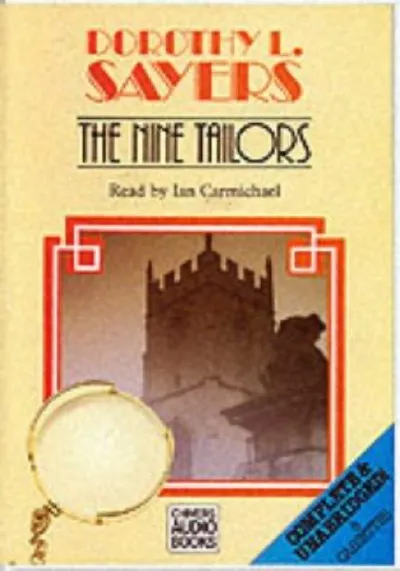
Dorothy L. Sayers — The Nine Tailors (1934)
Lord Peter Wimsey puts his car into a ditch outside Fenchurch St Paul on a snowy New Year's Eve and is press-ganged into an all-night peal because a ringer has flu. Published in 1934, it names all eight bells: Gaude, Sabaoth, John, Jericho, Jubilee, Dimity, Batty Thomas and Tailor Paul. They are not decoration; they do the work the plot needs doing.
 The Nine TailorsDorothy L. Sayers
 - 5

Charles Dickens — A Christmas Carol (1843)
Chapman & Hall published it on 19 December 1843; the first run of 6,000 copies sold out by Christmas Eve, and Dickens still cleared only £230, because he insisted on hand-colored etchings by John Leech, gilt edges and red cloth. Sentimentality is the charge, and Tiny Tim is the evidence, but the Ghost of Christmas Yet to Come shows Scrooge his own grave first. The warmth is bought.
 A Christmas CarolCharles Dickens
 - 6
Yōko Ogawa — The Housekeeper and the Professor (2003)
Shinchosha published the Japanese original in August 2003, and it won the inaugural Hon'ya Taishō, the prize Japan's booksellers vote on themselves; Stephen Snyder's translation followed from Picador in 2009. A mathematician with eighty minutes of memory calls his housekeeper's son Root, after the flat top of the boy's head. Nothing about the illness is fixed, which is what keeps the kindness honest.
Housekeeper and the Professor小川洋子 - 7
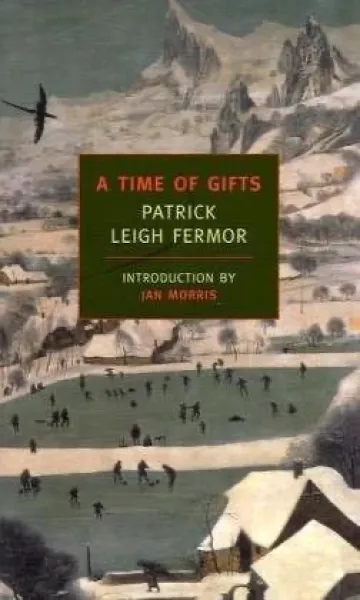
Patrick Leigh Fermor — A Time of Gifts (1977)
Walking out of the Hook of Holland on 8 December 1933 at eighteen, with almost nothing, he crossed a Europe that stopped existing a few years later. John Murray published the book in 1977, when he was sixty-two, and the forty-four-year gap is the point: snow, barns and borrowed beds recalled by an old man who kept the boy's appetite intact.
 A Time of GiftsPatrick Leigh Fermor
 - 8
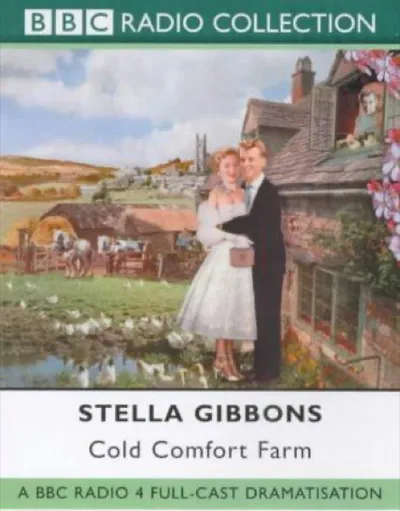
Stella Gibbons — Cold Comfort Farm (1932)
Flora Poste arrives at her doom-laden Sussex cousins to sort them out, and does. Longmans published it in 1932; it won the Prix Femina's foreign-novel category the year after, beating Elizabeth Bowen and Rosamond Lehmann. Gibbons marked her own most overwritten paragraphs with asterisks, for the reader's delectation and mirth, and Aunt Ada Doom saw something nasty in the woodshed.
 Cold Comfort FarmStella Gibbons
 - 9
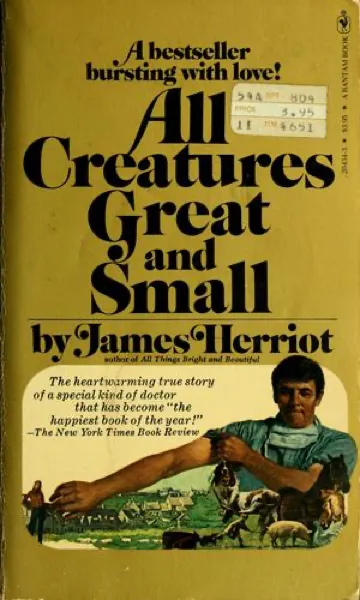
James Herriot — All Creatures Great and Small (1972)
St. Martin's Press bolted two British books together in 1972, If Only They Could Talk (1970) and It Shouldn't Happen to a Vet (1972), plus three chapters of a third, and invented the version America knows. Alf Wight wrote it under a pen name while running a real practice in Thirsk. Mrs Pumphrey's pampered Pekingese, Tricki Woo, and the Farnon brothers' Skeldale House do the rest.
 All Creatures Great and Small (All Creatures Great and Small #1-2)James Herriot
 - 10
Jun'ichirō Tanizaki — In Praise of Shadows (1933)
Thomas J. Harper and Edward Seidensticker's full English translation appeared from Leete's Island Books in 1977, forty-four years after the Japanese original of 1933. Tanizaki argues that a lacquer soup bowl is built for candlelight and looks merely cheap under an electric bulb. Nothing here is nostalgic decoration; it is an argument about how to light a room. Read it in February and it lands.
 陰翳礼讃 (In'ei raisan)谷崎潤一郎
 - 11
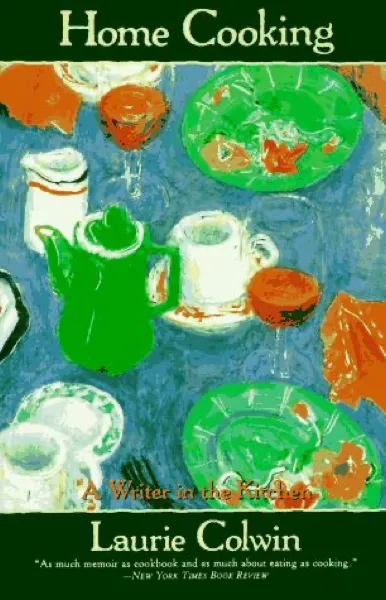
Laurie Colwin — Home Cooking (1988)
Essays first, recipes second: Knopf published it in 1988, four years before Colwin died at forty-eight. Chapters include Repulsive Dinners: A Memoir, in which she catalogs meals inflicted on her by friends, and Easy Cooking for Exhausted People. Extremely Easy Old-Fashioned Beef Stew is exactly what its title promises, and that plainness is the register the whole book keeps.
 Home cookingLaurie Colwin
 - 12
Ali Smith — Winter (2017)
Hamish Hamilton published the second of the Seasonal Quartet in 2017: a Christmas reunion in a big Cornish house, with Shakespeare's Cymbeline running under the floorboards. Art hires Lux, a Croatian stranger, to impersonate his girlfriend Charlotte in front of his mother Sophia; then Sophia's estranged sister Iris turns up. Nobody is softened, and the reconciliation costs something.
WinterAli Smith - 13
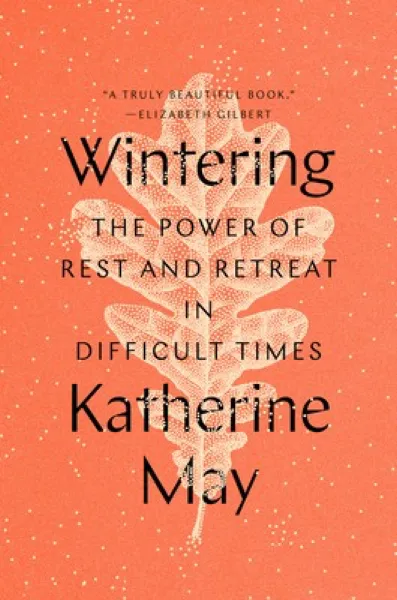
Katherine May — Wintering (2020)
Riverhead published the American edition on 10 November 2020, at 256 pages, and it became a New York Times bestseller. Her husband collapsed, her son stopped going to school, and her own illness ended her job; the book follows what she did next, through cold-water swimming, hibernating dormice, solstice, C. S. Lewis and Sylvia Plath. It treats retreat as a skill rather than a mood.
 WinteringKatherine May
 - 14
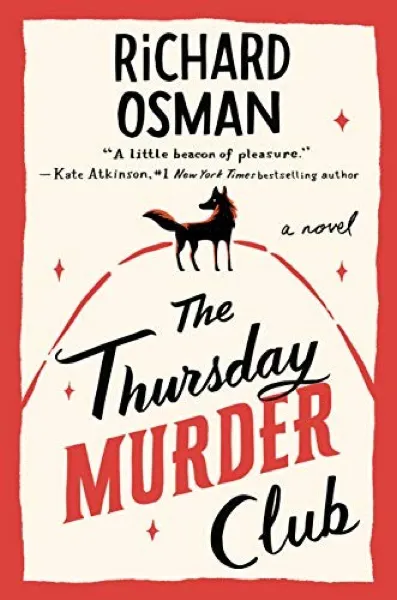
Richard Osman — The Thursday Murder Club (2020)
Viking put it out in 2020; it sold 45,000 copies in three days and 134,514 in the week to 19 December that year, the first debut novel to be a UK Christmas number one. Four residents of Cooper's Chase, Elizabeth, Joyce, Ron and Ibrahim, investigate cold cases over Thursday lunch. Joyce's diary is the reason it works: funny, and quietly about dying.
 The Thursday Murder ClubRichard Osman
How this list was ranked
Readers rank this list by voting items up and down. Items are ordered by reader votes.