The Best Books About Music
Fourteen books about music, ranked for range rather than greatness. Vote the order around if you would put a different corner of the category first. Width is the ranking logic here: the list is arranged to show how far books about music actually stretch, from a chapter set at the 1906 Graz premiere of Salome to a history of grime told through east London council blocks. Genres and eras are spread deliberately and rock is held to two titles, because a music-book list that is mostly rock is a rock list. Several of these sit beside existing ListWorld Music lists: Bass Culture with Reggae 70s, Fela with Afrobeat 70s, Bossa Nova with Bossa Nova 60s, Can't Stop Won't Stop with Hip-Hop 80s, Rip It Up and Start Again with Post-Punk. Left out: instrument manuals, discographies, and celebrity autobiographies with a band attached.
Alex Ross — The Rest Is Noise (2007) is #1 on “The Best Books About Music”.
- 1
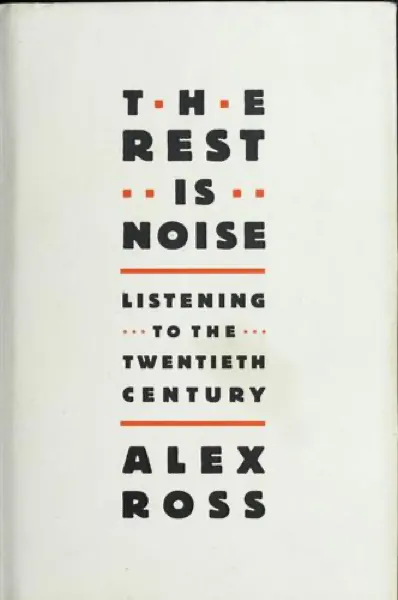
Alex Ross — The Rest Is Noise (2007)
Farrar, Straus and Giroux published it in 2007, and it took the National Book Critics Circle Award for Criticism that year. Chapter one opens in Graz in 1906 at the Austrian premiere of Strauss's Salome, with Mahler and his wife Alma in the hall, Puccini, Schoenberg and six of his students, and possibly a seventeen-year-old Adolf Hitler. It tells twentieth-century music as one continuous argument rather than a syllabus.
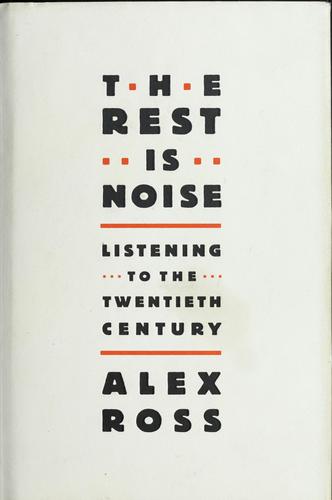 The rest is noiseAlex Ross
 - 2
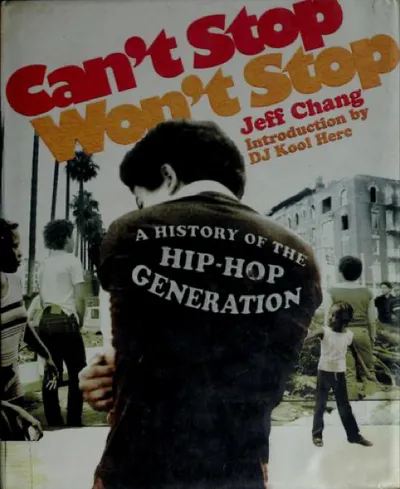
Jeff Chang — Can't Stop Won't Stop (2005)
Picador put it out in 2005 with an introduction by DJ Kool Herc, and it won an American Book Award the same year. Hip-hop starts here not with a record but with the Hoe Avenue peace meeting of 8 December 1971, where Ghetto Brothers leader Benjamin Melendez got a room of Bronx gangs to sign a truce six days after Black Benjie was beaten to death. It puts politics first and beats second.
 Can't stop, won't stopJeff Chang
 - 3
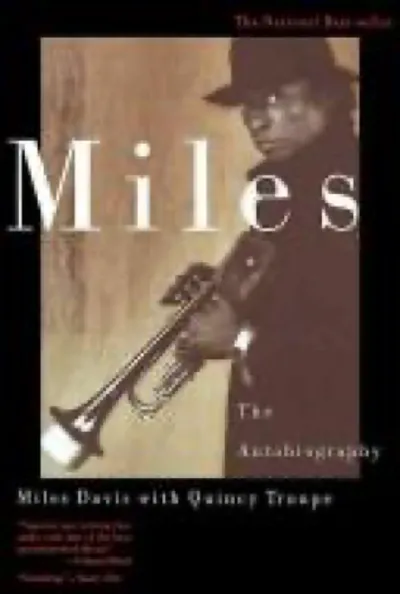
Miles Davis with Quincy Troupe — Miles: The Autobiography (1989)
Simon & Schuster published this in 1989 and it won an American Book Award the year after. Troupe transcribed and shaped, but the voice is unmistakable: profane, score-settling, generous in short bursts. It returns again and again to August 1959, when a policeman clubbed him outside Birdland, the club he was headlining, and he left with five stitches: the night he says made him bitter for good.
 Miles, the autobiographyMiles Davis
 - 4
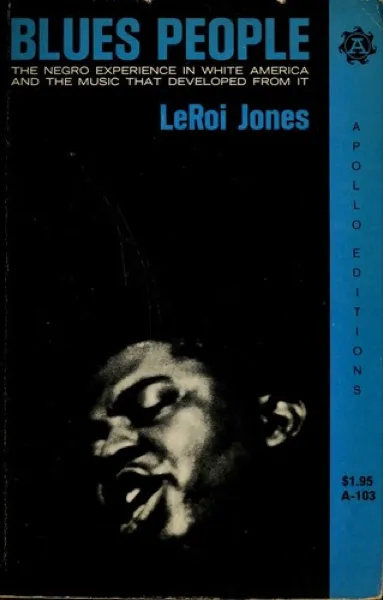
Amiri Baraka — Blues People (1963)
Published under the name LeRoi Jones by William Morrow in 1963, and every later music history has had to answer it. Jones runs a line from work songs to bebop and insists the music records a people's changing position in America rather than a sequence of styles, and the chapter titled The Negro as Property does the heavy lifting. Sixty years on, it still stings.
 Blues peopleAmiri Baraka
 - 5
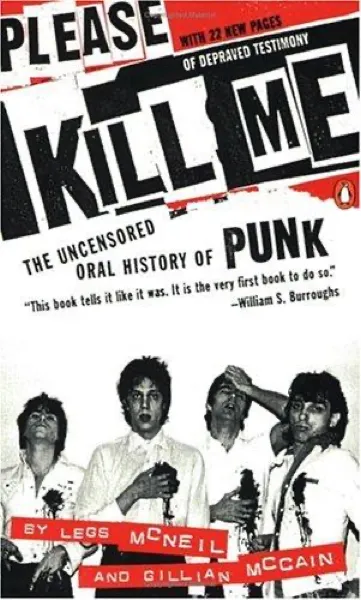
Legs McNeil & Gillian McCain — Please Kill Me (1996)
Grove Press brought it out in 1996, and there is no narrator anywhere in it: every line is somebody's own recollection, spliced against the next person's flat contradiction of it. Punk from the Velvet Underground through the Ramones, assembled from hundreds of interviews. The form carries the argument, because nobody gets the last word, and the people who were there agree about almost nothing.
 Please kill meLegs McNeil
 - 6
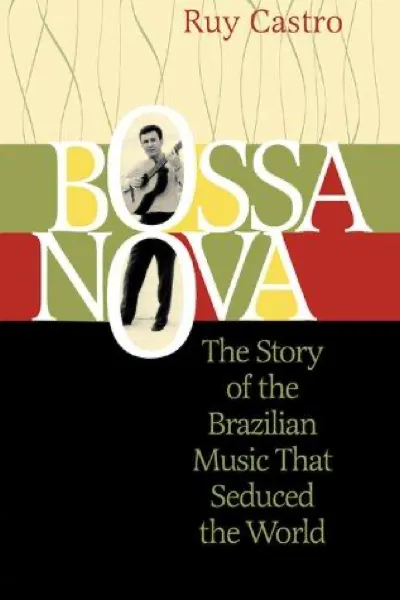
Ruy Castro — Bossa Nova (2000)
Originally published in Brazil in 1990 as Chega de Saudade, translated by Lysa Salsbury for A Cappella in November 2000; the Chicago Review Press paperback of 2003 carries a foreword by Julian Dibbell. Its best-known scene has João Gilberto shut in his sister's tiled bathroom in Diamantina, using the acoustics to work out the batida, the guitar beat that folds a whole samba percussion section into one right hand. It is gossipy, exact and unsentimental.
 Bossa NovaRuy Castro
 - 7
Hanif Abdurraqib — Go Ahead in the Rain (2019)
University of Texas Press published it in 2019; it was longlisted for that year's National Book Award for Nonfiction and entered the New York Times paperback nonfiction list at number 13. Much of it is written as letters to members of A Tribe Called Quest, including one to Phife Dawg's mother, the poet Cheryl Boyce-Taylor, at the moment of her son's death from diabetes complications on 22 March 2016.
 Go Ahead in the RainHanif Abdurraqib
 - 8
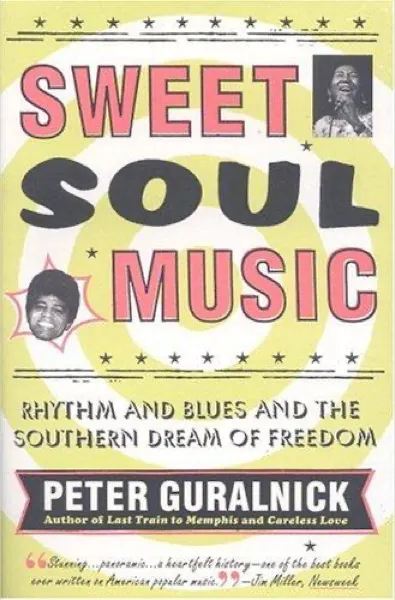
Peter Guralnick — Sweet Soul Music (1986)
Harper & Row published it in 1986, subtitled Rhythm and Blues and the Southern Dream of Freedom, and the claim is that Southern soul came out of integrated rooms in Memphis and Muscle Shoals at the exact moment the South was tearing itself apart. Portraits of Solomon Burke, James Carr and Booker T. and the MG's carry it. Otis Redding's plane goes into Lake Monona on 10 December 1967 and an era closes.
 Sweet soul musicPeter Guralnick
 - 9
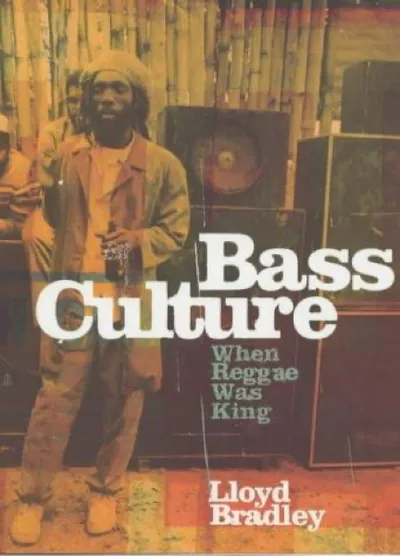
Lloyd Bradley — Bass Culture (2000)
Viking published it in 2000; Grove Press reissued it in America a year later under a different name, This Is Reggae Music, running 592 pages. Jamaican music is told through the sound systems rather than the stars, so Prince Buster and King Tubby get more room than Bob Marley, and the case made is that the dance decided what got recorded. It is the best companion there is to a reggae playlist.
 Bass cultureLloyd Bradley
 - 10
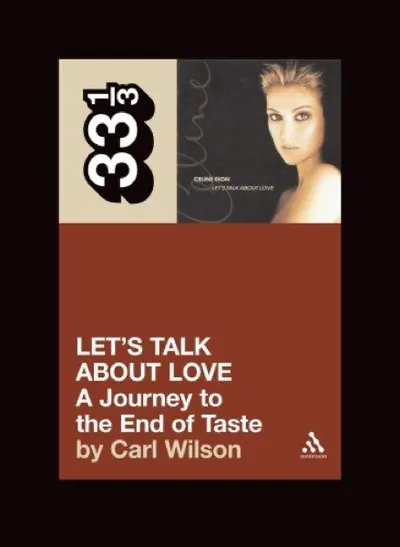
Carl Wilson — Celine Dion's Let's Talk About Love (2007)
Continuum published it in 2007 in the 33 1/3 series of single-album books, and Bloomsbury reissued an expanded version in 2014 with essays bolted on by Nick Hornby, Krist Novoselic and Ann Powers. Setting out to explain why he cannot stand an album adored by millions, Wilson ends up taking his own taste apart with Bourdieu's Distinction. It is the funniest book here, and the least comfortable.
 Celine Dion's Let's Talk About LoveCarl Wilson
 - 11
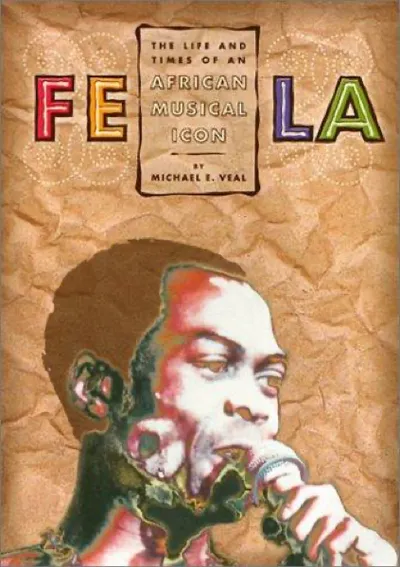
Michael E. Veal — Fela (2000)
Temple University Press published it in May 2000 at 352 pages, and the author is not a distant observer: he played guest saxophone with Egypt 80 before writing it. Afrobeat gets taken apart bar by bar alongside the politics, including the 1977 army raid on the Kalakuta Republic compound, when soldiers threw Fela's mother Funmilayo Ransome-Kuti from a second-floor window; she never recovered, lapsed into a coma and died fourteen months later, on 13 April 1978.
 FelaMichael Veal
 - 12
Simon Reynolds — Rip It Up and Start Again (2005)
Faber and Faber published it in 2005, subtitled Postpunk 1978-1984, and Reynolds followed it in 2009 with Totally Wired, a companion volume of the raw interviews. His case is that the interesting part arrived after punk burnt out, when art students with cheap synthesisers rebuilt the form. Sheffield gets the same seriousness as New York, and bands nobody else defends get defended.
 Rip it up and start againSimon Reynolds
 - 13
Dan Hancox — Inner City Pressure (2018)
Named a best music book of 2018 by the Guardian, the Observer, Pitchfork and NPR among others, and published by William Collins that year. Grime is told as a housing story: pirate radio rigs on east London council blocks, an economy of white labels and clashes, and Dizzee Rascal taking the 2003 Mercury Prize for Boy in da Corner. Hancox is unusually good on what the music cost the people who made it.
Inner city pressureDan Hancox - 14
Kelefa Sanneh — Major Labels (2021)
Penguin Press published it in 2021 in America and Canongate in Britain, and its structure is the argument: seven chapters, one per genre (rock, R&B, country, punk, hip-hop, dance and pop), each written as though that genre's listeners were the only audience who mattered. Nothing is ranked against anything else, which after thirteen ranked entries is a decent joke to end on.
 Major LabelsKelefa Sanneh
How this list was ranked
Readers rank this list by voting items up and down. Items are ordered by reader votes.