Business Books That Aren't Fluff
Thirteen business books that survive contact with an actual working week. Rank them, and vote off anything you think is padding. The bar was one question: does the argument still stand once you check its own case studies? That bar kept Jim Collins's Good to Great off the list. Eleven companies named great, two of which, Circuit City and Fannie Mae, later came badly apart, and a portfolio of all eleven would have trailed the S&P 500. Ordering runs by how much of the book you can use on the Monday after you finish it, so the practitioner titles sit above the reportage, which changes how you read an industry rather than what you do at your desk. Seven of the thirteen predate 2010, because management did not begin with the airport paperback. Where a central claim has been contested or has failed replication, the item says so. That honesty is the point of the bar.
Richard P. Rumelt — Good Strategy Bad Strategy (2011) is #1 on “Business Books That Aren't Fluff”.
- 1
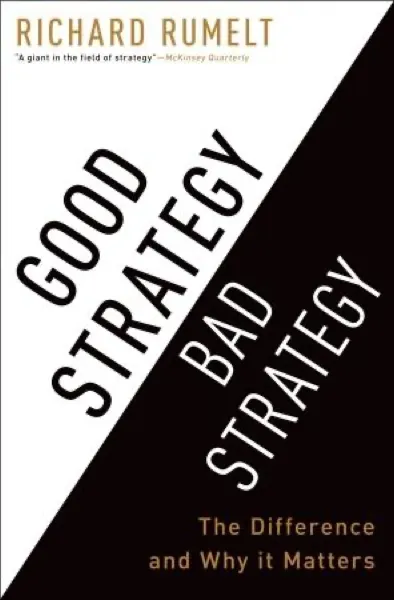
Richard P. Rumelt — Good Strategy Bad Strategy (2011)
Fluff comes first in the four hallmarks of bad strategy set out here, buzzwords masquerading as analysis, which is why the book that named the disease opens this list. Crown Business published it in 2011 and the Financial Times and Goldman Sachs made it one of six finalists that year. What replaces the fluff is a kernel with three parts: diagnosis, guiding policy, coherent action. Kmart is the cautionary case.
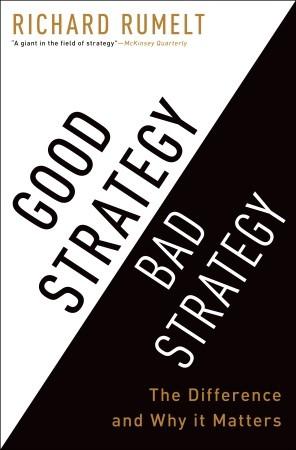 Good Strategy, Bad StrategyRichard P. Rumelt
 - 2
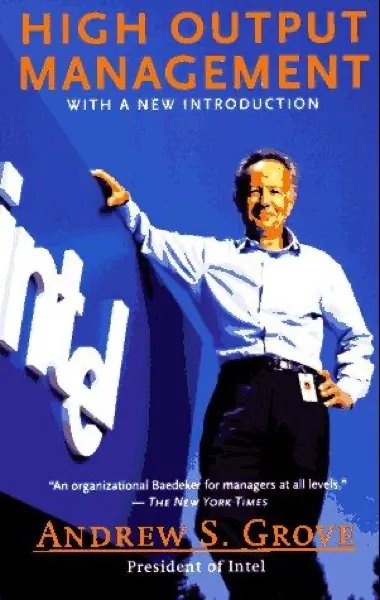
Andrew S. Grove — High Output Management (1983)
Ideas from this book shaped how Intel was run, and Vintage reissued it in 2015, the first new edition since 1995. Its unit of measurement is managerial leverage: your output is the output of the organization beneath you, so an hour spent badly multiplies badly. Ben Horowitz describes its standing in Silicon Valley as almost legendary, and Dominic Cummings pressed it on UK government aides after 2019.
 High Output ManagementAndrew S. Grove
 - 3
Peter F. Drucker — The Effective Executive (1967)
Harper & Row published it in 1967 and almost none of it has dated, because effectiveness is treated as five learnable habits rather than a temperament. Practice four is the one people flinch at: concentrate on the few areas where superior performance produces outstanding results, do first things first, and second things not at all. Practice five wants decisions built on dissenting opinions rather than consensus on the facts.
 Effective ExecutivePeter F. Drucker
 - 4
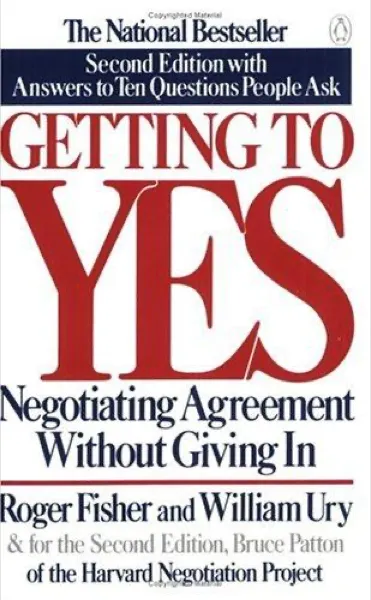
Roger Fisher & William Ury — Getting to Yes (1981)
Houghton Mifflin brought it out in 1981; by 2022 it had sold 15 million copies in more than 35 languages. BATNA, your best alternative to a negotiated agreement, is the idea that survives every objection, because it tells you the point at which walking away beats agreeing. James J. White's 1984 critique still bites, though: the evidence is anecdotal, and the four principles assume a counterpart who wants a deal.
 Getting to yesRoger Drummer Fisher
 - 5
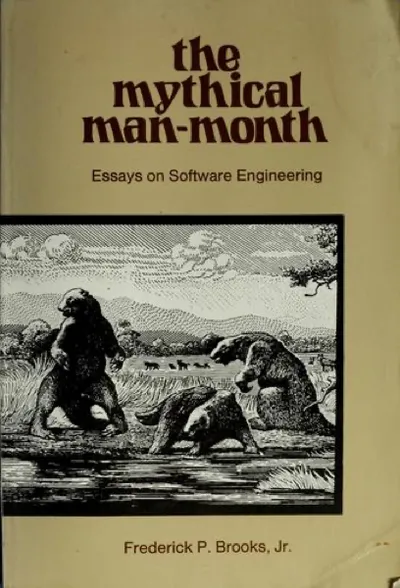
Frederick P. Brooks Jr. — The Mythical Man-Month (1975)
Addison-Wesley published it in 1975 out of the years spent running OS/360 at IBM, and its law, that adding manpower to a late software project makes it later, has outlived every methodology invented to escape it. What makes it honest is chapter 19 of the 1995 anniversary edition, where the author takes his own advice back: don't build one to throw away, the waterfall model is wrong.
 The Mythical Man-MonthFrederick P. Brooks
 - 6
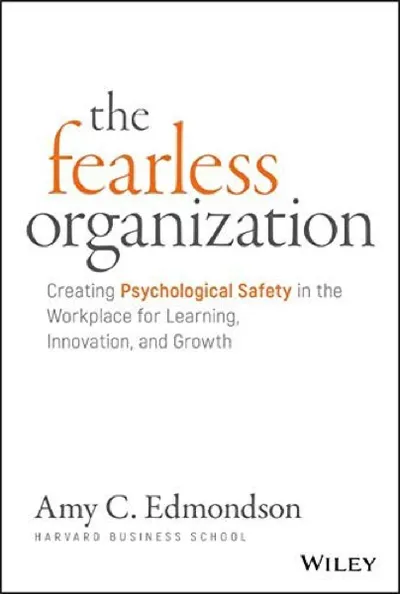
Amy C. Edmondson — The Fearless Organization (2018)
Wiley published it in 2018 and it took a Thinkers50 Breakthrough Idea Award the following year. Psychological safety got its evidence from hospital units, where teams whose members expected not to be punished reported more errors rather than fewer. That was the opposite of the expected result, and it is the finding the whole concept rests on. Later work complicates it: high safety has also been found alongside lower motivation to speak up.
 The Fearless OrganizationAmy C. Edmondson
 - 7
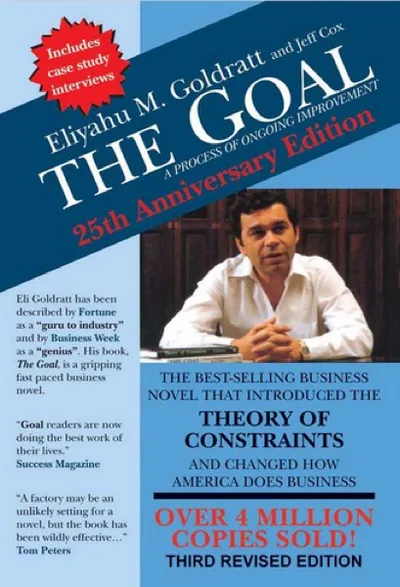
Eliyahu M. Goldratt & Jeff Cox — The Goal (1984)
Odd thing about a title Time ranked among the 25 most influential business management books in 2011: it is a novel, so every case study in it is invented. It works anyway. Alex Rogo has three months to save his plant, and the boy-scout hike carries the lesson: Herbie, the slowest walker, goes to the front of the line and his pack is redistributed. Throughput is set by the constraint.
 The goalEliyahu M. Goldratt
 - 8
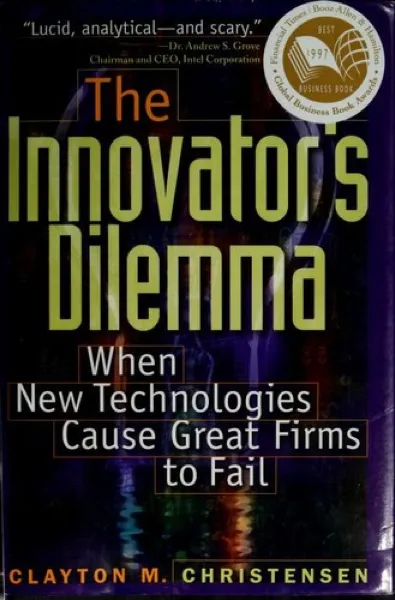
Clayton M. Christensen — The Innovator's Dilemma (1997)
Harvard Business School Press, 1997, winner of that year's Global Business Book Award, and the title here whose case studies have taken the hardest beating. Andrew King and Baljir Baatartogtokh went back over 77 industry cases for MIT Sloan Management Review in autumn 2015, surveying 79 experts, and concluded many did not fit four of the theory's own key elements. Jill Lepore got there first in 2014.
 The Innovator's DilemmaClayton M. Christensen
 - 9
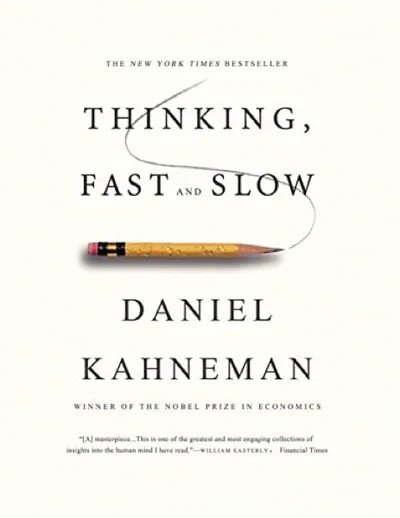
Daniel Kahneman — Thinking, Fast and Slow (2011)
Won the 2012 National Academies Communication Award, then watched chapter 4, The Associative Machine, come apart in the replication crisis, with one analysis putting its replicability index at 14. Its author conceded the point in 2017, saying he had placed too much faith in underpowered studies. Skip the priming, but keep System 1 and System 2, the planning fallacy and WYSIATI, which explain more bad forecasts than any process fix.
 Thinking, fast and slowDaniel Kahneman
 - 10
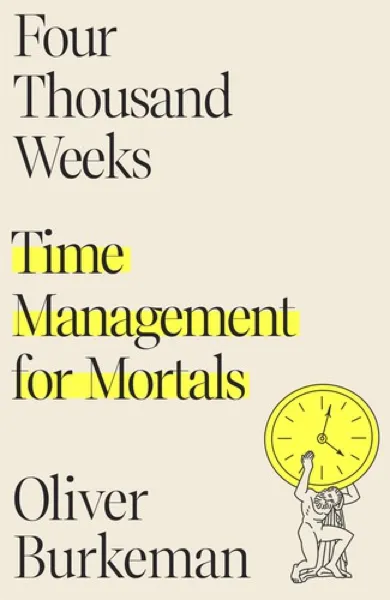
Oliver Burkeman — Four Thousand Weeks (2021)
Farrar, Straus and Giroux published it in 2021 and Time put it among its 100 must-read books of that year. Arithmetic does the argument: live to eighty and you get roughly four thousand weeks, which is a limit to accept rather than a productivity problem to solve. Cosmic insignificance therapy is the phrase, and since almost nothing you do matters cosmically, it reads as permission rather than despair.
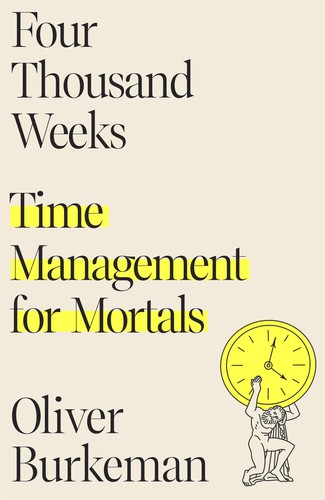 Four Thousand WeeksOliver Burkeman
 - 11

Marc Levinson — The Box (2006)
Princeton University Press published it in 2006, shortlisted that year for the Financial Times and Goldman Sachs Business Book of the Year, with a second edition in 2016. Malcom McLean's converted T-2 tanker Ideal X sailed from Port Newark to Houston on 26 April 1956 carrying 58 containers. Offshoring, ports and the shape of a supply chain all follow downstream from making distance cheap.
 The BoxMarc Levinson
 - 12
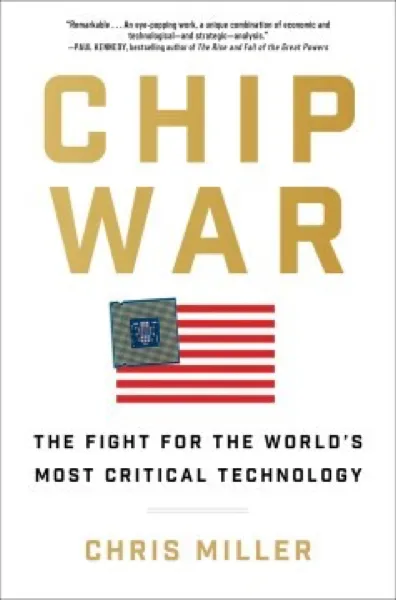
Chris Miller — Chip War (2022)
Financial Times Business Book of the Year in 2022, and it earned that: semiconductors read as the spine of seventy years of geopolitics, from the transistor in 1947 to TSMC's fabs. Barry Eichengreen's objection is the honest one to hold alongside it. The manuscript closed before the US export controls that followed, so the book draws no conclusion about whether those controls work.
 Chip WarChris Miller
 - 13
Zeke Faux — Number Go Up (2023)
Currency published it on 12 September 2023, and the reporting is what makes it: $20,000 of family money spent on a Bored Ape christened Dr. Scum, then a visit to a scam compound in Cambodia. Tether is the thread. Fortune's reviewer called the book shallow and thought blaming Tether for pig-butchering was like campaigning against $100 bills, an objection worth carrying while you read.
Number Go UpZeke Faux
How this list was ranked
Readers rank this list by voting items up and down. Items are ordered by reader votes.