Books Everyone Claims to Have Read
Fifteen books more often claimed than finished, ranked to start an argument. Vote the order straight if you actually reached the last page. What is measured here is the gap between the claim and the ending: length, reputation, and the social credit a title buys in a room. Nothing is here for being bad. Several are among the best books ever written, and greatness and abandonment turn out to be entirely compatible. The top three are wrong on purpose. Every item carries one looked-up figure about the act of reading the thing, whether that is a page count from a named edition, a survey rank or an abandonment statistic. Where the famous number rests on something shakier than it sounds, the item says so rather than pretending. Nineteen Eighty-Four and Moby-Dick are absent because neighboring ListWorld lists own them. Finnegans Wake finishes last for the one honest reason on the page.
Stephen Hawking — A Brief History of Time (1988) is #1 on “Books Everyone Claims to Have Read”.
- 1
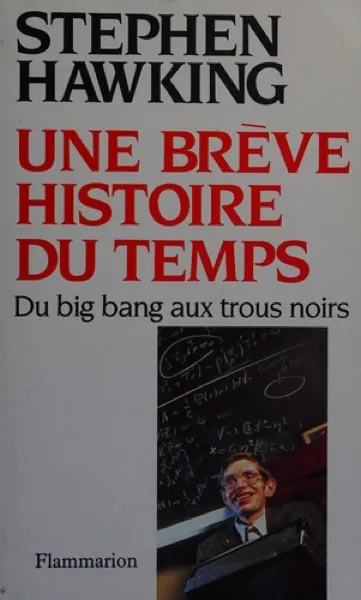
Stephen Hawking — A Brief History of Time (1988)
Twenty-five million copies in forty languages, and exactly one equation: warned that every formula would halve his readership, Hawking kept only E=mc². Jordan Ellenberg's 2014 Hawking Index, built from where Kindle highlights stop, scored it 6.6 percent, and the index carries this book's name even though the book placed fourth on Ellenberg's own sample. It is lucid and it is short, and it still gets put down somewhere around the light cones.
 A Brief History of TimeStephen Hawking
 - 2
Marcel Proust — In Search of Lost Time (1913–1927)
Seven volumes, 4,215 pages in the standard edition, and the Guinness World Record for the longest novel ever published, which is both the problem and the appeal. Most people stop after Swann's Way, having met the madeleine and concluded the point was made. It was not made. Proust published the first volume in 1913 and the last in 1927, five years after his own death.
In Search of Lost TimeMarcel Proust - 3
James Joyce — Ulysses (1922)
Shakespeare and Company published it on 2 February 1922, Joyce's fortieth birthday, in a run of 1,000 numbered copies; that same press's 1924 printing runs to 758 pages. Eighteen episodes, and the last of them, Molly Bloom in bed, arrives in eight paragraphs with almost no punctuation, which is where bookmarks stop moving. Consensus would put it first. Third is fairer, because its claimers usually did try.
 UlyssesJames Joyce
 - 4
David Foster Wallace — Infinite Jest (1996)
Little, Brown published 1,079 pages in 1996, with 388 endnotes at the back, some of them carrying footnotes of their own, so a reader needs two bookmarks and a strong wrist. The Entertainment, a film cartridge so absorbing that viewers stop doing anything else and die, is a joke aimed squarely at the object in your hands. Fourth rather than first, because the quitters here admit where they quit.
 Infinite JestDavid Foster Wallace
 - 5
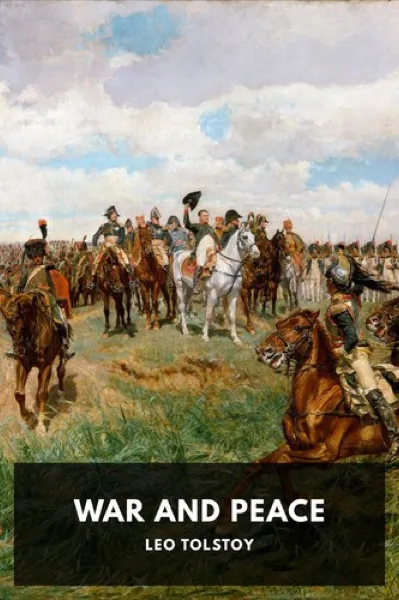
Leo Tolstoy — War and Peace (1869)
Fourth on the BBC Store's poll of 2,000 Britons naming books they had lied about reading, reported in 2016, behind Alice in Wonderland of all things. Everyone blames the French; only about two percent of the text is French, and Tolstoy stripped even that from an 1873 revision before restoring it. What actually stops people is the second epilogue, an essay on historical causation with no story in it.
 War and PeaceЛев Толстой
 - 6
Thomas Piketty — Capital in the Twenty-First Century (2013)
Éditions du Seuil brought it out in French in August 2013; Harvard published Arthur Goldhammer's translation in 2014, and 1.5 million copies had sold by January 2015. Ellenberg scored it lowest of anything he measured, 2.4 percent by one report and 2.6 by another, because Kindle highlights stopped near page 26 of roughly 700. Take that gently: the inequality r > g lands early, and marking up is not finishing.
 Le capital au XXIe siècleThomas Piketty
 - 7
J. R. R. Tolkien — The Lord of the Rings (1954–1955)
Third on that same BBC Store poll, and the mechanism is not mysterious: three films did the claiming. HarperCollins's one-volume 2021 edition runs 1,248 pages, appendices included, and they are not optional if you want the ending to land. Where readers actually stall is the Council of Elrond, a long chapter of seated exposition arriving early in the second book.
 The Lord of the RingsJ.R.R. Tolkien
 - 8
Miguel de Cervantes — Don Quixote (1605–1615)
Writers from 55 countries, polled by the Norwegian Nobel Institute in 2002, voted it the greatest work of fiction ever written, and something over 500 million copies have been printed since Part One appeared in 1605. Part Two, from 1615, is the better half and the one nobody reaches: it is where Quixote starts meeting people who have read the first volume. Open Library's 2014 Lerner edition runs 1,292 pages.
 Don Quijote de la ManchaMiguel de Cervantes Saavedra
 - 9
Fyodor Dostoyevsky — The Brothers Karamazov (1880)
Eight hundred and twenty-four pages in Farrar, Straus and Giroux's 2002 Pevear and Volokhonsky translation, serialized in The Russian Messenger from January 1879 to November 1880, with its author dead less than four months after publication. The Grand Inquisitor sits in Book V: Ivan's poem about Christ returning to Seville and being arrested for it. Almost everyone has read that. Almost nobody has read the trial.
 Братья КарамазовыФёдор Достоевский
 - 10
Victor Hugo — Les Misérables (1862)
655,478 words in the original French, and by one count 955 of its 2,783 pages are essay rather than story: nineteen chapters on the Battle of Waterloo whose connection to the plot arrives in the last paragraph of them, then a guided descent into the Paris sewers. Published across five volumes in 1862. Skipping the digressions is allowed. Claiming you read them is the subject of this list.
 Les MisérablesVictor Hugo
 - 11
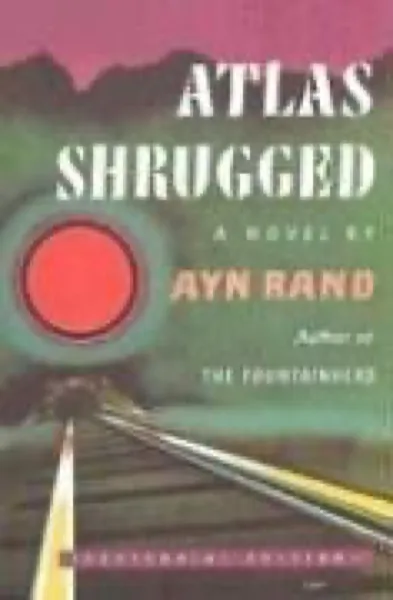
Ayn Rand — Atlas Shrugged (1957)
Random House printed 100,000 copies on 10 October 1957 at 1,168 pages, and sales had passed ten million by 2022. Rand spent more than two years on John Galt's radio address, finishing the speech on 13 October 1955, and in the finished novel it is the wall most readers hit. It is simultaneously the most quoted passage in the book and the most reliable place to close the cover.
 Atlas Shrugged (Centennial Ed. HC)Ayn Rand
 - 12
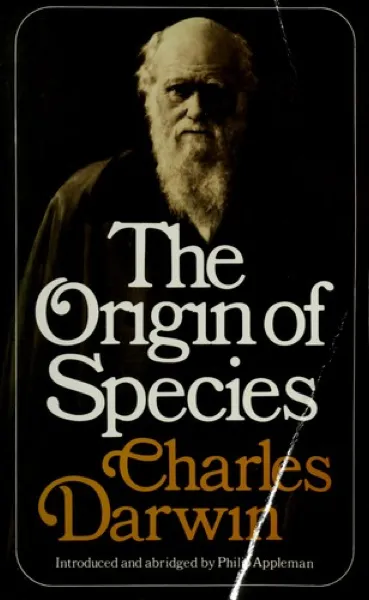
Charles Darwin — On the Origin of Species (1859)
John Murray's first printing of 1,250 copies was taken up by booksellers on 22 November 1859, two days ahead of publication, and Darwin revised through six editions in his lifetime; Open Library's record of Murray's 1869 printing runs 596 pages. Anyone can state the argument. Rather fewer have got as far as the full title's second half, the Preservation of Favoured Races in the Struggle for Life, which does work the shorthand quietly loses.
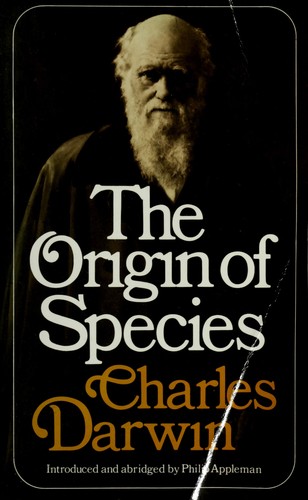 On the origin of species by means of natural selectionCharles Darwin
 - 13
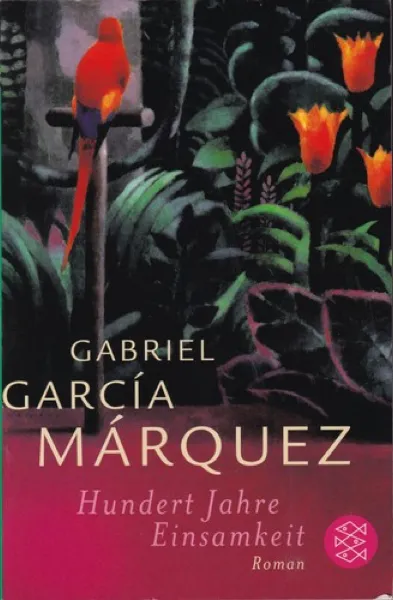
Gabriel García Márquez — One Hundred Years of Solitude (1967)
Editorial Sudamericana published it in Buenos Aires in May 1967; Gregory Rabassa's English followed in 1970, and it has since sold more than 50 million copies across 46 languages. Why people stall is measurable: the Buendía family tree carries the name Aureliano twenty-two times and José Arcadio four. Anyone who finished it has flipped backwards at least once, and probably lied about that too.
 Cien años de soledadGabriel García Márquez
 - 14
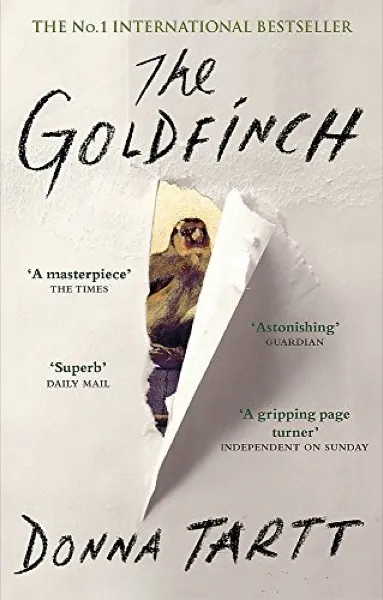
Donna Tartt — The Goldfinch (2013)
Kobo's 2014 data found fewer than half its Canadian and British readers reached the end of a novel that had just taken the Pulitzer. Ellenberg's index rates it his most-read title at 98.5 percent, but that measures how widely people highlight, where Kobo counted pages actually turned. Little, Brown's 2013 first edition runs 771 pages, and Carel Fabritius's small chained bird, stolen early, is the image everyone can describe.
 The GoldfinchDonna Tartt
 - 15
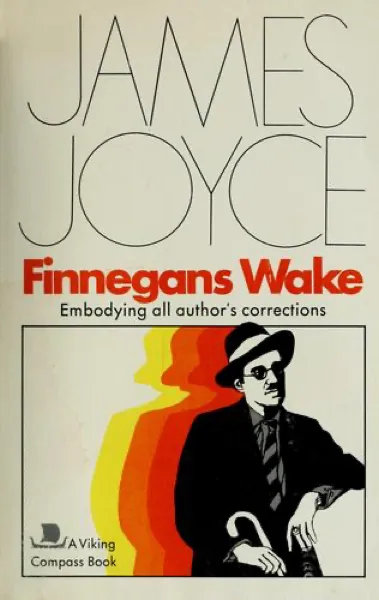
James Joyce — Finnegans Wake (1939)
Seventeen years of writing, 628 pages in Faber and Faber's first edition of 4 May 1939, and composite words drawing on some sixty to seventy languages. It ends mid-sentence, on a way a lone a last a loved a long the, completing by running back into riverrun on page one. Last place is not an insult: it is the only book here almost nobody bothers to lie about, which is what makes it the control.
 Finnegans WakeJames Joyce
How this list was ranked
Readers rank this list by voting items up and down. Items are ordered by reader votes.