The Best Small Towns in Texas
Fifteen Texas towns, ranked on walk-to-payoff: how much of a place you get without moving the car again. Vote the order into shape. Two tiers do the work. Everything in the top ten is a one-stop town, where whatever it is known for sits within a walk of one parking spot, and inside that tier the ranking follows how much there is to see on that walk. Comfort's downtown holds well over a hundred 19th-century buildings, Luckenbach holds one general store. The bottom five are two-stop towns, where the headline needs the car again: Blue Bell out past Brenham's center, the footprints upriver from Glen Rose. Inside that tier the ranking follows how much the walkable center gives you on its own. Ties break on whether the walk still works on an ordinary Tuesday. Fredericksburg and Marfa sit on The Best Weekend Getaways in Texas and stay there. Two Brewster County towns made it and no more. Every entry says whether it is an incorporated city, a village or an unincorporated place.
Comfort is #1 on “The Best Small Towns in Texas”.
- 1
Comfort
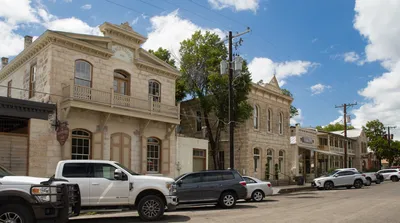
Seven buildings in the downtown business district came off the drawing board of architect Alfred Giles, and the structures around them run to well over a hundred, all dating to the 19th century. German Freethinkers and abolitionists settled the spot in 1854, and their politics got them killed: the Treue der Union Monument honors 35 men who died at the Battle of the Nueces after opposing secession. Park once and this unincorporated community is done.
 Comfort, Texas - Wikipediahttps://en.wikipedia.org/wiki/Comfort,_Texas
 - 2
Granbury
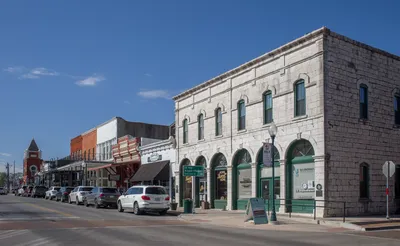
Twelve acres of courthouse square in this city went onto the National Register on June 5, 1974, and Wesley Clark Dodson's Second Empire courthouse of 1890 to 1891 anchors it in Brazos limestone. Four sides of shopfronts, with the Granbury Opera House still running Broadway productions on one of them. An hour does the circuit without moving the car.
 Granbury, Texas - Wikipediahttps://en.wikipedia.org/wiki/Granbury,_Texas
 - 3
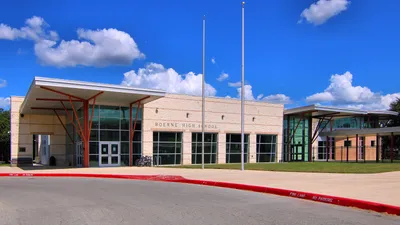
Boerne
Two courthouses face each other across a single street here: the 1870 limestone one, second-oldest in Texas, by architects Philip Zoeller and J. F. Stendebach, and the 1998 building that replaced it. German Free Thinkers founded the city as Tusculum in 1849 and renamed it in 1852 for the satirist Ludwig Börne. The Hill Country Mile runs the historic Main Street past both, and the show caves people drive out for are the weaker half of the day.
 Boerne, Texas - Wikipediahttps://en.wikipedia.org/wiki/Boerne,_Texas
 - 4
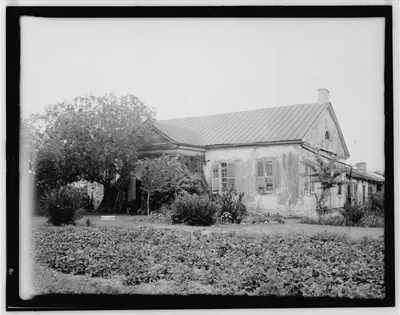
Castroville
Alsatian settlers under empresario Henri Castro reached the Medina River on September 2, 1844, and the compact grid of the city they founded still carries their steep-roofed houses. Walk it and you pass St. Louis Catholic Church and the Landmark Inn, where the Vance family added a second story in 1874 to take overnight guests. It reopened under that name on July 4, 1942, and it books rooms yet.
 Castroville, Texas - Wikipediahttps://en.wikipedia.org/wiki/Castroville,_Texas
 - 5
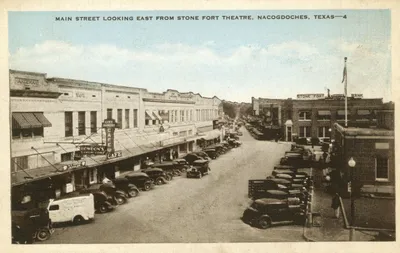
Nacogdoches
Calling itself the Oldest Town in Texas is a large claim, and the date behind it is the spring of 1779, when Antonio Gil Y'Barbo led settlers back to the site. His stone house is long gone. The replica on the Stephen F. Austin State University campus was dedicated on October 16, 1936 and works as a museum. Downtown to the Old Stone Fort is a short walk, and the students keep this city awake midweek.
 Nacogdoches, Texas - Wikipediahttps://en.wikipedia.org/wiki/Nacogdoches,_Texas
 - 6
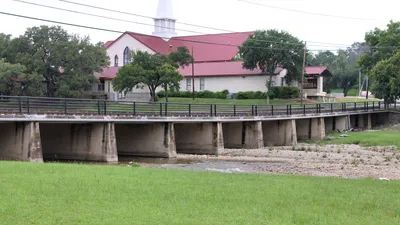
Salado
Incorporation came in 1867 for one reason: to build a bridge across Salado Creek. That tells you what kind of village this is, arranged around water and not much bothered about anything else. Chisholm Trail herds came through between 1866 and 1885, and the Stagecoach Inn was one of the stops on the route. Archibald Willingham had settled the spot in 1850, first of the Anglo-American arrivals. Main Street, the creek and the inn are minutes apart on foot.
 Salado, Texas - Wikipediahttps://en.wikipedia.org/wiki/Salado,_Texas
 - 7
Bandera
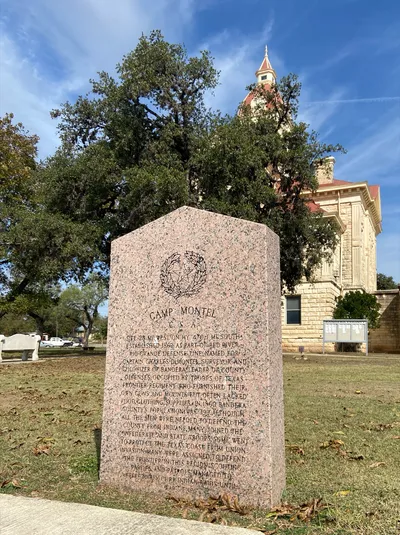
St. Stanislaus Catholic Church went up a few blocks off Main Street, built by the Polish Roman Catholic immigrants from Silesia who founded this city in 1855. Odd origin story for somewhere that bills itself the Cowboy Capital of the World, a claim it dates to its years as a staging area for the Great Western Cattle Trail. Main Street is short and the Medina River runs along the edge, 47 miles northwest of downtown San Antonio.
 Bandera, Texas - Wikipediahttps://en.wikipedia.org/wiki/Bandera,_Texas
 - 8
Archer City
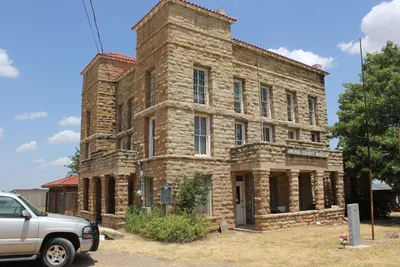
Larry McMurtry opened a second Booked Up here in 1988 and built it to between 400,000 and 450,000 titles, then auctioned most of the stock on August 10 and 11, 2012. The city he grew up in became Thalia in his novels, and the location for The Last Picture Show in 1971 and Texasville in 1990. Branch Tanner Archer, a commissioner for the Republic of Texas, supplied the name. What survives is on the courthouse square.
 Archer City, Texas - Wikipediahttps://en.wikipedia.org/wiki/Archer_City,_Texas
 - 9
Luckenbach
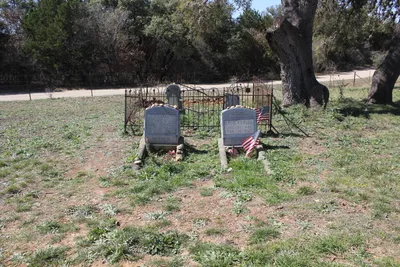
Bought outright in 1970 for $30,000 by actor Guich Koock, humorist Hondo Crouch and rancher Kathy Morgan, after a newspaper advert offered the place as a town with a population of three. Its oldest building is a combination general store and saloon opened by Minna Engel, 1849 by legend and 1886 by the land improvement records. The post office shut on April 30, 1971 and took zip code 78647 with it. Everything this unincorporated town has sits in one yard.
 Luckenbach, Texas - Wikipediahttps://en.wikipedia.org/wiki/Luckenbach,_Texas
 - 10
Marathon
Rancher Alfred S. Gage hired El Paso architect Henry Trost to put up a hotel out here, and the Gage Hotel opened in 1927. It doubled as Gage's office until he died the following year. Around it sits a census-designated place of a few blocks, first counted as one in the 2000 census. Amtrak's Sunset Limited rolls straight through without stopping, and the nearest platform is 30 miles northwest at Alpine.
 Marathon, Texas - Wikipediahttps://en.wikipedia.org/wiki/Marathon,_Texas
 - 11
Johnson City
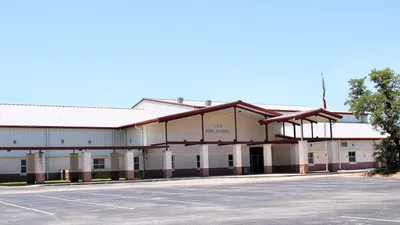
Founded in 1879 by James Polk Johnson, who donated a 320-acre site on the Pedernales River to start it, and named for him rather than for the nephew who became president. That nephew's boyhood home is in town, an 1880s Victorian house he moved into at five, a short walk from the county courthouse. The ranch district lies west of the city, and sources disagree on how far: 12 miles by one account, about fourteen by another.
 Johnson City, Texas - Wikipediahttps://en.wikipedia.org/wiki/Johnson_City,_Texas
 - 12
Alpine
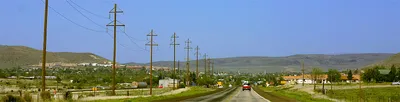
Osborne first, then Murphyville once the railroad cut a deal with brothers Daniel and Thomas Murphy for their spring water, and only then the name it carries now. The city sits at 4,462 feet and grew slowly until Sul Ross State Normal College opened in 1920. On that campus the Museum of the Big Bend keeps a replica of a Quetzalcoatlus; the WPA built its original home in 1937. Amtrak's Sunset Limited stops three times a week.
 Alpine, Texas - Wikipediahttps://en.wikipedia.org/wiki/Alpine,_Texas
 - 13
Brenham
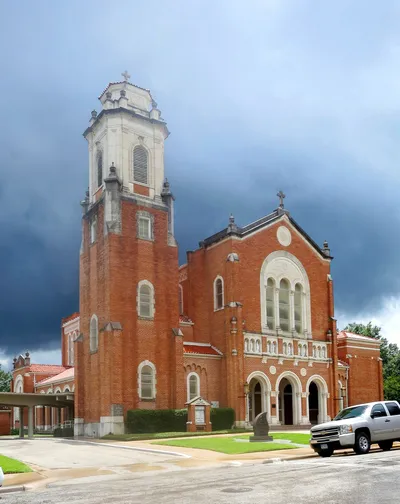
Hickory Grove took a new name in 1843, in memory of Richard Fox Brenham, a local physician who died serving with the Texian militia on the Mier Expedition. Blinn College, the oldest county-owned junior college in Texas, sits inside the city and keeps the streets busy midweek. The catch is Blue Bell Creameries, which is why most people drive over: its headquarters stand out past the walkable part, so the center and the draw are two separate stops.
 Brenham, Texas - Wikipediahttps://en.wikipedia.org/wiki/Brenham,_Texas
 - 14
Goliad
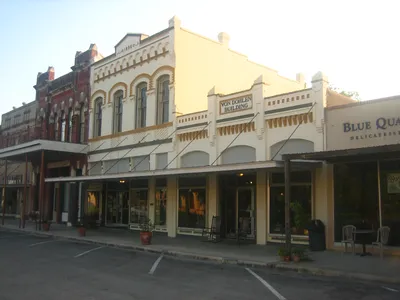
Renamed in 1829 from La Bahía, apparently an anagram of Hidalgo with the silent H dropped, honoring the priest Miguel Hidalgo. The county-seat square of this city is ordinary enough; the reason to stop is the fort at the edge of town, where Presidio La Bahía has stood since roughly October 1749 and where 303 men were shot on Palm Sunday of 1836. Kathryn O'Connor paid for the 1963-68 restoration, and the presidio runs as a public museum.
 Goliad, Texas - Wikipediahttps://en.wikipedia.org/wiki/Goliad,_Texas
 - 15
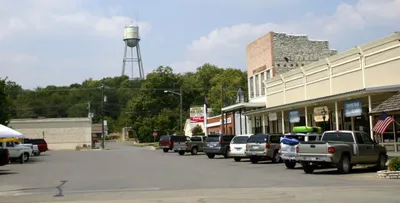
Glen Rose
Charles Barnard put a trading post here in 1849 and a three-story stone gristmill on the Paluxy River, which is why the place answered to Barnard's Mill before anything else. Somervell County formed on March 15, 1875 and made the city its seat. The square is small and the walk is short, because what people come for is upriver: theropod and sauropod footprints in the Paluxy bed at Dinosaur Valley State Park, open to the public since 1972.
 Glen Rose, Texas - Wikipediahttps://en.wikipedia.org/wiki/Glen_Rose,_Texas
How this list was ranked
Readers rank this list by voting items up and down. Items are ordered by reader votes.