MLB Ballparks, Ranked
Rank them on one thing: how much of the city outside gets inside. The view over the wall, the walk to the gate, and whether a park's quirks came from its site or were bolted on by a designer. Not age, not the team, not the trophy case, and the order shows it: a park that opened in 2010 finishes above ones built decades earlier, while two that predate most of this list finish last. Scope is the parks a big-league club actually calls home this season, which is why a borrowed yard in West Sacramento is here and why Ebbets Field is not. You cannot judge a demolished ballpark on what it feels like to walk into one. Not every club is represented either, because this is a ranking rather than a directory. The order is the argument; vote it into the shape you think it deserves.
PNC Park is #1 on “MLB Ballparks, Ranked”.
- 1
PNC Park
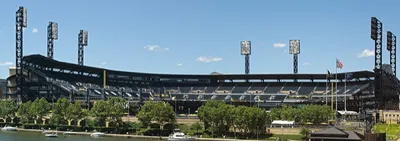
Walk across the Roberto Clemente Bridge, shut to cars on game days, and the whole thing opens onto the Allegheny with downtown Pittsburgh stacked up behind the outfield. Two decks, so nothing hangs between you and the city. The right-field wall is 21 feet high for Clemente's number. A record 40,629 saw the Pirates take the Wild Card game 6-2 on 1 October 2013.
 PNC Park - Wikipediahttps://en.wikipedia.org/wiki/PNC_Park
 - 2
Oracle Park
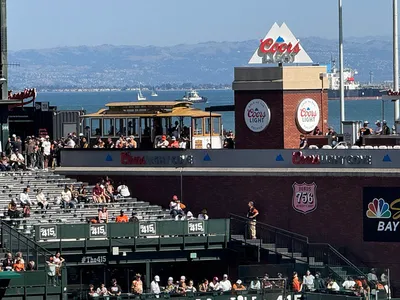
Kayakers bob in McCovey Cove waiting on a ball clearing the 24-foot brick wall in right, built to that height for Willie Mays' number. Fenced archways cut through the brick and open straight onto the Cove. It opened on 31 March 2000 and the bay has been half the show since. Matt Cain threw a perfect game here on 13 June 2012.
 Oracle Park - Wikipediahttps://en.wikipedia.org/wiki/Oracle_Park
 - 3
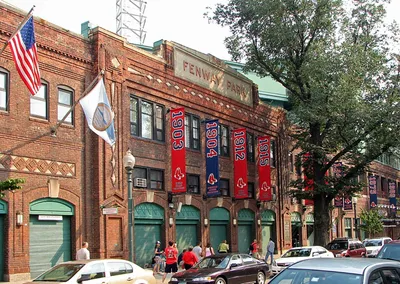
Fenway Park
Lansdowne Street is the reason the Green Monster exists. The wall runs just over 37 feet because the block ended 310 feet from home plate and there was nowhere else for the outfield to go. Every quirk in here is a property line, including the 420-foot Triangle. First pitch was 20 April 1912, and Carlton Fisk waved his Game 6 homer fair off that same wall in the 1975 World Series.
 Fenway Park - Wikipediahttps://en.wikipedia.org/wiki/Fenway_Park
 - 4
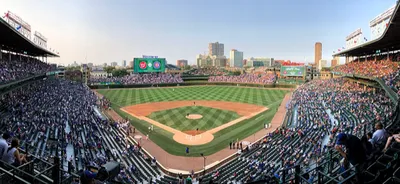
Wrigley Field
Rooftops across Waveland and Sheffield sell seats because the neighborhood got there before the outfield walls did, and since 2004 the building owners have split the take with the Cubs. It opened in 1914 as Weeghman Park. Lights did not arrive until 1988, after 5,687 straight day games, and the switch went on 8 August 1988. The ivy is alive and the scoreboard is still turned by hand.
 Wrigley Field - Wikipediahttps://en.wikipedia.org/wiki/Wrigley_Field
 - 5
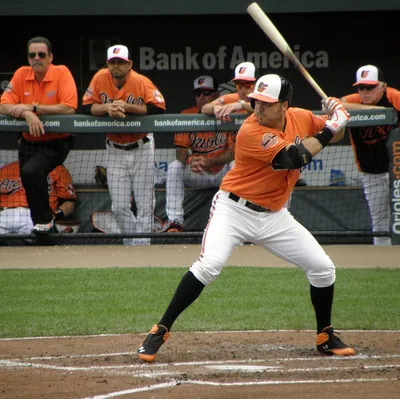
Oriole Park at Camden Yards
A brick warehouse from the old Baltimore and Ohio railroad sits behind right field, and Eutaw Street runs between it and the stands with no traffic on it. Home runs that land out there get a bronze plaque set into the pavement where they stopped. Completed in 1992. Cal Ripken Jr. passed Lou Gehrig's 2,130 consecutive games on 6 September 1995 and homered while doing it.
 Oriole Park at Camden Yards - Wikipediahttps://en.wikipedia.org/wiki/Oriole_Park_at_Camden_Yards
 - 6
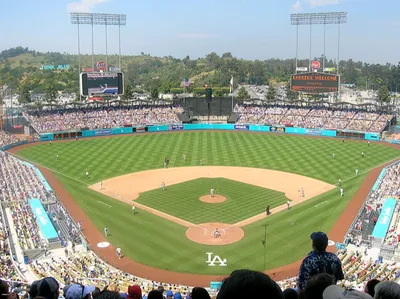
Dodger Stadium
Chavez Ravine handed this one its entire personality: downtown to the south, the tree-lined hills of Elysian Park behind, the San Gabriel Mountains sitting over the outfield pavilions. The terraced lot lets you park level with your own seat and walk straight in without a ramp. It opened in 1962, and Sandy Koufax threw a perfect game here in 1965.
 Dodger Stadium - Wikipediahttps://en.wikipedia.org/wiki/Dodger_Stadium
 - 7
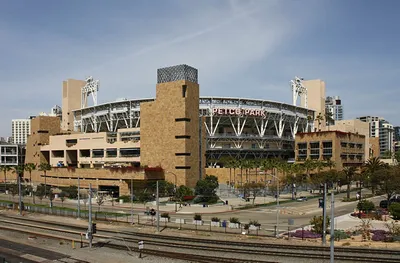
Petco Park
The left-field foul pole is a building. San Diego kept the old Western Metal Supply Co. warehouse and built the park around it, so its southeast corner does the pole's job. Gallagher Square's grass berm above the outfield fence stays open during games. It opened in 2004, and Tim Lincecum no-hit the Padres here on 13 July 2013 while pitching for the visiting Giants.
 Petco Park - Wikipediahttps://en.wikipedia.org/wiki/Petco_Park
 - 8
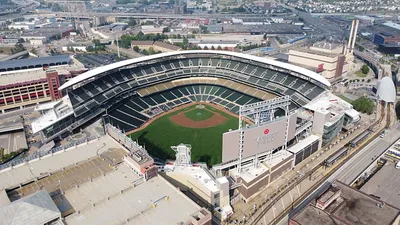
Target Field
Squeezed onto a downtown site roughly the size of Fenway's, hemmed in by rail lines and ramps, so the building bends around Minneapolis instead of flattening a piece of it. Kasota limestone from near Mankato faces the whole thing, and the Minnie and Paul handshake sign revives a logo the Twins wore from 1961 until 1986. It opened in 2010 and hosted the 2014 All-Star Game.
 Target Field - Wikipediahttps://en.wikipedia.org/wiki/Target_Field
 - 9
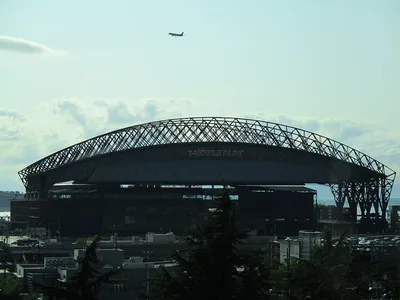
T-Mobile Park
Roofs usually seal a ballpark shut. Seattle's does not. It parks overhead like an umbrella on 128 wheels and leaves the sides open, so wind and cold still get at the field with it closed. Nine acres of cover, 22 million pounds of it. First game was 15 July 1999. Philip Humber threw a perfect game against the Mariners here on 21 April 2012, and Félix Hernández did it for the home side nearly four months later.
 T-Mobile Park - Wikipediahttps://en.wikipedia.org/wiki/T-Mobile_Park
 - 10

Daikin Park
You enter through what used to be Houston's Union Station, and a locomotive runs 800 feet of track along the wall above left field because the rail yard was here first. Then the roof shuts and the city disappears, which is the trade at the park formerly called Minute Maid. The Crawford Boxes sit 315 feet from the plate. On 9 October 2005 the Astros beat Atlanta 7-6 in 18 innings across five hours and fifty minutes.
 Daikin Park - Wikipediahttps://en.wikipedia.org/wiki/Daikin_Park
 - 11
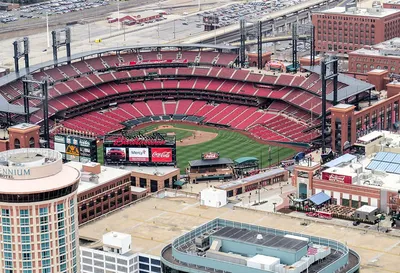
Busch Stadium
St. Louis put the downtown skyline where you cannot miss it, and a bridge resembling the Eads arches over the Gate 3 entrance. Past that, though, the place keeps to itself: a well-mannered brick bowl that borrows more from the view than it gives back. Opened 4 April 2006, and the Cardinals clinched the World Series at home in Game 5 on 27 October that year, 4-2.
 Busch Stadium - Wikipediahttps://en.wikipedia.org/wiki/Busch_Stadium
 - 12
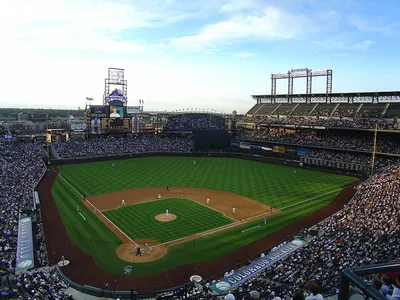
Coors Field
One row of purple seats in the upper deck marks a mile above sea level, which is the most honest thing a ballpark has done about its own strangeness. The brick suits Lower Downtown. The Rocky Mountain scene behind center field, though, is landscaping rather than a view. It opened on 26 April 1995, and Ichiro Suzuki tripled for his 3,000th hit here on 7 August 2016.
 Coors Field - Wikipediahttps://en.wikipedia.org/wiki/Coors_Field
 - 13
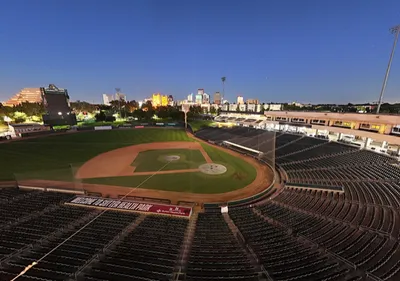
Sutter Health Park
Berms instead of stands in both outfield corners, so little gets between the seats and the water. The Sacramento River runs past, the state capitol sits across it, and the city skyline shows from the grandstand. Old warehouses and rail yards had the ground first. Everything the Athletics added for their 2025-through-2027 stay is interior, which is why a borrowed setting lands here and no higher. First home game, 31 March 2025, an 18-3 loss to the Cubs.
 Sutter Health Park - Wikipediahttps://en.wikipedia.org/wiki/Sutter_Health_Park
 - 14
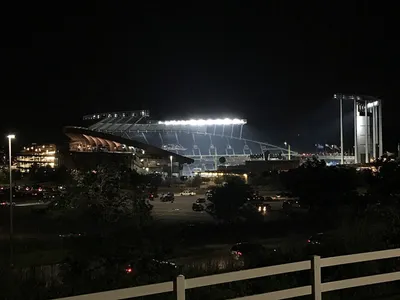
Kauffman Stadium
Nothing surrounds it but parking. The Truman Sports Complex shares a lot with Arrowhead next door, so there is no neighborhood to let in and the park had to build its own view: 322 feet of fountain and waterfall behind the right-field fence. It opened in 1973 as Royals Stadium. In the 2014 Wild Card Game the Royals trailed 7-3 in the eighth and won 9-8.
 Kauffman Stadium - Wikipediahttps://en.wikipedia.org/wiki/Kauffman_Stadium
 - 15
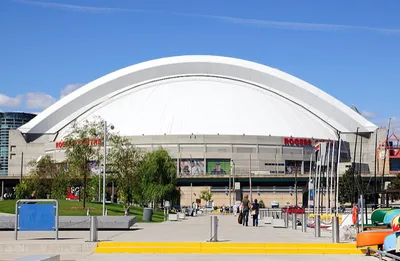
Rogers Centre
The CN Tower is right outside and you would never guess it from your seat. Three of its four roof panels move and take twenty minutes about it, the acoustics argue with themselves, and 70 hotel rooms look down on the field like an aquarium. It opened in 1989. Joe Carter ended the World Series here on 23 October 1993 with a walk-off off Mitch Williams, and the building has traded on it since.
 Rogers Centre - Wikipediahttps://en.wikipedia.org/wiki/Rogers_Centre
 - 16
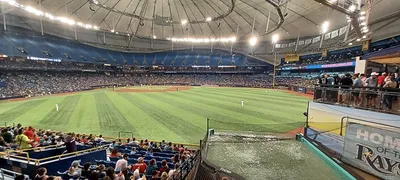
Tropicana Field
Hurricane Milton tore the roof membrane off on 9 October 2024, the Rays spent 2025 playing in Tampa, and repairs got them back for opening day on 6 April 2026. What they returned to is a dome tilted toward the outfield to hold cooling costs down, with four catwalks strung overhead: hit the C or D ring between the poles and it counts as a home run. No view, by design.
 Tropicana Field - Wikipediahttps://en.wikipedia.org/wiki/Tropicana_Field
How this list was ranked
Readers rank this list by voting items up and down. Items are ordered by reader votes.