The Best Inventions of the 21st Century
Ranked oldest first by the year each thing worked, not the year someone had the idea. Vote it into a different shape if you think the rule is wrong. Every entry quotes its own article for the date the thing first worked — a first demonstration, release, approval or sale. It admits the e-cigarette, patented in 1927 and sold from 2004, and the memristor, named in 1971 and reported working in 2007. It throws graphene out: the article says that form of carbon occurs naturally, and 2004 is when it was first isolated, which makes it a material somebody found rather than a device or technique somebody made. It is the most arguable call here. Branded consumer product lines are out, the Roomba kind, where an entry is really one company's retail range. Falcon 9 and Ingenuity are branded too, and neither is retail, so both are in. Same-year items go alphabetically by article title. Nothing is ranked by importance: a cure and a rotorcraft share no unit, so the sorting is yours. The medical skew is real and deliberate.
Capsule endoscopy is #1 on “The Best Inventions of the 21st Century”.
- 1
Capsule endoscopy
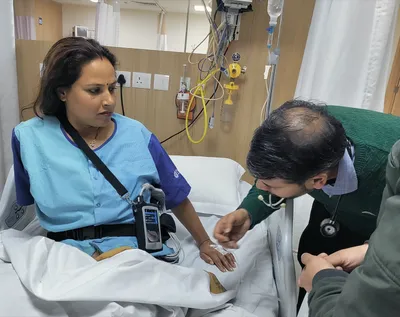
Swallow a camera the size of a large pill and it photographs the small intestine on the way through. The article hands the date to a regulator — in 2001 the FDA approved the first capsule endoscope developed by Given Imaging, later commercialized as the PillCam. That is the earliest qualifying date anywhere in this order, which is why it opens.
 Capsule endoscopy - Wikipediahttps://en.wikipedia.org/wiki/Capsule_endoscopy
 - 2
E-cigarette
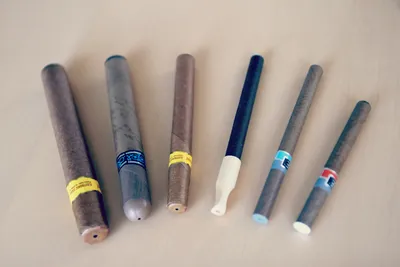
Joseph Robinson filed a patent for an electronic vaporizer in 1927 and Herbert Gilbert filed one for a smokeless non-tobacco cigarette in 1963, and neither produced anything a person could buy. The device that worked came much later — the article says so flatly, and the e-cigarette was first introduced to the Chinese domestic market in 2004. Dating it from the market rather than the patent is this list's rule working in public.
 Electronic cigarette - Wikipediahttps://en.wikipedia.org/wiki/Electronic_cigarette
 - 3
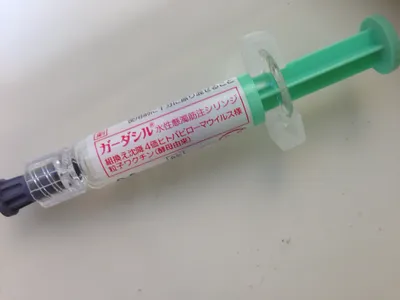
HPV vaccine
Cancer prevention by injection sounded implausible right up until it shipped. The article dates it twice over: in 2006 the FDA approved the first preventive HPV vaccine, marketed by Merck & Co. under the trade name Gardasil, and its summary line is blunt about it — the first HPV vaccine became available in 2006. Availability is the qualifying event, and the research behind it does not count.
 HPV vaccine - Wikipediahttps://en.wikipedia.org/wiki/HPV_vaccine
 - 4
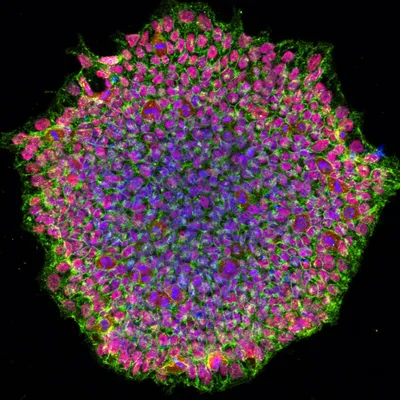
Induced pluripotent stem cells
An ordinary skin cell, four added genes, and you have a cell that can become almost any other kind. Credit in the article goes to Shinya Yamanaka and Kazutoshi Takahashi, who showed in 2006, in Kyoto, that c-Myc, Oct4, Sox2 and KLF4 together turn a somatic cell pluripotent. It earns its place on a demonstration rather than an approval — both count equally here.
 Induced pluripotent stem cell - Wikipediahttps://en.wikipedia.org/wiki/Induced_pluripotent_stem_cell
 - 5
Metamaterial cloaking
Invisibility in the narrow engineering sense — bending radiation around an object so that it casts no shadow and throws back no reflection. The article gives a date to the day, saying the principle of cloaking, with a cloaking device, was first proved at frequencies in the microwave radiation band on October 19, 2006. Microwaves are not visible light, and the apparatus that proved it is not a cloak anyone can wear.
 Metamaterial cloaking - Wikipediahttps://en.wikipedia.org/wiki/Metamaterial_cloaking
 - 6
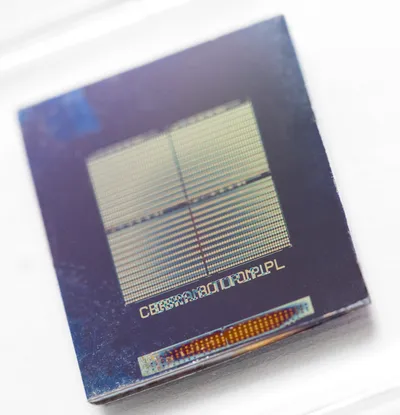
Memristor
Leon Chua described and named it in 1971 as the missing fourth circuit element, and it stayed theory for decades. Two later dates sit in the article and the earlier one rules — interest revived when an experimental solid-state version was reported by R. Stanley Williams of Hewlett Packard in 2007. HP Labs found experimental evidence for the component in 2008, so 2007 rather than 2008 fixes the rank.
 Memristor - Wikipediahttps://en.wikipedia.org/wiki/Memristor
 - 7
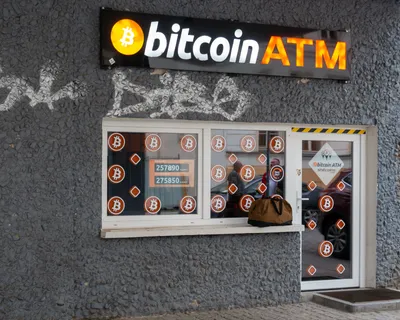
Bitcoin
Whoever Satoshi Nakamoto is, the white paper landed in 2008 and nobody has matched that name to a person since. The date that ranks it is the one the article gives next — use of bitcoin as a currency began in 2009, with the release of its open-source implementation. Running code is the working instance, and 2009 is when the code started running.
 Bitcoin - Wikipediahttps://en.wikipedia.org/wiki/Bitcoin
 - 8
Falcon 9
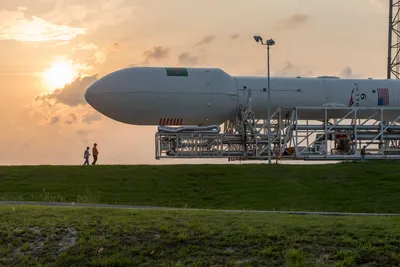
Reusable boosters are the point, and the article dates the vehicle by its debut — the first Falcon 9 launch was on June 4, 2010. The landing everyone remembers came later, in December 2015, when a booster touched down on a ground pad near the launch site on flight 20 and was recovered. First flight is the qualifying event, so 2010 is where it sits.
 Falcon 9 - Wikipediahttps://en.wikipedia.org/wiki/Falcon_9
 - 9
CRISPR gene editing
The famous dates here are a 2012 patent filing and a 2020 Nobel Prize, and neither of them is a thing working. What the article does state is this — successful CRISPR-Cas9 genome editing was first achieved in plants in August 2013. Regulators arrived much later, when the UK's MHRA approved Casgevy in November 2023, the first drug based on the technique.
 CRISPR gene editing - Wikipediahttps://en.wikipedia.org/wiki/CRISPR_gene_editing
 - 10
Cultured meat
Growing animal tissue in a vat was a laboratory result long before it was a product. The prototype is what the article dates — in 2013 Mark Post created a hamburger patty made from tissue grown outside of an animal. Selling any of it took until December 2020, when the world's first commercial sale of cell-cultured meat happened at the Singapore restaurant 1880.
 Cultured meat - Wikipediahttps://en.wikipedia.org/wiki/Cultured_meat
 - 11
Sofosbuvir
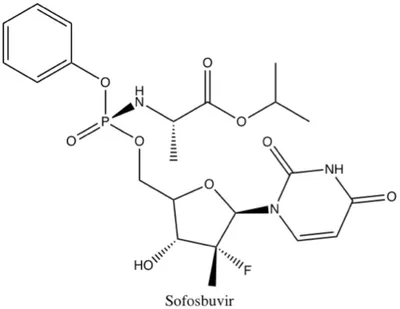
Hepatitis C went from a chronic infection to a course of tablets you finish. Both dates sit in one line of the article — sofosbuvir was discovered in 2007 and approved for medical use in the United States in 2013. Discovery is not a qualifying event under the rule, so the approval year is what places it, and the name on the box is Sovaldi.
 Sofosbuvir - Wikipediahttps://en.wikipedia.org/wiki/Sofosbuvir
 - 12
Nanopore sequencing
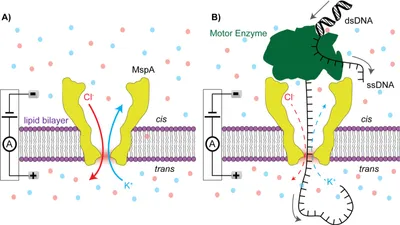
Thread a DNA strand through a protein pore, measure the current across it, and read the bases off the signal. The plan was sketched in 1989 and the term coined in 1999, and neither of those is hardware. The article puts the working date on the product — Bayley co-founded Oxford Nanopore, and in 2014 the company released its first portable nanopore sequencing device.
 Nanopore sequencing - Wikipediahttps://en.wikipedia.org/wiki/Nanopore_sequencing
 - 13
Automated insulin delivery
A glucose sensor, an insulin pump, and a control loop joining them — which is why people call it an artificial pancreas. Per the article the qualifying date is a regulatory one: in September 2016 the FDA approved the Medtronic MiniMed 670G, the first approved hybrid closed loop system. The page now sits under the title Automated insulin delivery system, so the phrase a reader searches for and the phrase on the article no longer match.
 Automated insulin delivery system - Wikipediahttps://en.wikipedia.org/wiki/Automated_insulin_delivery_system
 - 14
Semaglutide
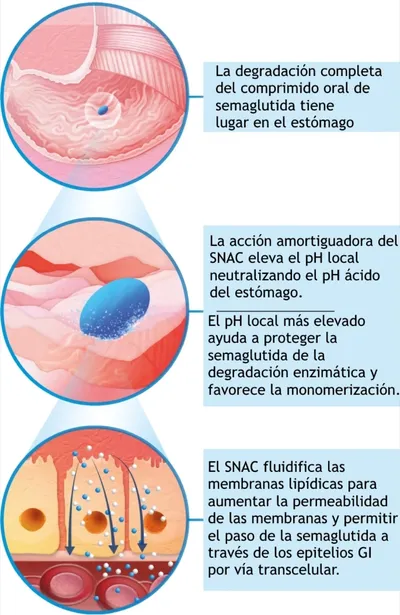
Weight-loss coverage arrived years after the drug itself did. The article's own date is the diabetes one: in December 2017 the injectable version with the brand name Ozempic was approved in the US for use by people with diabetes. Wegovy, the weight-management brand, came afterwards, and diabetes approval is the first working instance stated, so the position is fixed at 2017.
 Semaglutide - Wikipediahttps://en.wikipedia.org/wiki/Semaglutide
 - 15
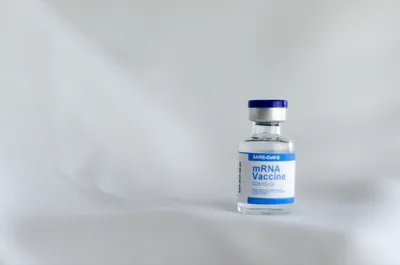
mRNA vaccine
Two sentences in the article carry the whole date between them. In December 2020 Pfizer–BioNTech and Moderna obtained authorization for their mRNA-based COVID-19 vaccines; on 2 December the UK's MHRA became the first medicines regulator to approve an mRNA vaccine. The year comes from the first of those and the day from the second, and the decades of chemistry behind both are research this order does not touch.
 mRNA vaccine - Wikipediahttps://en.wikipedia.org/wiki/MRNA_vaccine
 - 16
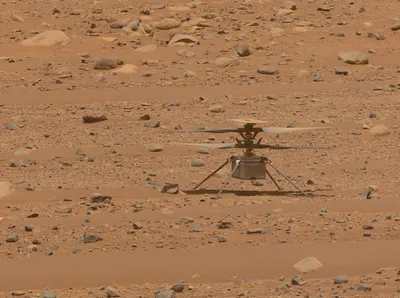
Ingenuity
Nobody had flown an aircraft on another planet before this one. The first flight came on 19 April 2021, and the article claims the record in plain terms: the first aircraft to conduct a powered and controlled extraterrestrial flight, in an atmosphere thin enough to make that genuinely hard. It operated on Mars from 2021 to 2024, and no qualifying date here is later.
 Ingenuity (helicopter) - Wikipediahttps://en.wikipedia.org/wiki/Ingenuity_(helicopter)
How this list was ranked
Readers rank this list by voting items up and down. Items are ordered by reader votes.