The Best Books to Give as Gifts
Fourteen books to give to somebody whose taste you cannot guess, ranked by how safely each one lands and by whether the object itself feels like a present. Vote the order around. Every entry names the edition and its publisher, because here the edition is the recommendation: a slipcased three-volume set, a hardback too tall for a shelf, letters you pull out of glued-in envelopes, a Taschen volume that needs two hands. Ranking weighed how many different people a book suits against how good it is to unwrap and hold; ties went to whichever I have actually given more than once. Left out on purpose: anything that assumes the recipient already likes a genre, anything that only exists as a file, and this season's prize winner, which will be remaindered by spring. Five of the fourteen are nonfiction, six work for a child as readily as an adult, and four suit a person who does not read much.
Bill Watterson — The Complete Calvin and Hobbes (2005) is #1 on “The Best Books to Give as Gifts”.
- 1
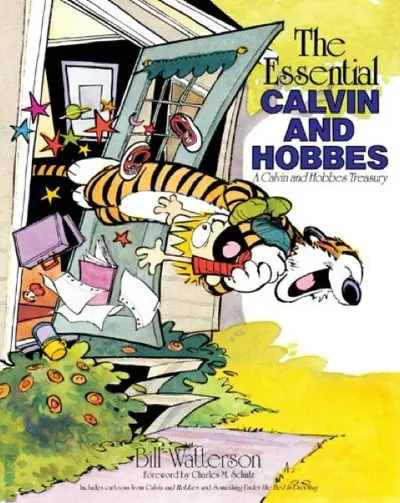
Bill Watterson — The Complete Calvin and Hobbes (2005)
A cardboard box turned upside down, its label crossed out and rewritten, is the Transmogrifier, and it tells you what kind of mind is at work here. Andrews McMeel's 2005 edition puts the strips into three hardcovers in one slipcase, at 491, 479 and 481 pages, and the sheer weight of it is half the present. The same contents returned in 2012 as a 1,456-page paperback, but the boxed hardbacks are what you give.
 The Complete Calvin and HobbesBill Watterson
 - 2
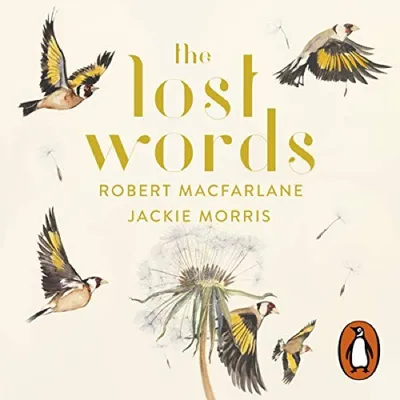
Robert Macfarlane & Jackie Morris — The Lost Words (2017)
Twenty common nature names, among them acorn, bluebell and kingfisher, each get an acrostic spell whose first letters rebuild the word, facing Jackie Morris's paintings. House of Anansi's North American hardback of 2018 measures 10.75 by 14.5 inches, which is the whole idea: it will not fit a shelf, so it stays out where people open it. Hamish Hamilton published it in Britain in 2017.
 The Lost WordsRobert Macfarlane
 - 3
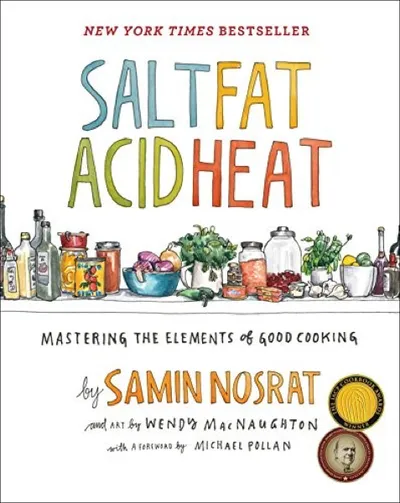
Samin Nosrat — Salt, Fat, Acid, Heat (2017)
Give it to somebody who cooks badly rather than somebody who cooks well, because it explains why things work where most cookbooks only say what to do. Half the book argues the four elements out before a single recipe appears; the other half is 100 essential recipes. Simon & Schuster published 480 pages on 25 April 2017, illustrated throughout by Wendy MacNaughton and introduced by Michael Pollan.
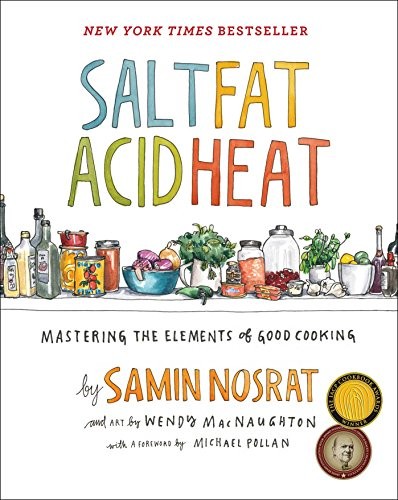 Salt, Fat, Acid, HeatSamin Nosrat
 - 4
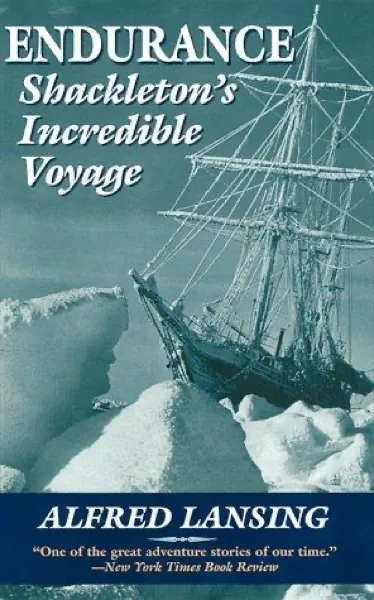
Alfred Lansing — Endurance (1959)
Crushed by ice, the ship was abandoned on 27 October 1915 and did not go under until 21 November. The 22.5-foot James Caird then sailed 800 miles to South Georgia between 24 April and 10 May 1916, and all 28 men lived. Hodder & Stoughton printed 287 pages in 1959 and Basic Books has reprinted it since, most recently in 2014, a cheap paperback you can post to a reader of anything at all.
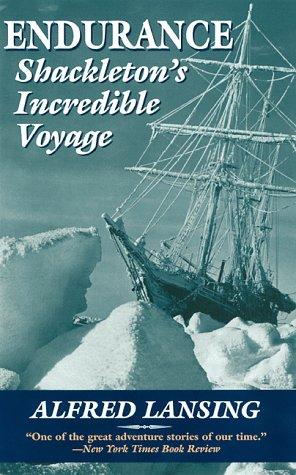 EnduranceAlfred Lansing
 - 5
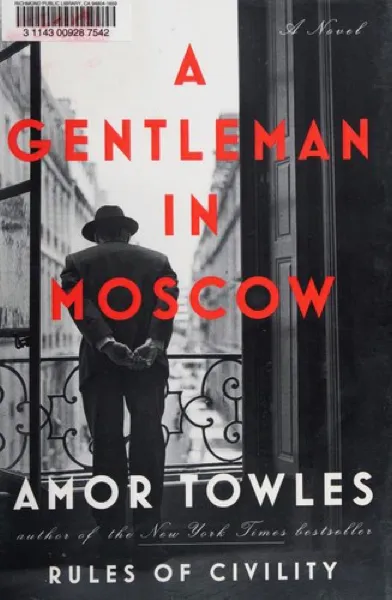
Amor Towles — A Gentleman in Moscow (2016)
Count Alexander Rostov is sentenced in 1922 to house arrest in the Hotel Metropol and spends three decades in an attic room above it. Viking's 2016 hardback runs 462 pages, thick enough to feel like an actual object rather than a token, and the chapters are short enough to take one a night. Of everything here, it is the safest bet for an adult you know nothing about.
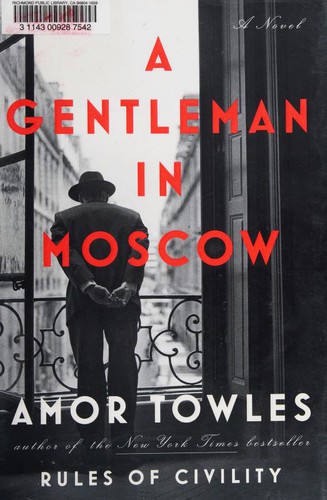 A Gentleman in MoscowAmor Towles
 - 6
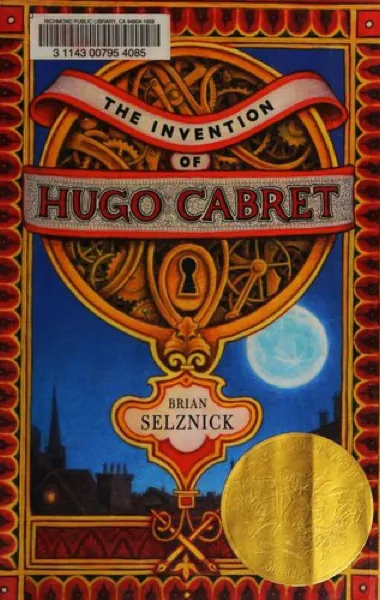
Brian Selznick — The Invention of Hugo Cabret (2007)
Winner of the 2008 Caldecott Medal, and the first novel ever to take a prize meant for picture books. Scholastic Press put out a brick in 2007, which catalogs list at between 526 and 534 pages, carrying 284 pictures, with pencil drawings running the story alone for whole stretches, cutting like film. Georges Méliès, the real filmmaker, turns up inside it as a character.
 The Invention of Hugo CabretBrian Selznick
 - 7
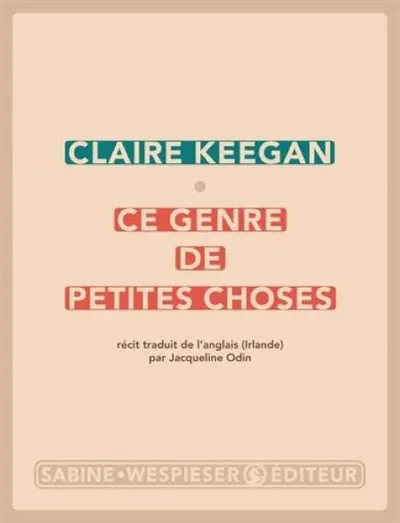
Claire Keegan — Small Things Like These (2021)
Bill Furlong delivers coal around New Ross in December 1985 and finds a girl locked in the convent's coal shed. One decision, barely argued for. Faber's 2021 hardback is 116 pages and fits a coat pocket, which is why it answers the person who says they have no time to read: an evening to get through, then a week of thinking about it.
 Small Things Like TheseClaire Keegan
 - 8
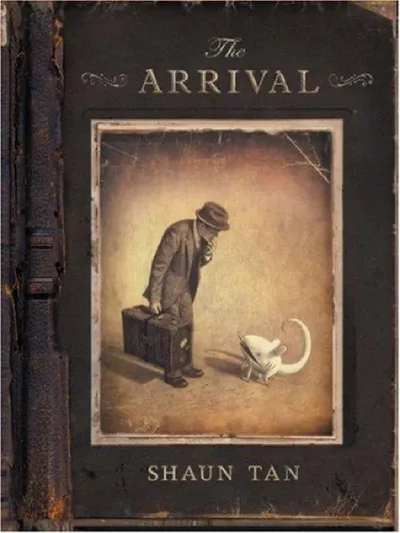
Shaun Tan — The Arrival (2006)
Not one word appears in 128 pages. Graphite on cartridge paper, with the pages laid out like the leaves of a family photo album, because Tan built the thing to imitate one. Lothian Books issued it in Australia in 2006 and Arthur A. Levine brought it to America the following year. No text means no barrier: it suits a grandparent, a teenager, or somebody still learning English.
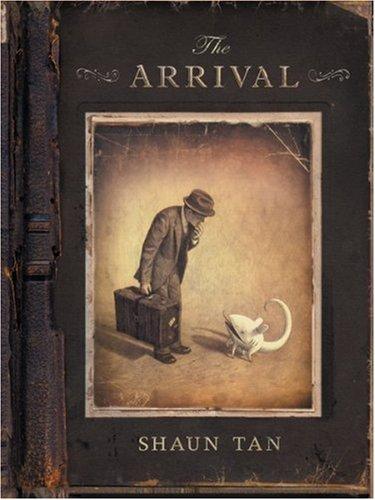 The ArrivalShaun Tan
 - 9
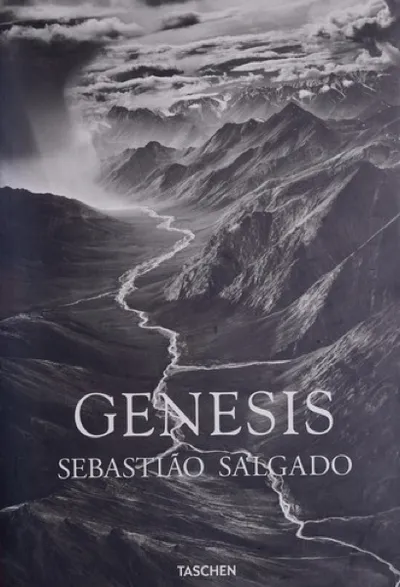
Sebastião Salgado — Genesis (2013)
Five geographic chapters run from Planet South through Sanctuaries, Africa and Northern Spaces to Amazonia and Pantanal, drawn from eight years of expeditions from 2004, all of it black and white. Taschen's 2013 volume is 520 pages at 24.3 by 35.5 centimetres and getting on for four kilograms, a book for a table rather than a shelf. Nobody dislikes it; almost nobody buys it for themselves.
 GenesisSebastião Salgado
 - 10
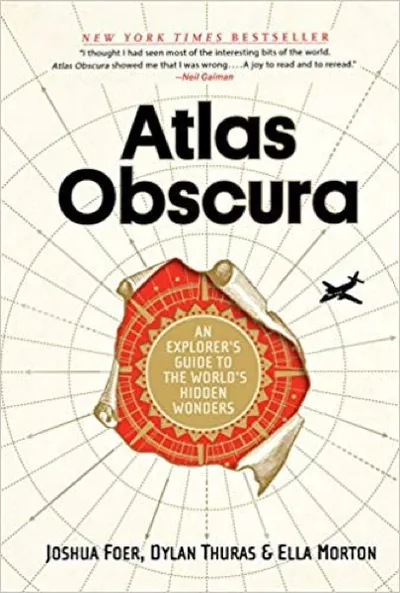
Joshua Foer, Dylan Thuras & Ella Morton — Atlas Obscura (2016)
Glowworm caves in New Zealand, a pub inside a baobab tree in South Africa: nothing here has to be read in order, so it works for a person who never finishes anything. Workman's 2016 hardback runs 470 pages, and the second edition of 15 October 2019 adds 100 places, twelve city guides and a fold-out map of an imaginary round-the-world trip.
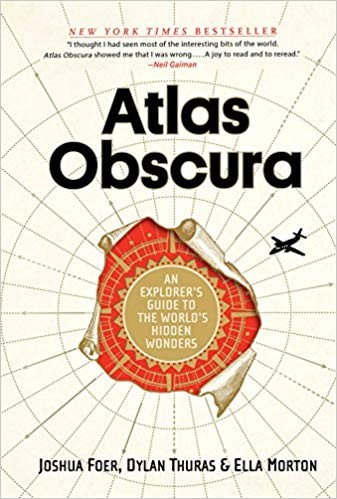 Atlas ObscuraJoshua Foer
 - 11
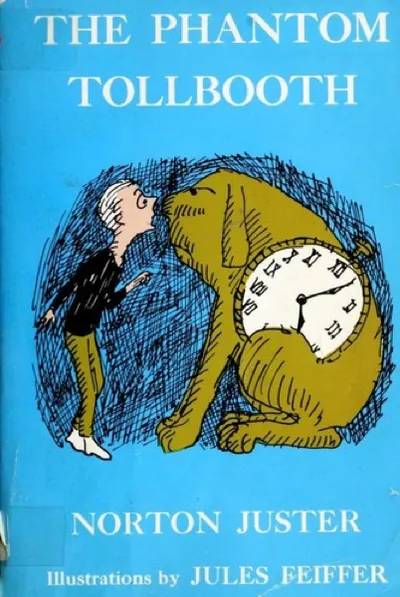
Norton Juster — The Phantom Tollbooth (1961)
Tock, the watchdog with a clock in his side who exists to stop anybody wasting time, is the joke the whole story turns on. Epstein & Carroll issued it in 1961, distributed by Random House, with Jules Feiffer's pen drawings throughout; Random House's paperback runs 256 pages. Open Library catalogs 64 editions, which is roughly how reliably it still lands on a bored nine-year-old.
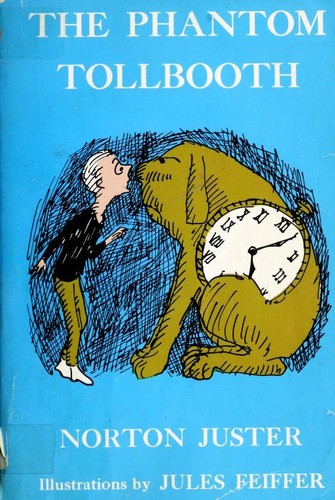 The Phantom TollboothNorton Juster
 - 12
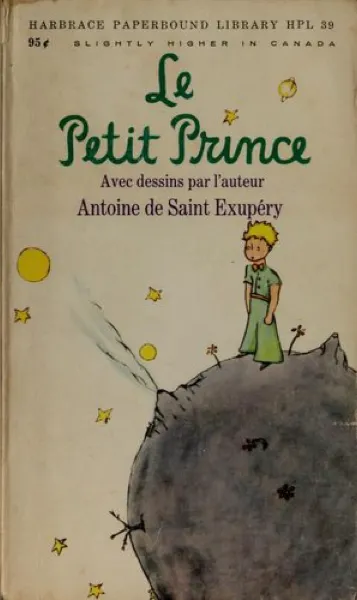
Antoine de Saint-Exupéry — The Little Prince (1943)
Watercolours by the author himself, among them the boa constrictor digesting an elephant that grown-ups insist is a hat, are the reason this has to arrive as a printed copy rather than a file. Reynal & Hitchcock published it in April 1943; Harcourt's 96-page edition of 2000, in Richard Howard's translation, reproduces the plates properly. Some 140 million copies have sold, in around 600 languages.
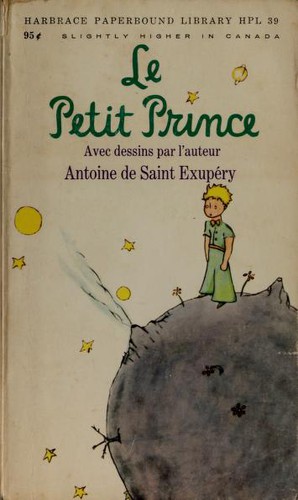 Le petit princeAntoine de Saint-Exupéry
 - 13
Nick Bantock — Griffin and Sabine (1991)
Letters sit inside envelopes glued to the leaves and you pull them out to read them; postcards, faux postage stamps and passport pages are reproduced whole. Chronicle Books issued it in 1991, though Open Library dates the first printing to August 1992, so the catalogs disagree. Three volumes finish the correspondence. No other present gets opened twice the way this one does.
Griffin and SabineNick Bantock - 14
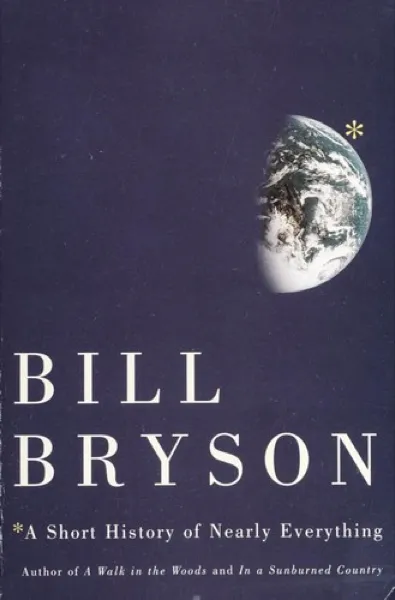
Bill Bryson — A Short History of Nearly Everything (2003)
Yellowstone's caldera is the chapter people quote back at you, and the book earns it by being funny about how little anyone knew. Broadway Books put out 544 pages in May 2003; the special illustrated edition of 2005 runs 624 pages with photographs and is the one worth wrapping. It took the Aventis Prize for best general science book in 2004 and had sold over 300,000 copies in Britain by 2005.
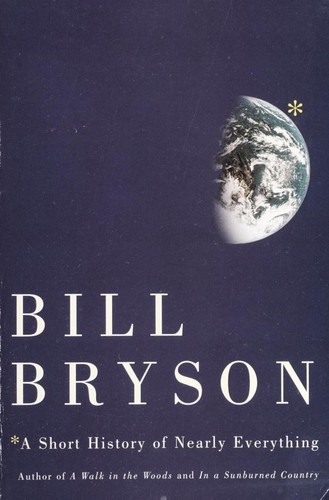 A short history of nearly everythingBill Bryson
How this list was ranked
Readers rank this list by voting items up and down. Items are ordered by reader votes.