US National Parks, Ranked — Settled by Vote
Ranked on two terms, then handed over for you to vote on. First: how much of a park's country exists nowhere else on earth. Second: how much of that country you can reach on your own feet, without a permit lottery, a bus reservation or a charter flight. The second term discounts rather than vetoes, so a park singular enough absorbs a heavy one and still places near the top, while a park whose best ground sits behind a bus or a bush plane drops. Size is not a term: Bryce Canyon covers 35,835 acres and places seventh, and Wrangell–St. Elias is the largest park in the country and places last. Eighteen parks here, nowhere near the whole system. Everglades finished last on the same measure. Gateway Arch failed the first term outright: 192.83 acres of monument, courthouse and tram, where the singular thing is a building rather than country. Openings and reservation rules move, so check before you drive.
Yosemite National Park is #1 on “US National Parks, Ranked — Settled by Vote”.
- 1
Yosemite National Park
Walk the valley floor and El Capitan, Half Dome and Yosemite Falls are all in front of you at once. The cable route up Half Dome needs a permit whenever the cables are up, usually Memorial Day weekend through Columbus Day. Federal protection here predates the national park idea: the Yosemite Grant of 1864. And the falls measure 2,425 feet, fourth tallest in North America.
 Yosemite National Park - Wikipediahttps://en.wikipedia.org/wiki/Yosemite_National_Park
 - 2
Zion National Park
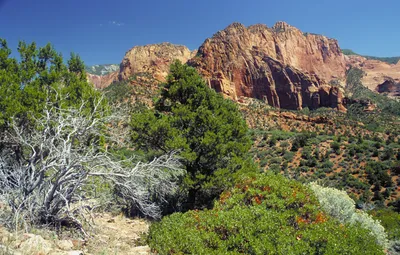
Six miles of road do all the work, running up the canyon and stopping at the Temple of Sinawava. From early April to late October private cars stay out and the shuttle carries everyone instead, which is the reason the corridor still functions. Congress renamed the place from Mukuntuweap National Monument in 1919. Walk up the Narrows past Big Springs and you need a permit.
 Zion National Park - Wikipediahttps://en.wikipedia.org/wiki/Zion_National_Park
 - 3
Yellowstone National Park
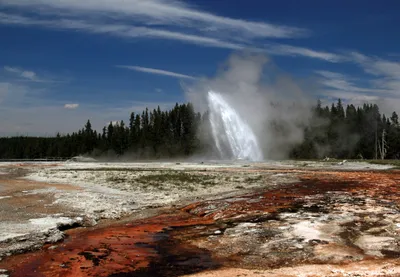
Nothing else in the system carries at least 10,000 geothermal features, and nothing else makes you drive this much to see them. Geyser basins, the canyon and the wildlife valleys are separate destinations, and the day goes to the windshield rather than your boots. The 42nd Congress created it through the Yellowstone National Park Protection Act on March 1, 1872, the first anywhere. Old Faithful is still the one everybody waits for.
 Yellowstone National Park - Wikipediahttps://en.wikipedia.org/wiki/Yellowstone_National_Park
 - 4
Grand Canyon National Park
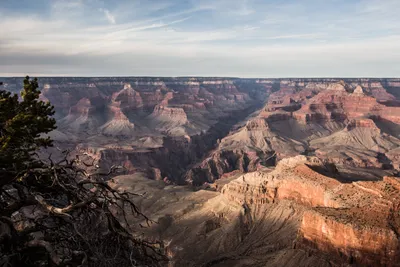
Standing at the rim hands you the whole thing at once, which is also the problem, since that view is most of what a day here contains. Getting inside costs a descent and a climb back out, and Phantom Ranch on the canyon floor is a serious walk. It was the 15th site named a national park, in February 1919. From March to December, Hermit's Rest is reachable only on the free Park Service shuttle.
 Grand Canyon National Park - Wikipediahttps://en.wikipedia.org/wiki/Grand_Canyon_National_Park
 - 5
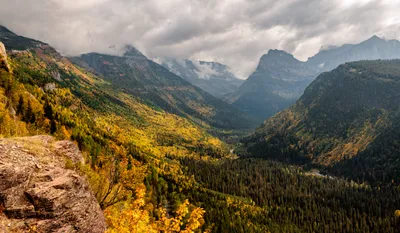
Glacier National Park (U.S.)
Alpine country starts at the parking lot. That is the entire case: 53 miles of road, finished in 1932, carry you over the Continental Divide at Logan Pass at 6,646 feet. Snow keeps that road shut into early summer most years, which is the honest deduction. Of roughly 150 glaciers here in the mid-19th century, 25 were still active in 2010.
 Glacier National Park (U.S.) - Wikipediahttps://en.wikipedia.org/wiki/Glacier_National_Park_(U.S.)
 - 6
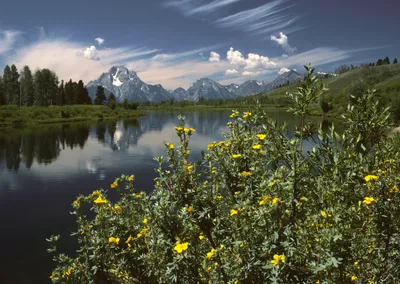
Grand Teton National Park
No foothills, which is the whole trick: the range climbs from valley floor to 13,775 feet in one move, better than 7,000 feet above Jackson Hole. The original 96,000-acre park dates to 1929 and absorbed the monument next door in 1950. Two hundred miles of trail run off one short road, and Hidden Falls, a hundred feet high just west of Jenny Lake, is an easy walk in.
 Grand Teton National Park - Wikipediahttps://en.wikipedia.org/wiki/Grand_Teton_National_Park
 - 7
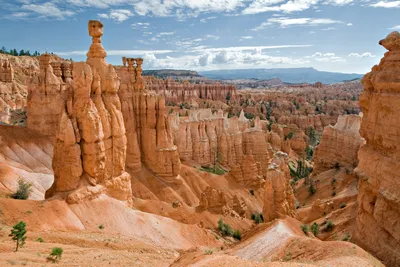
Bryce Canyon National Park
Frost does the sculpting. Water gets into the rock, freezes and splits it, and stream erosion carries the debris away; that is how the hoodoo columns form. Drop off Sunset Point on the Navajo Loop and you are among them quickly, back on the rim inside two hours. The park covers 35,835 acres at 8,000 to 9,000 feet, so the shoulder seasons are cold.
 Bryce Canyon National Park - Wikipediahttps://en.wikipedia.org/wiki/Bryce_Canyon_National_Park
 - 8
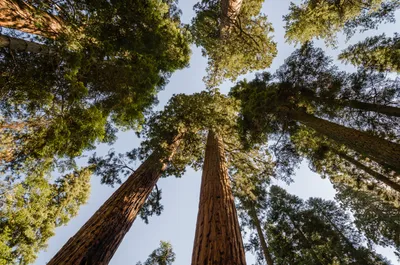
Sequoia National Park
Established on September 25, 1890, and the sequoia groves are walkable in an afternoon: General Sherman, the largest tree on Earth by volume, stands a short stroll from the road. Moro Rock adds a 351-step stairway cut into the granite by the Civilian Conservation Corps in the 1930s. Mount Whitney is in the park too, at 14,505 feet, the highest point in the contiguous United States.
 Sequoia National Park - Wikipediahttps://en.wikipedia.org/wiki/Sequoia_National_Park
 - 9
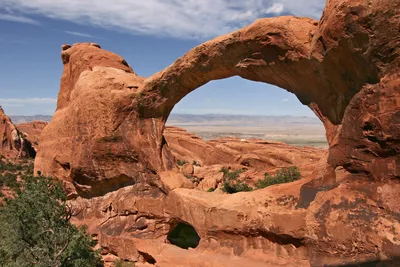
Arches National Park
Wall Arch came down overnight on August 4 or 5 in 2008, which tells you what the rock here does while nobody is watching. More than 2,000 sandstone arches are still standing, the highest density anywhere in the world. Landscape Arch spans 290 feet along that same Devils Garden trail, a span that looks like it should not hold.
 Arches National Park - Wikipediahttps://en.wikipedia.org/wiki/Arches_National_Park
 - 10
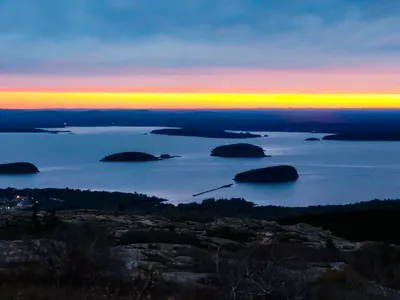
Acadia National Park
John D. Rockefeller Jr. financed, designed and directed a network of carriage roads here between 1915 and 1940, and cars still cannot use them: gentle gradients, stone bridges, engineering scaled to horses. That is the reason to come, in any month of the year. Cadillac Mountain is the tallest along the eastern coastline of the United States, and a road climbs it.
 Acadia National Park - Wikipediahttps://en.wikipedia.org/wiki/Acadia_National_Park
 - 11
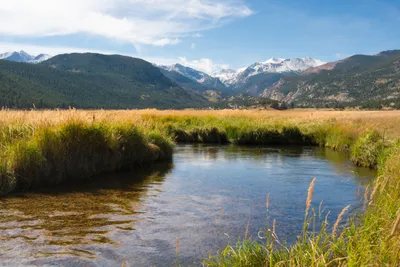
Rocky Mountain National Park
A timed-entry reservation has been required of most visitors from May through October since 2020, so the spontaneous version of this trip is gone. What the planning buys you is Trail Ridge Road, the highest continuously paved highway in the country, topping out at 12,183 feet and putting you above treeline without a hike. Winter shuts most of it.
 Rocky Mountain National Park - Wikipediahttps://en.wikipedia.org/wiki/Rocky_Mountain_National_Park
 - 12
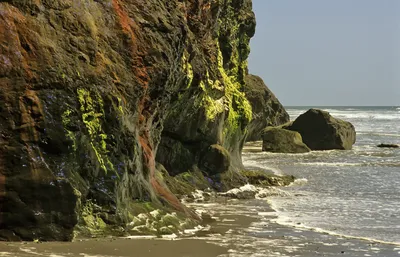
Olympic National Park
Rainforest, alpine ridge and 60 miles of coast, and each is a separate drive of hours around the peninsula. Park status came on June 29, 1938, and the interior still has no road through it, so you walk in or you do not go. The Hoh Rainforest takes over 12 feet of precipitation a year, possibly the wettest spot in the continental United States.
 Olympic National Park - Wikipediahttps://en.wikipedia.org/wiki/Olympic_National_Park
 - 13
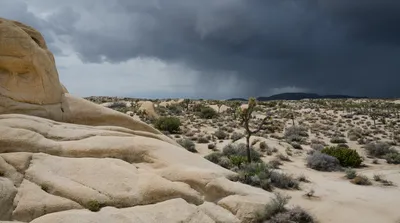
Joshua Tree National Park
Two deserts meet inside the boundary, the higher Mojave and the lower Colorado, and the plants change as you drive between them. Minerva Hoyt spent years pushing for protection before the monument proclamation of August 10, 1936. Congress made it a park in 1994. From a single pull-out, Keys View looks down on the Coachella Valley, the Salton Sea and the San Andreas Fault.
 Joshua Tree National Park - Wikipediahttps://en.wikipedia.org/wiki/Joshua_Tree_National_Park
 - 14
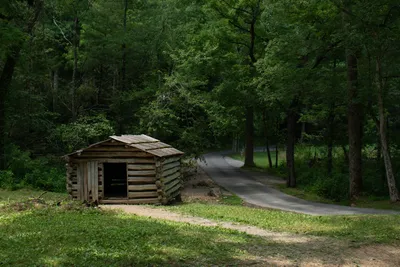
Great Smoky Mountains National Park
Congress chartered it in 1934 and Franklin Roosevelt dedicated it in 1940, and the weeks most people skip are the good ones. Elkmont hosts the peak display of synchronous fireflies from late May into early June. Elk went back into Cataloochee in 2001 and 2002 and are easiest to find there. A 45-foot observation tower sits on top of Kuwohi, off Newfound Gap Road.
 Great Smoky Mountains National Park - Wikipediahttps://en.wikipedia.org/wiki/Great_Smoky_Mountains_National_Park
 - 15
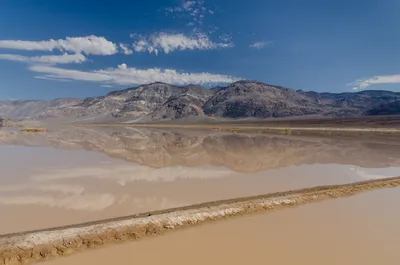
Death Valley National Park
On July 10, 1913 the Weather Bureau recorded 134 degrees Fahrenheit at Greenland Ranch, now called Furnace Creek, and that number governs half the year. Distances between the named stops are enormous, and that is the deduction. Badwater Basin sits 282 feet below sea level, the second-lowest depression in the Western Hemisphere, and the salt flat crunches underfoot.
 Death Valley National Park - Wikipediahttps://en.wikipedia.org/wiki/Death_Valley_National_Park
 - 16
Denali National Park and Preserve
You do not drive the 92-mile park road. Private vehicles stop early and everything past that point runs on tour and shuttle buses, which makes Wonder Lake a six-hour ride from the visitor center, each way. It was created in 1917 as Mount McKinley National Park, and the mountain at the middle of it reaches 20,310 feet, the highest in North America.
 Denali National Park and Preserve - Wikipediahttps://en.wikipedia.org/wiki/Denali_National_Park_and_Preserve
 - 17
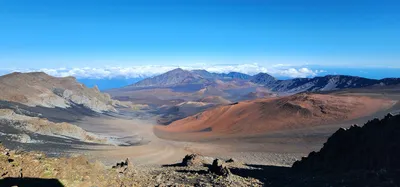
Haleakalā National Park
The summit and Kīpahulu are the same park but not the same trip: no road connects them directly, so reaching the pools along Palikea Stream in the ʻOheʻo gulch means a long winding drive around the windward coast. That split is what holds it down here. Silversword grows nowhere else on Earth. Nēnē died out in the park and came back in 1946, carried up in Boy Scouts' backpacks.
 Haleakalā National Park - Wikipediahttps://en.wikipedia.org/wiki/Haleakal%C4%81_National_Park
 - 18
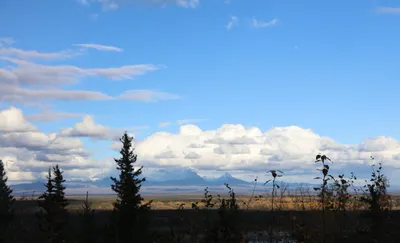
Wrangell–St. Elias National Park and Preserve
Largest park in the country, and two rough gravel roads are the whole road system: the McCarthy Road and the Nabesna Road, with everything else a flight or a long walk. That ratio is why it finishes here rather than near the top. Kennecott worked one of the world's richest copper deposits from 1903 to 1938, and the McCarthy Road ends near it. Mount Saint Elias reaches 18,008 feet.
 Wrangell–St. Elias National Park and Preserve - Wikipediahttps://en.wikipedia.org/wiki/Wrangell%E2%80%93St._Elias_National_Park_and_Preserve
How this list was ranked
Readers rank this list by voting items up and down. Items are ordered by reader votes.