TED Talks Actually Worth Your Time
Fourteen TED talks that actually pay back the minutes, ranked by what you still use years later. Vote your favorite up and demote the one you always skip. The measure is simple: an idea that survived scrutiny, or a performance you cannot get anywhere else, per minute of attention. The order is rough consensus, with the most rewatched, most assigned, most argued-over talks near the top, plus honesty flags where the science wobbled after the applause. Power posing has some explaining to do. Every link is the official upload. All fourteen sit on TED's own YouTube channel, checked one by one, and the five talks born on TEDx stages (Houston, Puget Sound, BeaconStreet, MidAtlantic, Sydney) say so in their copy. Famous omissions like Jill Bolte Taylor's stroke talk and Hans Rosling's stats show missed our fourteen, not our respect. If that stings, the vote buttons are right there. View counts were read from ted.com in July 2026.
Sir Ken Robinson — Do Schools Kill Creativity? (2006) is #1 on “TED Talks Actually Worth Your Time”.
- 1
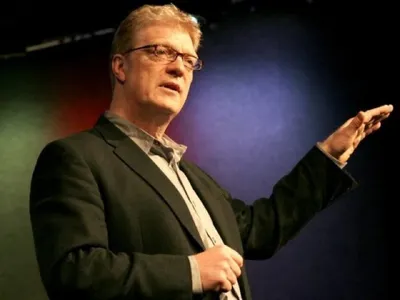
Sir Ken Robinson — Do Schools Kill Creativity? (2006)
Eighty million plays on ted.com as of July 2026, and still the right place to start. Filmed at TED2006, it argues schools rank subjects by economic usefulness and squander the rest of a child. The proof is a story: a doctor turns on the radio, watches young Gillian Lynne dance, and tells her mother to enroll her in lessons. Lynne went on to choreograph Cats. It's rare to find comedy this relaxed carrying an argument this angry.
- 2
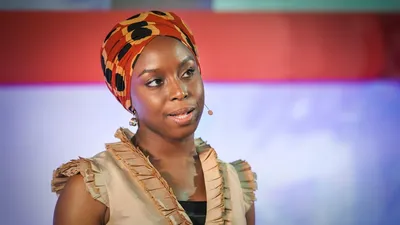
Chimamanda Ngozi Adichie — The Danger of a Single Story (2009)
Assigned constantly in classrooms, and for once the syllabus is right. Delivered at TEDGlobal in July 2009, the argument runs that our lives and cultures are composed of many overlapping stories, and that settling for one of them manufactures stereotype. It has only grown more useful since. Past 42 million ted.com plays by mid-2026, it is also the best-written talk TED has published: every example is concrete, nothing is padded, and the ending refuses easy comfort.
- 3
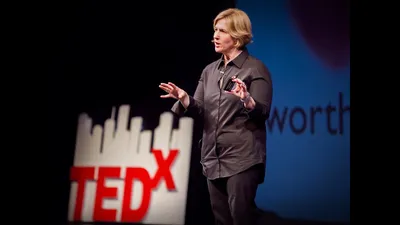
Brené Brown — The Power of Vulnerability (2010)
Filmed at TEDxHouston in June 2010, a TEDx stage flagged as such, though the link here is TED's own official upload, and now one of the five most viewed talks TED has. What you get is a decade of shame research delivered in self-deprecating, personal terms, from a researcher who plainly wanted cleaner data than human connection allows. The reluctance is the charm, and the reason it converts skeptics.
- 4
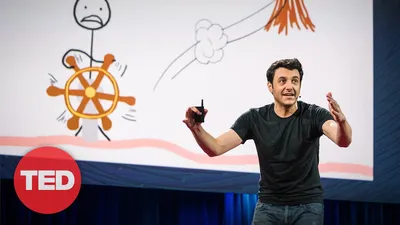
Tim Urban — Inside the Mind of a Master Procrastinator (2016)
Every procrastinator recognizes the cast: the Instant Gratification Monkey at the wheel, the Panic Monster who wakes only for deadlines, the Dark Playground where unearned leisure happens. Urban built those characters on his blog Wait But Why before walking them onto the TED2016 stage, and the crowd work shows it. Past 78 million ted.com plays by mid-2026, it is the funniest of TED's mega-hits, and the most quotable by a mile.
- 5
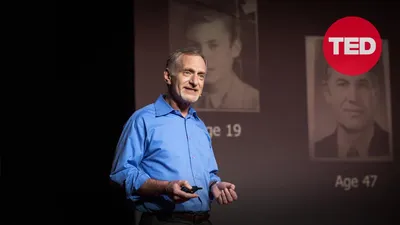
Robert Waldinger — What Makes a Good Life? (2015)
Seventy-five years of the Harvard Study of Adult Development, compressed into three lessons by its current director, a psychiatrist and Zen priest. Filmed at TEDxBeaconStreet in November 2015, with the upload on TED's channel, and past 52 million plays by mid-2026. The lessons circle one claim, boring on purpose, which is why it sticks: the quality of your relationships, more than money or fame, tracks long-term health.
- 6
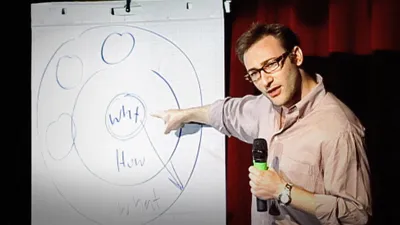
Simon Sinek — How Great Leaders Inspire Action (2009)
One idea, stretched confidently across a whole talk: the golden circle, and the claim that people don't follow what you do until they understand why you do it. Filmed at TEDxPuget Sound in September 2009 and later made canonical on TED's channel, it has passed 70 million ted.com plays as of mid-2026. Dock it for repetition if you like; half of corporate strategy decks still quote it, which is its own argument for knowing the source.
- 7
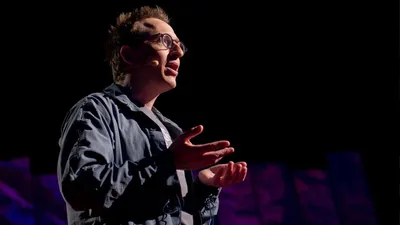
Jon Ronson — Strange Answers to the Psychopath Test (2012)
Somewhere between stand-up and investigative journalism sits this TED2012 retelling of his book The Psychopath Test. The center of it is a young Broadmoor detainee trapped by unfalsifiable diagnoses, since once labeled, every claim of sanity reads as one more symptom. The Hare checklist, a 20-item test where very different people can land on the same score, gets equally skeptical treatment. It's funny, unsettling, and careful exactly where it needs to be.
- 8
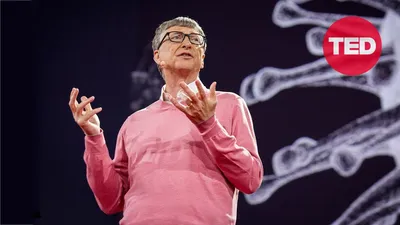
Bill Gates — The Next Outbreak? We're Not Ready (2015)
Five years before Covid, at TED2015 in March 2015, the warning was already on the record: the 2014 Ebola outbreak had shown there was no real system for stopping the next epidemic. He asked for scenario planning, vaccine development and trained health workers, and put the stakes plainly, saying there's no need to panic but we need to get going. Rewatching it now is an exercise in queasy hindsight, which is the point.
- 9
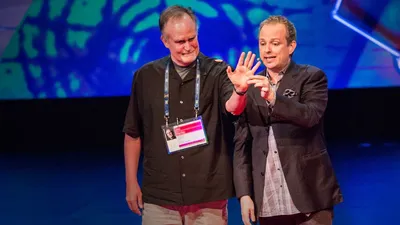
Apollo Robbins — The Art of Misdirection (2013)
Watch your wrist. TED's page bills him as the greatest pickpocket in the world, and the TEDGlobal 2013 slot is spent proving it, with watches and wallets lifted from audience members while he narrates, step by step, where their attention just went. It's a lecture on perception that doubles as a live demonstration of its own thesis, at 35 million ted.com plays by mid-2026. It plays better the second time, once you know where to look.
- 10
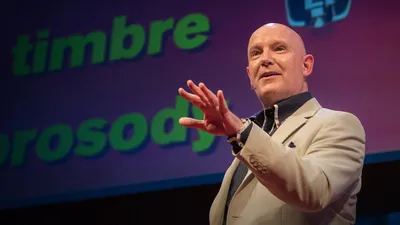
Julian Treasure — How to Speak So That People Want to Listen (2013)
Practical to a degree most talks never attempt. Treasure, a sound expert by trade, lays out techniques for being heard, empathetic speaking included, then drills the audience in vocal warm-up exercises meant for use before any conversation that matters, in service of his stated goal of helping the world sound more beautiful. Filmed at TEDGlobal 2013 and past 68 million ted.com plays by mid-2026. Thin in places, but the usable-per-minute ratio is among the highest here.
- 11
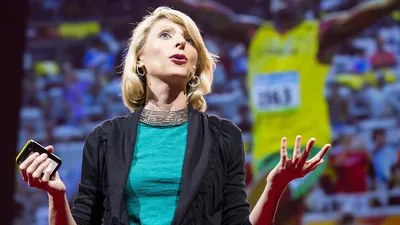
Amy Cuddy — Your Body Language May Shape Who You Are (2012)
Power posing had a rough decade: the effect behind this TEDGlobal 2012 talk got caught in psychology's replication crisis, and ted.com now carries a reproducibility disclaimer on the very page hosting its 77 million plays. Watch it anyway, flag attached. The interesting half of the claim, that body language affects how others see us but may also change how we see ourselves, survives as an open question, and the delivery never stopped being persuasive.
- 12
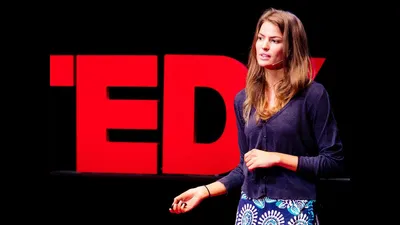
Cameron Russell — Looks Aren't Everything. Believe Me, I'm a Model (2012)
Barely sixteen when she started modeling, Russell stands on the TEDxMidAtlantic stage in October 2012, with the official upload on TED's channel, and calls her career winning a genetic lottery, then turns on an industry that recruits girls exactly that young. Forty-one million ted.com plays by mid-2026 suggest the honesty scaled. It's short, unsentimental, and a sharper media-literacy lesson than most semester-long courses manage.
- 13
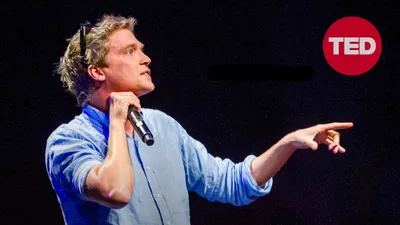
Tom Thum — The Orchestra in My Mouth (2013)
Eleven minutes of beatboxing that TED's own copy calls a mouthful of instrumental impersonations, filmed at TEDxSydney in May 2013, carried on the main TED channel, and closing in on 40 million ted.com plays as of mid-2026. No lesson, no framework, no slides. It earns the slot the direct way: you will not believe one human throat is doing all of this, and you will send it to someone before it ends.
- 14
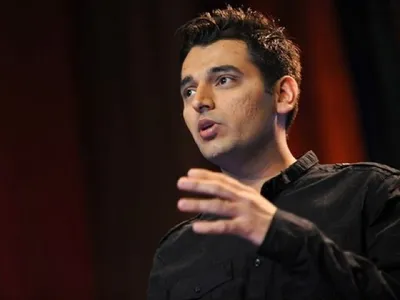
Pranav Mistry — The Thrilling Potential of SixthSense Technology (2009)
Nobody wears a SixthSense rig today, which is exactly why this TEDIndia talk from November 2009 belongs here: it is the sharpest time capsule of what everyone then believed was coming, a gesture-driven layer of digital information over physical objects. Mistry demos paper behaving like a screen and closes with a pledge to open-source the code. Nineteen million plays by mid-2026, and proof that demos age faster than the ideas behind them.
How this list was ranked
Readers rank this list by voting items up and down. Items are ordered by reader votes.