National Flags, Ranked — Settled by Vote
Rank the world's national flags by who is on record saying what they mean, then vote the order into the shape you think it should have. Three bands do the sorting. Band one: the article names who put the meaning on the record — a law, a constitution, a government body, or the designer speaking about meaning. Band two: a meaning is stated and nobody is named behind it. Band three: a named instrument or an official statement is on the record giving the colours no official meaning of their own, which outranks a single motif the article still reads. Two things look like band one and aren't. An instrument fixing shape, shade, geometry or what a design may not contain is a specification, and a specification is not a meaning. Naming who chose a design is not naming who said what it means. Inside a band, oldest first by the date the article gives for the flag entering use, ties on the article title. Scope is sovereign UN member states, which costs Kosovo, Wales, the Isle of Man and Hawaii.
Switzerland is #1 on “National Flags, Ranked — Settled by Vote”.
- 1
Switzerland
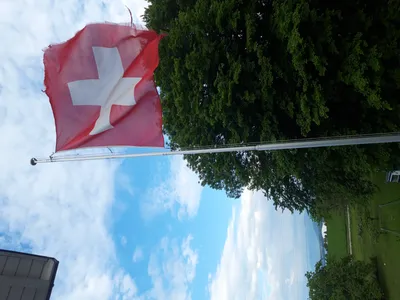
Legislation defining the Swiss federal coat of arms passed on 12 December 1889, and in the same year the Federal Council described the white cross as representing 'at the same the Christian cross symbol and the field sign of the Old Confederacy'. A named government body on the meaning — band one. The shade of red went undefined in law until 2017, which is the specification, not the meaning.
 Flag of Switzerland - Wikipediahttps://en.wikipedia.org/wiki/Flag_of_Switzerland
 - 2
Portugal
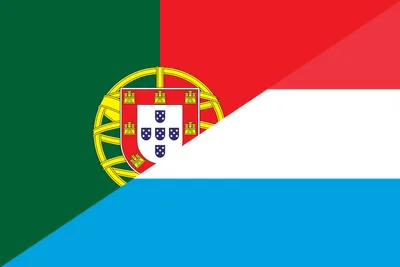
A special commission picked the green and the red for the new republic, with Columbano Bordalo Pinheiro, João Chagas and Abel Botelho among its members, and it wrote down why: red should 'be present as one of the main colours, because it is the battling, warm, virile colour, par excellence'. The decree approving the flag was published on 30 June 1911 — band one, with the body that chose it named.
 Flag of Portugal - Wikipediahttps://en.wikipedia.org/wiki/Flag_of_Portugal
 - 3
India
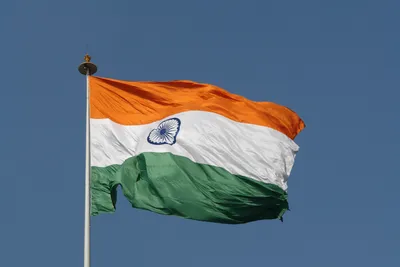
'Bhagwa or the Saffron denotes renunciation or disinterestedness,' Sarvepalli Radhakrishnan told the Constituent Assembly, which adopted the tricolour in its present form on 22 July 1947. The same Assembly resolved that the flag should not have any communal undertones — a named speaker and a named body, both on the record, which is what puts this in band one.
 Flag of India - Wikipediahttps://en.wikipedia.org/wiki/Flag_of_India
 - 4
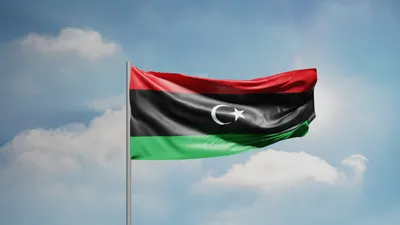
Libya
Omar Faiek Shennib drew this one and King Idris approved it, and Shennib's own account is where the meanings come from — red for the blood sacrificed for the freedom of Libya, black for the years under Italian occupation, green for agriculture. A named designer is a named source, so band one. Officially adopted on 24 December 1951, used until 1969, readopted by the National Transitional Council on 3 August 2011.
 Flag of Libya - Wikipediahttps://en.wikipedia.org/wiki/Flag_of_Libya
 - 5
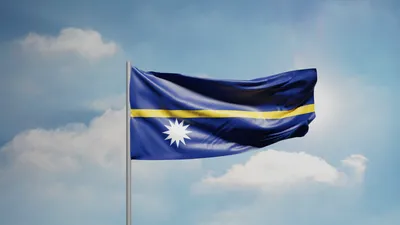
Nauru
Chosen in a local design competition and adopted on independence day, 31 January 1968. The narrow gold stripe, a twelfth of the flag's length, represents the Equator, and the article cites the Government of the Republic of Nauru for that reading — a government body on the record, so band one. The blue field is the Pacific Ocean and the white twelve-pointed star is the island itself.
 Flag of Nauru - Wikipediahttps://en.wikipedia.org/wiki/Flag_of_Nauru
 - 6
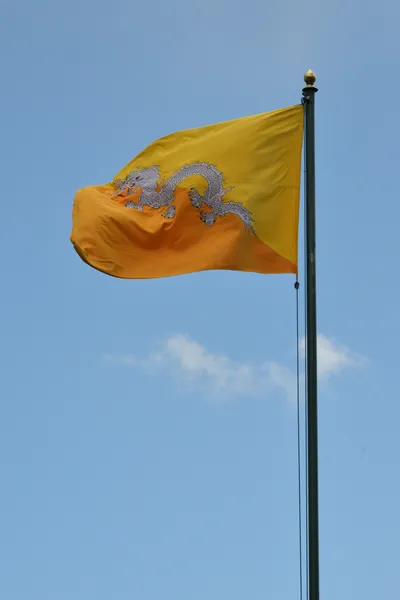
Bhutan
Unchanged since 1969, and what the two halves mean is fixed by Resolution 28 of the 36th Session of the National Assembly, dated 8 June 1972, restated in the Constitution of 2008: yellow for civil tradition and temporal authority, orange for the Drukpa Kagyu and Nyingma schools. An instrument named twice, with a session number attached — band one at its most explicit.
 Flag of Bhutan - Wikipediahttps://en.wikipedia.org/wiki/Flag_of_Bhutan
 - 7
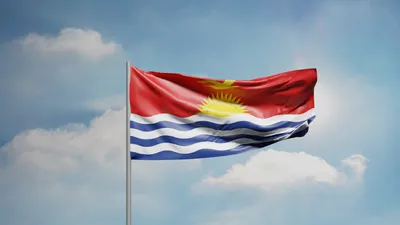
Kiribati
Gold frigatebird over a rising sun, and three white waves for the Gilbert, Phoenix and Line Islands. Schedule 2, section 8 of the National Identity Act of 1989 supplies the official description: the bird 'represents power, freedom and Kiribati cultural dance patterns', and the sun is tropical because the country lies astride the Equator. A named act, so band one. Hoisted at the independence celebrations in Tarawa on 12 July 1979.
 Flag of Kiribati - Wikipediahttps://en.wikipedia.org/wiki/Flag_of_Kiribati
 - 8
Mozambique
Every colour is spoken for in the constitution: red for anti-colonial resistance and national defence, green for the soil, golden-yellow for the subsoil, black for the African continent, white for peace — band one. Adopted on 1 May 1983. The article notes the particular gun in the design is not mentioned in the constitution, but is generally understood to be an AK-47 with a bayonet attached.
 Flag of Mozambique - Wikipediahttps://en.wikipedia.org/wiki/Flag_of_Mozambique
 - 9
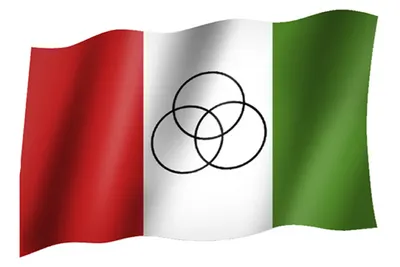
Rwanda
Law no. 34/2008, Chapter III, Article 5 — that is the citation the article attaches to blue for happiness and peace, yellow for economic development, green for hope of prosperity. A numbered instrument, so band one. Alphonse Kirimobenecyo, a Rwandan artist and engineer, designed it, and it was adopted on 31 December 2001, the government having announced in 1999 that it would replace a flag associated with the genocide.
 Flag of Rwanda - Wikipediahttps://en.wikipedia.org/wiki/Flag_of_Rwanda
 - 10
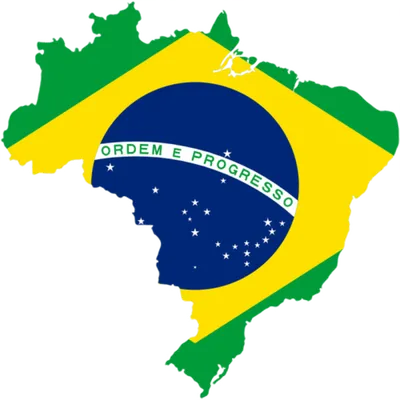
Brazil
Four days after the Proclamation of the Republic, on 19 November 1889, this design replaced the flag of the Empire. The article says the green stood for the House of Braganza and the yellow for the House of Habsburg, and names nobody as the source for that, which is band two. It also notes the shades are 'not specified in any legal document' — the specification again, rather than the meaning.
 Flag of Brazil - Wikipediahttps://en.wikipedia.org/wiki/Flag_of_Brazil
 - 11
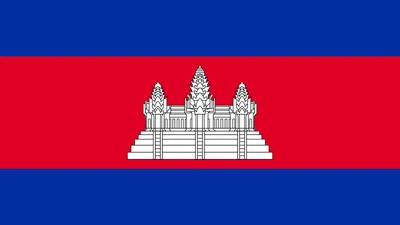
Cambodia
Angkor Wat, in white, sits on the red band, and the article calls this 'one of only four national flags in the world to feature a building, alongside those of Portugal, San Marino, and Spain'. On meaning it says red and blue are traditionally the colours of Cambodia, representing the nation and the king — stated flat, with no law or designer behind it, so band two. First adopted in 1948 and readopted on 24 September 1993.
 Flag of Cambodia - Wikipediahttps://en.wikipedia.org/wiki/Flag_of_Cambodia
 - 12
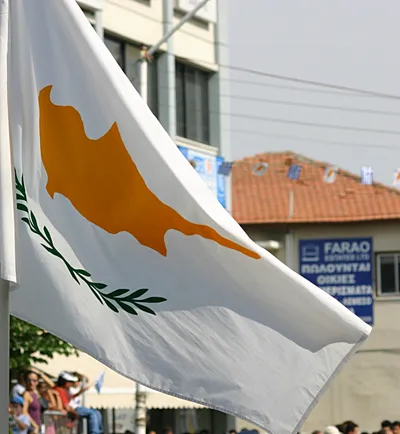
Cyprus
The constitution demanded a 'neutral design and colour', so Article 4 ruled out blue, red, the cross and the crescent. What went on instead was a copper-orange map of the island, which the article puts down to the large deposits of copper ore, above two olive branches signifying peace between the Greek and Turkish Cypriots. No law or designer is credited with either meaning — band two. In use since 16 August 1960.
 Flag of Cyprus - Wikipediahttps://en.wikipedia.org/wiki/Flag_of_Cyprus
 - 13
Nepal
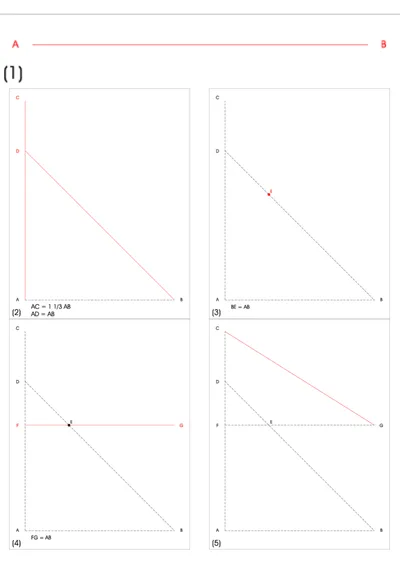
Concave, pentagonal, and by the article's own account 'the only non-rectangular national flag in the world and the only one that is taller than it is wide'. Schedule 1 of the Constitution of Nepal, adopted on 20 September 2015, details a method of making it — geometry, not meaning. On the sun and moon the article offers 'one popular interpretation' and no instrument at all, so band two. Adopted 16 December 1962.
 Flag of Nepal - Wikipediahttps://en.wikipedia.org/wiki/Flag_of_Nepal
 - 14
Vanuatu
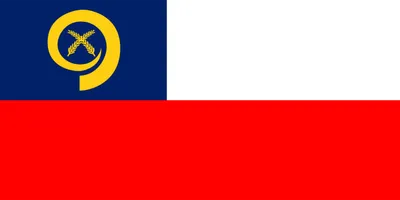
Prime Minister Walter Lini asked for the yellow Y-shape, which the article says represents the shape of the islands on the map and the light of the gospel. The colour readings arrive with nobody attached: green for the richness of the islands, red for blood that unites humanity, black for the Melanesian ni-Vanuatu people. Band two on that basis. The emblem in the black is a boar's tusk, and the flag went up on 18 February 1980.
 Flag of Vanuatu - Wikipediahttps://en.wikipedia.org/wiki/Flag_of_Vanuatu
 - 15
Belize
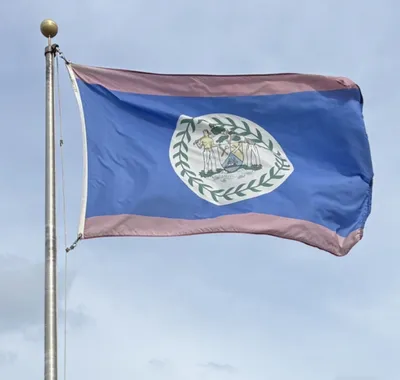
Two woodcutters flank a mahogany tree — the article's claim is that 'the flag of Belize is the only country to have humans depicted as a major design element on its national flag'. The figures, tools and trees recall the logging industry that first brought British settlement, and the 50 leaves recall 1950, the year PUP came to power. Nobody is named for any of it, so band two. Adopted 21 September 1981.
 Flag of Belize - Wikipediahttps://en.wikipedia.org/wiki/Flag_of_Belize
 - 16
Turkmenistan
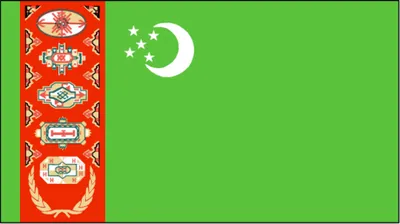
On the colours the article is blunt: 'While no official explanation has been given for the symbolism of the flag's colors or white symbols, there are several leading theories.' Nobody official has spoken, so band two rather than band three — an absence is not a refusal. The white crescent and five stars stand for the country's five regions and the Five Pillars of Islam. Introduced 27 September 1992.
 Flag of Turkmenistan - Wikipediahttps://en.wikipedia.org/wiki/Flag_of_Turkmenistan
 - 17
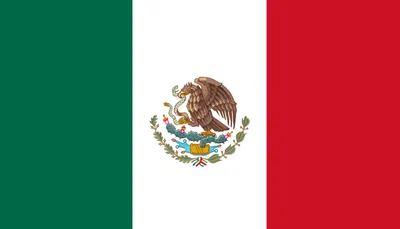
Mexico
Green, white and red came out of independence from Spain and the First Mexican Empire, and the Flag Law then declined to say what they mean: Article 3 'does not give an official symbolism to the colors, other meanings may be given to them.' A named instrument on the record, giving the colours no meaning — band three. The current flag was adopted on 16 September 1968 and confirmed by law on 24 February 1984.
 Flag of Mexico - Wikipediahttps://en.wikipedia.org/wiki/Flag_of_Mexico
 - 18
South Africa
Official South African government information says 'no universal symbolism should be attached to any of the colours', and that is a government on the record declining to fix a meaning, which is band three. The exception the article allows is the Y-shaped motif — read as 'the convergence of diverse elements within South African society, taking the road ahead in unity'. Fred Brownell, then State Herald, designed it in March 1994; it was adopted on 27 April 1994.
 Flag of South Africa - Wikipediahttps://en.wikipedia.org/wiki/Flag_of_South_Africa
How this list was ranked
Readers rank this list by voting items up and down. Items are ordered by reader votes.