The Space Photographs Worth Knowing, Oldest First
Start with Earthrise and read down. The order is chronological, oldest first, by the earliest date each linked article puts on the picture — the day the shutter opened where the article says so, the day it went public where that is the only date given. A year with no month sits ahead of a dated month in the same year. Every entry is a photograph with its own Wikipedia article, which is much narrower than a famous space picture, and that rule picks the list's whole character: Earth seen from a long way off, deep fields, and almost none of the coloured nebulae you are picturing. It costs the first image of a black hole: an article exists for the telescope array, none for the photograph. Read in sequence and you watch a camera pointed away from Earth work out what it can do, from a Hasselblad in lunar orbit to a sixteen-year data stack and back to a Nikon in lunar orbit fifty-seven years on. Fork it and make your own version if you would cut it differently.
Earthrise is #1 on “The Space Photographs Worth Knowing, Oldest First”, ranked by ListWorld Other Desk.
- 1
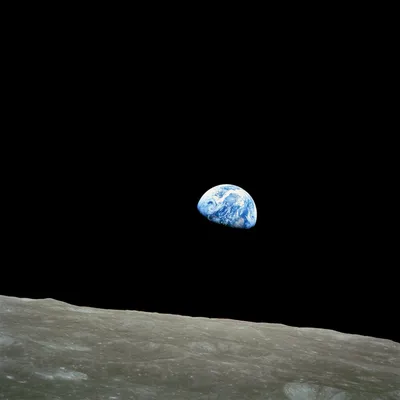
Earthrise
Shot from lunar orbit on 24 December 1968 by William Anders during Apollo 8, using a highly modified Hasselblad 500 EL with an electric drive. The article times the frame to 16:39:39.3 UTC — the oldest exposure on this list, which is the whole reason it opens. The camera has left home and it is looking back at it.
 Earthrise - Wikipediahttps://en.wikipedia.org/wiki/Earthrise
 - 2
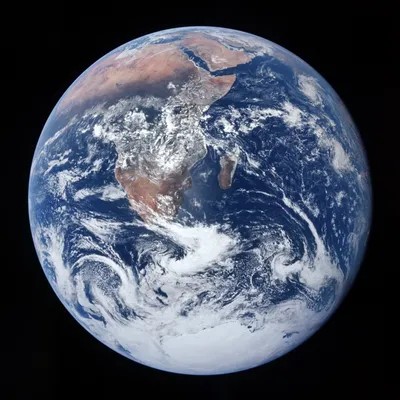
The Blue Marble
Nobody signed it. NASA credits mission photographs to the whole crew — Gene Cernan, Ronald Evans and Harrison Schmitt all shot with the onboard Hasselblad on 7 December 1972, on the way to the Moon. Interviews and evidence examined by Eric Hartwell after the mission point to Schmitt. Taken from around 29,400 kilometres out, with the whole disc lit.
 The Blue Marble - Wikipediahttps://en.wikipedia.org/wiki/The_Blue_Marble
 - 3
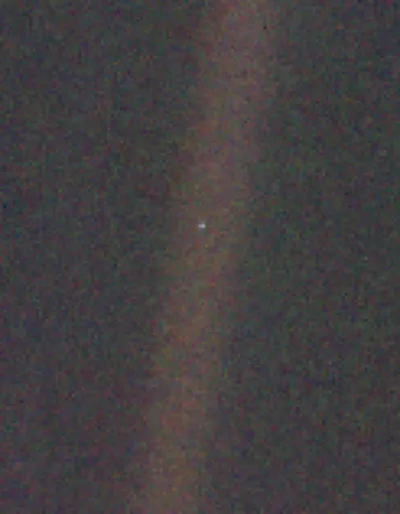
Pale Blue Dot
Voyager 1 turned around on 14 February 1990 and photographed Earth from over 6 billion kilometres away, a distance its own lead calls unprecedented — 40.5 AU. That lead also places the frame inside that day's Family Portrait series of the Solar System, which is why the wider mosaic from the same afternoon gets no slot of its own here.
 Pale Blue Dot - Wikipediahttps://en.wikipedia.org/wiki/Pale_Blue_Dot
 - 4
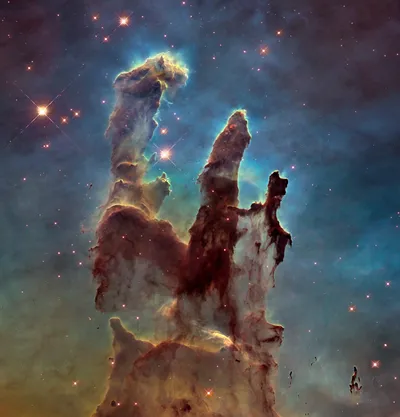
Pillars of Creation
Elephant trunks of interstellar gas and dust in the Eagle Nebula — 6,500 to 7,000 light-years out in Serpens. Jeff Hester and Paul Scowen of Arizona State University took it with Hubble on 1 April 1995, and Space.com later put it in a top ten of Hubble photographs. With Mystic Mountain, it is as close as this list gets to the coloured nebula people picture.
 Pillars of Creation - Wikipediahttps://en.wikipedia.org/wiki/Pillars_of_Creation
 - 5
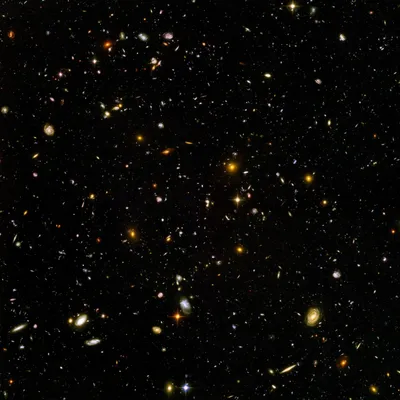
Hubble Deep Field
342 separate exposures went into it, taken with the Wide Field and Planetary Camera 2 over ten consecutive days between 18 and 28 December 1995. The target was a small patch of Ursa Major. The article calls the result something constructed from a series of observations rather than something shot, which is the honest description of every deep field below.
 Hubble Deep Field - Wikipediahttps://en.wikipedia.org/wiki/Hubble_Deep_Field
 - 6
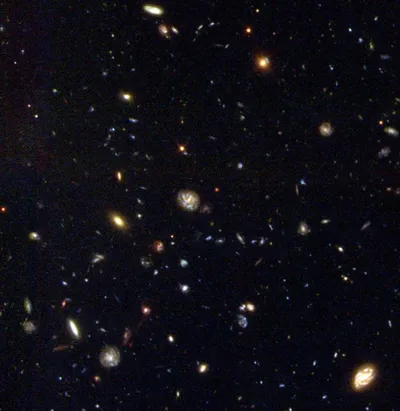
Hubble Deep Field South
Doing it again in the opposite hemisphere took several hundred individual images over 10 days in September and October 1998, with the same Wide Field and Planetary Camera 2, aimed this time at Tucana. The article gives the reason plainly — to provide observatories in the Southern Hemisphere with a similarly deep optical image of the distant universe.
 Hubble Deep Field South - Wikipediahttps://en.wikipedia.org/wiki/Hubble_Deep_Field_South
 - 7
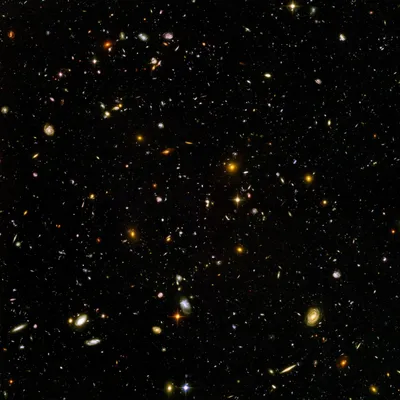
Hubble Ultra-Deep Field
Fornax, in two sessions — 23 September to 28 October 2003, then 4 December 2003 to 15 January 2004. The lead puts an estimated 10,000 galaxies in that one small region of sky, and calls the result a deep-field image rather than a photograph. Between the sessions the telescope came back to the same square four months later.
 Hubble Ultra-Deep Field - Wikipediahttps://en.wikipedia.org/wiki/Hubble_Ultra-Deep_Field
 - 8
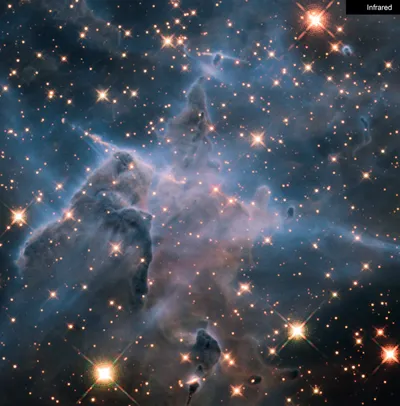
Mystic Mountain
Lovecraft is behind the name — the article says the works of H. P. Lovecraft influenced it. What it shows is a pillar about three light-years tall in the Carina Nebula, caught by Hubble's then-new Wide Field Camera 3, with several Herbig–Haro objects where young stars fire jets into the gas. Nothing in it dates the exposure, so this sits on the year the view went public: 2010, when it marked twenty years of Hubble in orbit.
 Mystic Mountain - Wikipediahttps://en.wikipedia.org/wiki/Mystic_Mountain
 - 9
Solar System Family Portrait
MESSENGER assembled this from 34 frames taken with the Mercury Dual Imaging System during November 2010, from approximately the orbit of Mercury. It is not the 1990 Voyager mosaic, which carries almost the same name and gets mistaken for it constantly. Voyager looked back at the Solar System from outside; this one looks out at it from the inside.
 Family Portrait (MESSENGER) - Wikipediahttps://en.wikipedia.org/wiki/Solar_System_Family_Portrait
 - 10
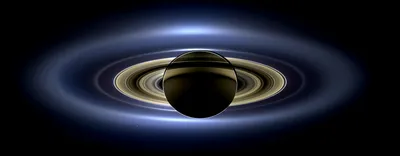
The Day the Earth Smiled
During an eclipse of the Sun on 19 July 2013, Cassini turned to image Saturn and most of its visible ring system, along with Earth and the Moon as distant pale dots. Carolyn Porco, the imaging team leader, conceived it and asked people to look up and smile while the pictures were taken — telling the subject in advance is what makes it odd.
 The Day the Earth Smiled - Wikipediahttps://en.wikipedia.org/wiki/The_Day_the_Earth_Smiled
 - 11
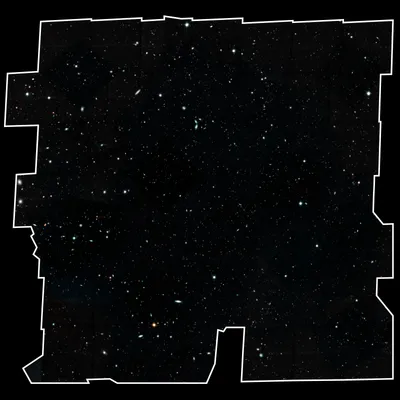
Hubble Legacy Field
No exposure date exists for this one, so the 2 May 2019 NASA announcement is what places it here. It stacks 7,500 exposures out of sixteen years of Hubble data — 250 days of total exposure time, an estimated 265,000 galaxies in Fornax. Same constellation as the Ultra-Deep Field, with the galaxy count up by more than an order of magnitude.
 Hubble Legacy Field - Wikipediahttps://en.wikipedia.org/wiki/Hubble_Legacy_Field
 - 12
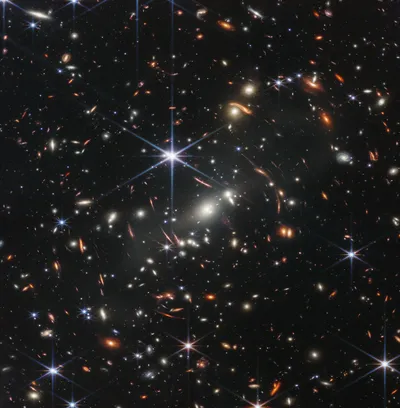
Webb's First Deep Field
Joe Biden unveiled it on 11 July 2022, which is the date the article gives — the first operational image from the James Webb Space Telescope. It is a NIRCam composite totalling 12.5 hours of exposure, showing the galaxy cluster SMACS 0723 as it appeared 4.6 billion years ago. The Hubble Deep Field above needed ten consecutive days.
 Webb's First Deep Field - Wikipediahttps://en.wikipedia.org/wiki/Webb's_First_Deep_Field
 - 13
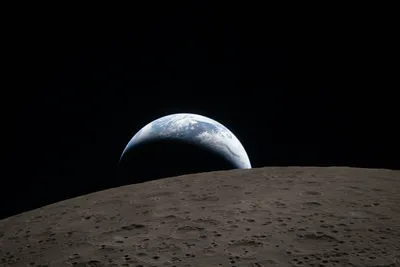
Earthset
Fifty-seven years after Anders, somebody in lunar orbit pointed a camera at Earth again — Christina Koch, on a Nikon D5, at 22:41 UTC on 6 April 2026, during the Artemis II crew's flyby of the Moon. The article dates it to the minute. Nothing here is newer, and the gap back to the first entry is most of a lifetime.
 Earthset - Wikipediahttps://en.wikipedia.org/wiki/Earthset
How this list was ranked
This list is ranked by ListWorld Other Desk, not by community vote.