Every iPhone, Ranked
Thirty-five iPhones, ranked by what stuck rather than by what sold. Vote the order into the shape you think it deserves. Four bands do the work. Phones that changed how you unlock or navigate come first; then phones that changed the body or the screen in a way a later iPhone kept; then phones that added a capability later iPhones kept; then phones nothing has inherited from yet, whether because they were a refresh or because they are too new. Inside a band the later phone wins, since it carries everything the earlier one introduced. Same-day models break Pro, Air, base, e. Comparisons across bands do not hold. Plus, mini and Pro Max get no separate entries, because Wikipedia files them with the base model. Links go to Apple where Apple still runs a marketing page naming that model, and to Wikipedia where the model's old address now serves the generic iPhone page or a shop listing instead. The original iPhone also sits on The Most Influential Gadgets of All Time, a deliberate double.
iPhone X is #1 on “Every iPhone, Ranked”.
- 1
iPhone X
Killing the home button was the biggest bet Apple ever placed on muscle memory. This was the first iPhone designed without one, and that change became standard on every model that followed. Released 3 November 2017. Face ID replaced Touch ID at the same time, scanning your face to unlock the device. Nine years on, that's still how the phone works.
 iPhone X - Wikipediahttps://en.wikipedia.org/wiki/IPhone_X
 - 2
iPhone 5s
Touch ID landed here: a fingerprint reader built into a redesigned home button, used to unlock the phone and authorise App Store and iTunes Store purchases. Released 20 September 2013. Before it you typed a passcode forty times a day; after it you didn't. That is a change to how you operate a phone, not a spec bump.
 iPhone 5s - Wikipediahttps://en.wikipedia.org/wiki/IPhone_5s
 - 3
iPhone (1st generation)
Everything the 2007 original started is still on the phone in your pocket: a 3.5-inch multi-touch display running 320x480 at 163 ppi, no stylus, no keyboard, an interface you drive with a fingertip. Released 29 June 2007 in the United States. Tap, pinch and flick were invented here, and nothing since has needed to replace them.
 iPhone (1st generation) - Wikipediahttps://en.wikipedia.org/wiki/IPhone_(1st_generation)
 - 4
iPhone 15 Pro
Grade 5 titanium replaced the stainless steel frame the Pro line had used for years, and the next year's Pro models shipped in four titanium finishes, so the material stuck. Released 22 September 2023. The Action button arrived at the same time, retiring the mute switch that every iPhone before it had carried on its left edge.
 iPhone 15 Pro - Wikipediahttps://en.wikipedia.org/wiki/IPhone_15_Pro
 - 5
iPhone 14 Pro
Cutting a pill-shaped hole in the screen and animating around it looked like a stunt and turned into furniture. The Dynamic Island sits slightly detached from the top of the display; within a year it was standard on the base iPhone, replacing the notch, and Apple's iPhone 17 page still lists it. Released 16 September 2022.
 iPhone 14 Pro - Wikipediahttps://en.wikipedia.org/wiki/IPhone_14_Pro
 - 6
iPhone 12 Pro
Flat-sided chassis, shared with the rest of the 12 line and described as the first major redesign since the iPhone X, with the 13 arriving the next year on the same flat shape. Released 23 October 2020. What the Pro added on top was a lidar scanner borrowed from the iPad Pro, which is how the Measure app estimates your height.
 iPhone 12 Pro - Wikipediahttps://en.wikipedia.org/wiki/IPhone_12_Pro
 - 7
iPhone 12
Squared-off edges came back, borrowed from the iPhone 4 and 5 and from the iPad Pro, in the first major redesign since the iPhone X, and the 13 kept that flat chassis a year later. Released 23 October 2020. The front took an improved glass-ceramic covering called Ceramic Shield, co-developed with Corning.
 iPhone 12 - Wikipediahttps://en.wikipedia.org/wiki/IPhone_12
 - 8
iPhone XR
Color, an LCD and a single camera, at a price that undercut the XS. The 6.1-inch Liquid Retina LED-backlit IPS panel set the screen format the base iPhone would use for years, and the iPhone 11 shipped the next autumn with the same 6.1 inches and the same 1792 x 828 resolution. Released 26 October 2018.
 iPhone XR - Wikipediahttps://en.wikipedia.org/wiki/IPhone_XR
 - 9
iPhone 6
Bigger, at last. A 4.7-inch display, with a 5.5-inch Plus alongside it, ended Apple's argument that a phone should be reachable one-handed, and the iPhone 7 two years later still came in exactly those two sizes. Released 19 September 2014. A climbdown, handled so smoothly that almost nobody called it one.
 iPhone 6 - Wikipediahttps://en.wikipedia.org/wiki/IPhone_6
 - 10
iPhone 5
Taller by half an inch and lighter in the hand, with a 4-inch screen and a new Lightning connector in place of the 30-pin dock plug everyone owned three cables for. Released 21 September 2012. The 5s kept that same 4-inch screen, and Lightning ran the iPhone until USB-C arrived in 2023.
 iPhone 5 - Wikipediahttps://en.wikipedia.org/wiki/IPhone_5
 - 11
iPhone 4
Glass on both faces with a stainless band around the edge, and a screen Apple called the Retina display: 326 pixels per inch, sharp enough that the marketing stopped quoting resolution and started quoting eyesight. Released 24 June 2010. The 4s retained most of that external design, which is exactly the test this ranking applies.
 iPhone 4 - Wikipediahttps://en.wikipedia.org/wiki/IPhone_4
 - 12
iPhone 3G
Plastic. A redesigned housing replaced the first iPhone's aluminum back, and the 3GS reused it a year later, glossy plastic and tapered edges and metal buttons, unchanged. Released 11 July 2008 across twenty-two countries. Faster data and GPS were the pitch, but the shape is the part the next model actually kept.
 iPhone 3G - Wikipediahttps://en.wikipedia.org/wiki/IPhone_3G
 - 13
iPhone 16e
Apple's own cellular modem showed up first on the cheap one: the C1, in place of the Qualcomm parts every iPhone had used since the 12. Released 28 February 2025. The Air followed with a C1X, so the switch held. Odd that the budget model got the risky silicon, but that is where you test it.
 iPhone 16e - Wikipediahttps://en.wikipedia.org/wiki/IPhone_16e
 - 14
iPhone 16 Pro
Camera Control arrived across all four 16 models, this one included, and Apple's iPhone 17 page still carries the button. Video recording moved to 4K at 120 frames per second, which Apple called its highest resolution and frame rate combination yet. Released 20 September 2024, in a body nearly identical to the 15 Pro's.
 iPhone 16 Pro - Wikipediahttps://en.wikipedia.org/wiki/IPhone_16_Pro
 - 15
iPhone 16
A new button on the right edge, Camera Control, opens the camera app, scrolls through settings and takes the shot. Released 20 September 2024. The iPhone 17 kept it, which is the only test that counts here. Behind it sits a 48-megapixel Fusion camera at the same resolution as the 15's.
 iPhone 16 - Wikipediahttps://en.wikipedia.org/wiki/IPhone_16
 - 16
iPhone 15
USB-C, at last, and only because the European Union insisted on it. The 15 and 15 Plus were the first iPhones to drop the proprietary Lightning connector for a USB-C port, and the 16's charging line names USB-C fast-charge. Released 22 September 2023. One cable for the phone, the tablet and the laptop.
 iPhone 15 - Wikipediahttps://en.wikipedia.org/wiki/IPhone_15
 - 17
iPhone 14
Crash Detection is what earns this one its place: the phone listens for a severe car crash and automatically places an emergency call twenty seconds later, unless you cancel first. Released 16 September 2022. Apple's iPhone 17 page still lists the feature. One you hope never fires, and one you would miss.
 iPhone 14 - Wikipediahttps://en.wikipedia.org/wiki/IPhone_14
 - 18
iPhone 13 Pro
ProMotion finally reached the phone: a variable 10 to 120 Hz refresh rate that drops to 10 Hz to preserve battery and climbs when you scroll. Peak brightness went to 1,200 nits at the same time. Released 24 September 2021. The base iPhone did not get 120 Hz until 2025, four years behind.
 iPhone 13 Pro - Wikipediahttps://en.wikipedia.org/wiki/IPhone_13_Pro
 - 19
iPhone 13
Cinematic mode was the headline: rack-focus video at 1080p and 30 frames per second, on the wide and the front-facing cameras both. Released 24 September 2021. It sounds like a gimmick and half of it is, but the iPhone 14 shipped the same feature a year later, which is what this ranking rewards.
 iPhone 13 - Wikipediahttps://en.wikipedia.org/wiki/IPhone_13
 - 20
iPhone 11 Pro
Three lenses on the back, and a new word on the box. The triple-lens 12MP rear camera array put wide, ultra-wide and telephoto on one phone for the first time, and the 12 Pro carried all three forward. Released 20 September 2019. Apple has sold a Pro model every year since.
 iPhone 11 Pro - Wikipediahttps://en.wikipedia.org/wiki/IPhone_11_Pro
 - 21
iPhone 11
Two cameras on the cheaper model, and the second was the useful one: an f/2.4 ultra-wide lens with a 120 degree field of view, sitting beside the f/1.8 wide. Released 20 September 2019. Base iPhones have carried an ultra-wide ever since, and the 16's is still there with a wider aperture.
 iPhone 11 - Wikipediahttps://en.wikipedia.org/wiki/IPhone_11
 - 22
iPhone XS
Dual SIM arrived here quietly, a nano-SIM in the tray and an eSIM in the silicon. Released 21 September 2018. Six years later the US iPhone 16 shipped eSIM-only, with no tray at all. Otherwise this is the X with a faster chip and an optional larger body, which is a fair summary of an S-year.
 iPhone XS - Wikipediahttps://en.wikipedia.org/wiki/IPhone_XS
 - 23
iPhone 8
Glass backs instead of the aluminum housing every earlier model used, which is what made Qi inductive charging possible. Released 22 September 2017, six weeks before the X turned up and took the whole year's attention. The X supported Qi immediately and the 16 lists MagSafe and Qi 2, so the idea stuck.
 IPhone 8 - Wikipediahttps://en.wikipedia.org/wiki/IPhone_8
 - 24
iPhone 7
Rated IP67 for water and dust, the first officially water-resistant iPhone, and the first without a 3.5 mm headphone jack, a removal nobody asked for and nobody has reversed. Released 16 September 2016. The 8 turned up the next year rated IP67 as well, so the sealing stuck even if the goodwill did not.
 iPhone 7 - Wikipediahttps://en.wikipedia.org/wiki/IPhone_7
 - 25
iPhone 6s
4K video recording at 3840x2160 appeared on an iPhone for the first time here, and the SE that followed six months later shot 4K too. Released 25 September 2015. The other headline was 3D Touch, which added pressure-sensitive input to the display, a genuinely clever idea that never found its job.
 iPhone 6s - Wikipediahttps://en.wikipedia.org/wiki/IPhone_6s
 - 26
iPhone 4s
Siri showed up as an automated voice control system that let you give the phone spoken commands, and the iPhone 5 shipped with it the following year. Released 14 October 2011, retaining most of the iPhone 4's external design. The camera also went to 8 megapixels and 1080p video, which mattered more at the time.
 iPhone 4s - Wikipediahttps://en.wikipedia.org/wiki/IPhone_4s
 - 27
iPhone 3GS
Video recording is the part that lasted. Auto-focus, auto white balance, auto macro and VGA video capture, on a phone whose exterior was identical to the 3G's, glossy plastic and all. Unveiled 8 June 2009 at WWDC in San Francisco. By the 4s, two years later, the same pipeline was shooting 1080p.
iPhone 3GS - Wikipediahttps://en.wikipedia.org/wiki/IPhone_3GS - 28
iPhone 17e
March 2026's budget model runs the Apple A19 system on a chip with a binned four-core GPU, and Apple's own C1X modem rather than a bought-in one. Released 11 March 2026. Nothing has had the chance to inherit from it yet, and the e-line's job is to be cheap rather than to be first.
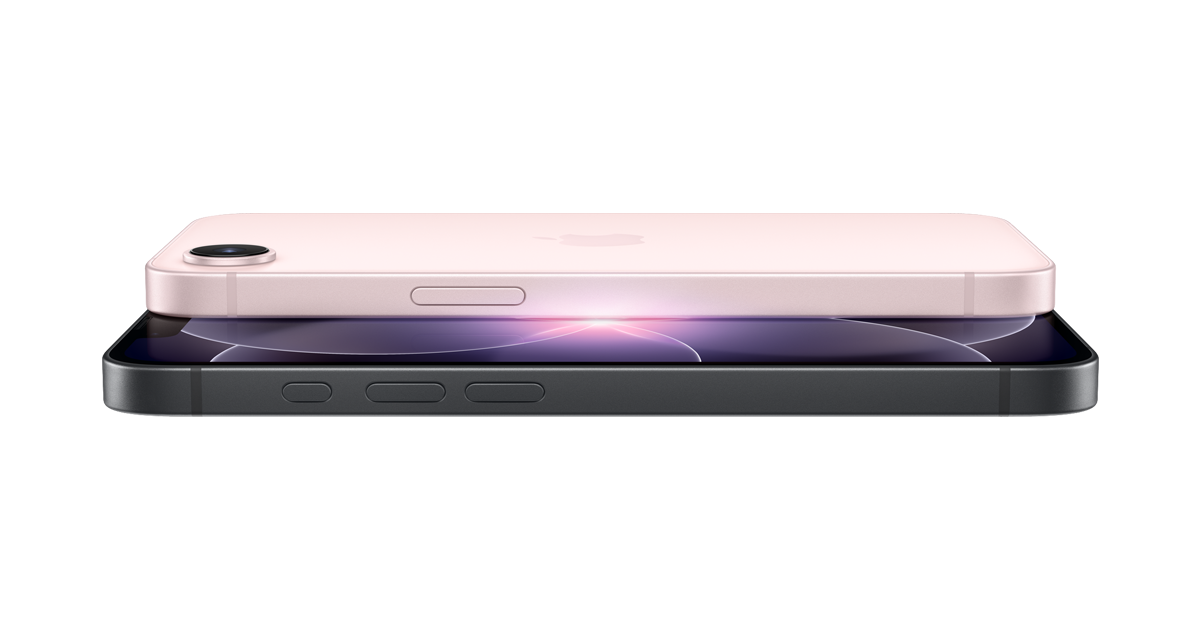 iPhone 17eiPhone 17e. Durable Ceramic Shield 2. Long Battery life. 48MP Camera. 256GB storage. A19 chip. iOS 27. Built for Apple Intelligence.https://www.apple.com/iphone-17e/
 - 29
iPhone 17 Pro
Vapor chamber cooling, built straight into a new aerospace-grade aluminum unibody frame, is a real answer to the thing that actually limits phone performance, which is heat. Released 19 September 2025. Whether the aluminum body lasts the way titanium and stainless steel did is a question nothing has answered yet.
 iPhoneDesigned for Apple Intelligence. Discover iPhone Duo, iPhone 18 Pro, iPhone Air, iPhone 17, and iPhone 17e.https://www.apple.com/iphone-17-pro/
 - 30
iPhone Air
A depth of 5.6 mm makes this the thinnest iPhone Apple has built, beating the 6.9 mm iPhone 6 that had held the record for eleven years. Released 19 September 2025. Thinness costs you battery and camera, and no later model has copied the shape yet, so it sits where the rule puts it.
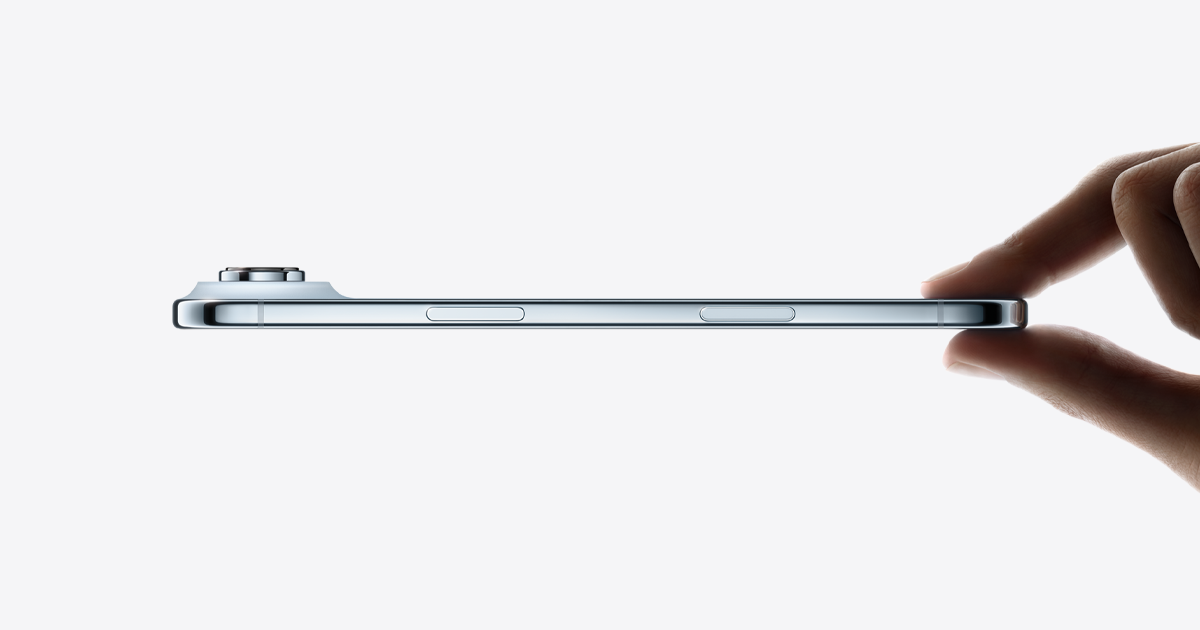 iPhone AiriPhone Air. Incredibly light and thin. With the powerful A19 Pro chip inside. The new Center Stage front camera. And Ceramic Shield front and back.https://www.apple.com/iphone-air/
 - 31
iPhone 17
120 Hz ProMotion on a non-Pro iPhone at last, on a larger 6.3-inch OLED panel, four years after the 13 Pro had it. Released 19 September 2025. Inheriting a feature is not the same as introducing one. Lovely screen, though, and the jump from 60 Hz is the most noticeable upgrade the base line has had in years.
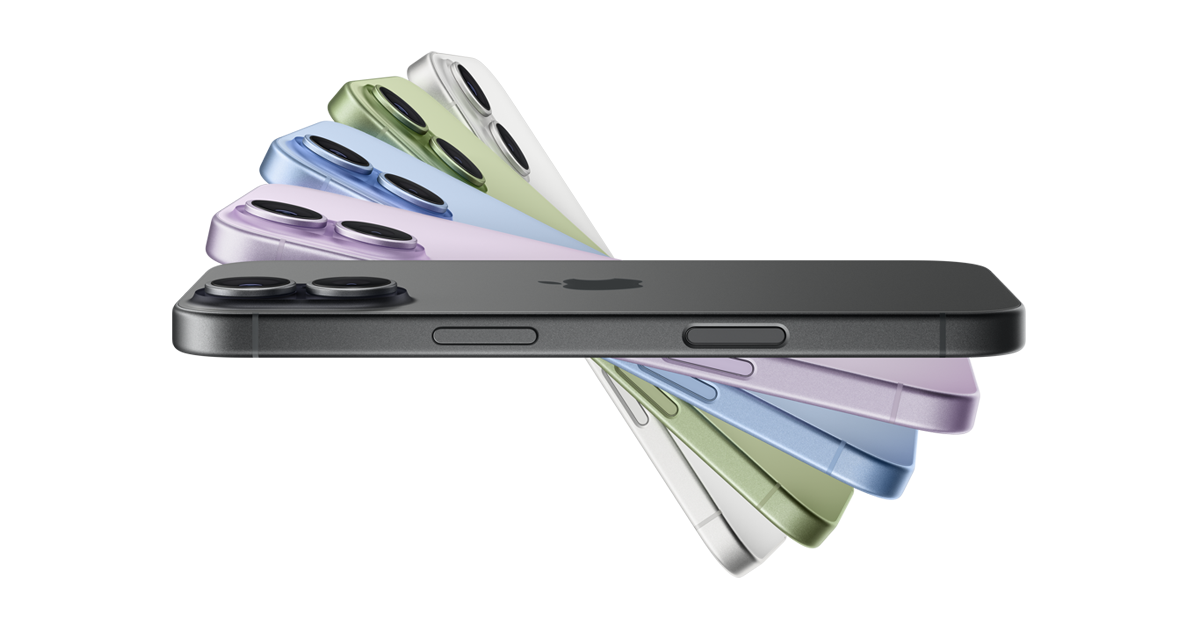 iPhone 17iPhone 17. Center Stage front camera. Latest-generation Ceramic Shield. 6.3-inch ProMotion display. A19 chip. Five gorgeous colors.https://www.apple.com/iphone-17/
 - 32
iPhone SE (3rd generation)
Same dimensions and form factor as the second-generation SE, with the A15 Bionic system-on-chip and 5G lifted from the iPhone 13 line. Released 18 March 2022. Nothing here started anywhere. It is a 2017 body with 2021 silicon inside, sold to people who wanted a small phone with a home button. Fair trade, no legacy.
 iPhone SE (3rd generation) - Wikipediahttps://en.wikipedia.org/wiki/IPhone_SE_(3rd_generation)
 - 33
iPhone SE (2nd generation)
Following the pattern the first SE set, this one takes the iPhone 8's form factor and fills it with internal components from the iPhone 11 lineup. Released 24 April 2020. Cheap, genuinely quick, and it introduced nothing whatsoever, which is the entire point of an SE and the reason it sits down here.
iPhone SE (2nd generation) - Wikipediahttps://en.wikipedia.org/wiki/IPhone_SE_(2nd_generation) - 34
iPhone SE (1st generation)
Physical design and dimensions lifted straight from the 5s, internals close to the 6s: the Apple A9 system-on-chip, a bigger battery, and a 12-megapixel camera shooting 4K at 30 frames per second. Released 31 March 2016. The best small phone Apple ever sold, and a phone that started absolutely nothing.
 iPhone SE (1st generation) - Wikipediahttps://en.wikipedia.org/wiki/IPhone_SE_(1st_generation)
 - 35
iPhone 5c
Hard-coated polycarbonate in blue, green, pink, yellow and white, with a black glass front. Cheerful, well made, and unlike anything Apple has shipped since. Released 20 September 2013 alongside the 5s. Nothing later copied the shell or the colors, and by the rule this list runs on, that is what puts it at the end.
 iPhone 5c - Wikipediahttps://en.wikipedia.org/wiki/IPhone_5c
How this list was ranked
Readers rank this list by voting items up and down. Items are ordered by reader votes.