The Best Constellations for Beginner Stargazers
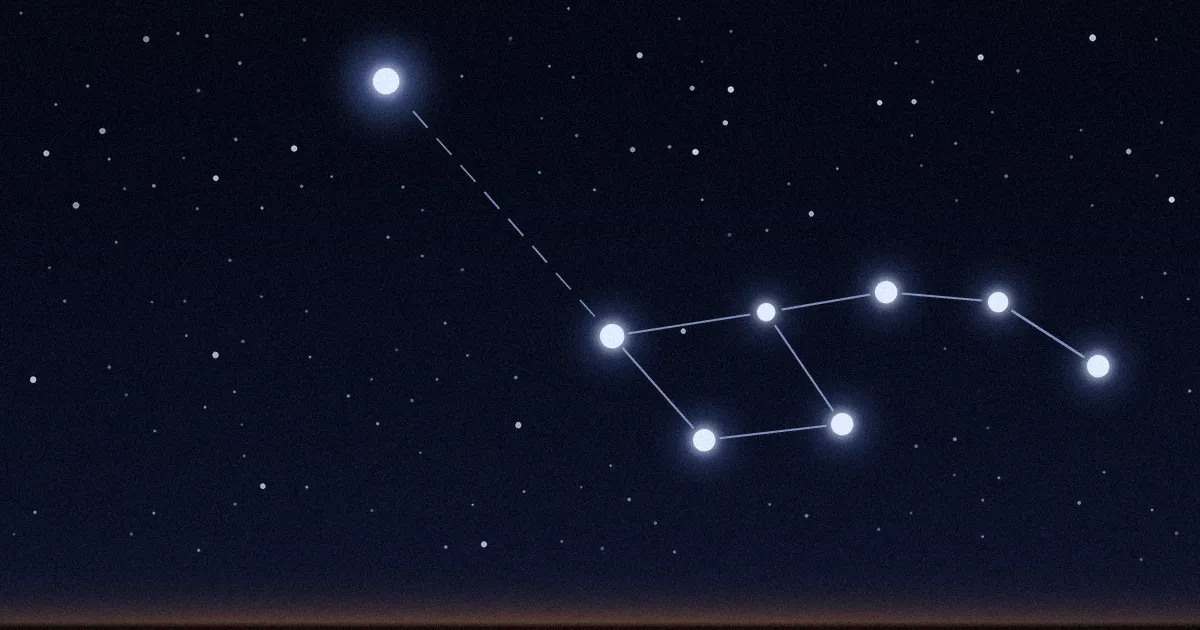
Constellations in the order you find them, written for mid-northern latitudes: the US, Europe, most of Asia. Start with the Big Dipper, which you can pick out from a city pavement with no chart, and every entry after it is found from something an earlier one taught you — a pointer line, the arc of a handle, a star's colour. A few anchors need nothing but your eyes: the Dipper, Orion's Belt, Vega and, far enough south, the Pointers beside the Southern Cross. Everything else is found from one of those or from a skill one taught, the way Scorpius is picked out by the colour Orion showed you. South of the equator the Dipper may never clear the horizon, so the last entry is for when you travel. The Big Dipper itself isn't an entry, because it isn't a constellation: it's seven stars inside Ursa Major. Asterisms are finding aids, never entries. Each entry says when it is up for a 9 p.m. observer, from its article. If your sky differs, fork it and make your own version.
Ursa Major is #1 on “The Best Constellations for Beginner Stargazers”, ranked by ListWorld Other Desk.
- 1
Ursa Major
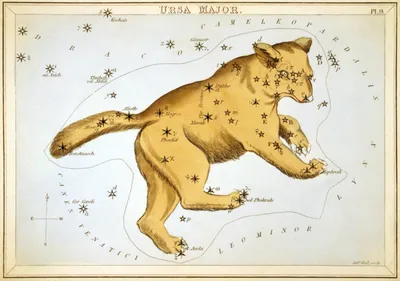
Find the Big Dipper first: seven stars in the shape of a saucepan, high in the north at 9 p.m. in April and above the horizon all year from mid-northern latitudes, where the article calls the constellation circumpolar. The Dipper is the rump and tail of a much larger bear; Alioth, in the handle, is its brightest star. Look at the bend of the handle — Mizar has a faint companion, Alcor, that you can split without binoculars.
 Ursa Major - Wikipediahttps://en.wikipedia.org/wiki/Ursa_Major
 - 2
Ursa Minor
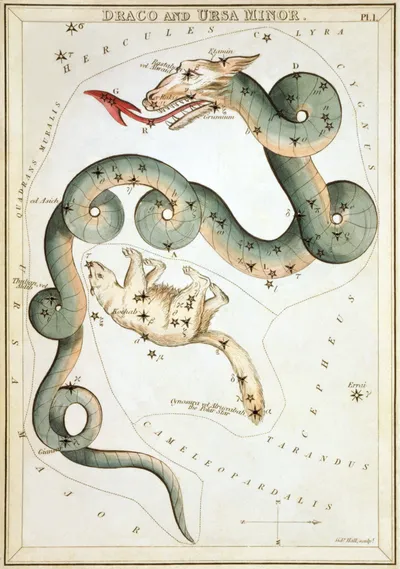
Two stars at the outer edge of the Dipper's bowl, Merak and Dubhe, do the work: a line from Merak through Dubhe, five times their separation, lands on Polaris — within a degree of the north celestial pole and the Little Bear's brightest star, around second magnitude. No month to wait for: the article says the constellation is visible only from the northern hemisphere and its stars can be observed all year, so any clear night from mid-northern latitudes will do.
 Ursa Minor - Wikipediahttps://en.wikipedia.org/wiki/Ursa_Minor
 - 3
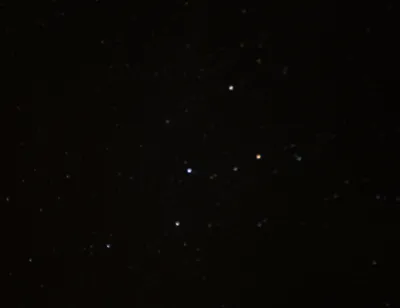
Cassiopeia
Across the pole from the Dipper sits a W of five bright stars. A line from Alkaid, the last star of the Dipper's handle, through Polaris and about as far again lands on it — circling Polaris opposite the Dipper, below the pole on spring and summer nights, above it and inverted in winter. Best at 9 p.m. in November from mid-northern latitudes. Schedar, at magnitude 2.2, is the brightest of the five.
 Cassiopeia (constellation) - Wikipediahttps://en.wikipedia.org/wiki/Cassiopeia_(constellation)
 - 4

Boötes
Follow the arc of the Dipper's handle, Alioth to Mizar to Alkaid, and keep curving: the first bright star you reach is Arcturus — an orange giant and the fourth-brightest star in the sky. The rest of the Herdsman hangs above it as a kite, or an ice-cream cone, with Arcturus at the point. The article says the constellation culminates at midnight around 2 May, so May and June evenings are the time.
 Boötes - Wikipediahttps://en.wikipedia.org/wiki/Boötes
 - 5
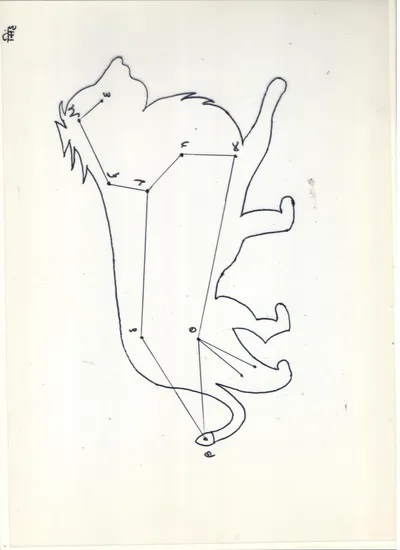
Leo
Back at the bowl, a line from Megrez to Phecda, the two stars on the inside, carried on southward leads to Regulus, a blue-white star of about magnitude 1.3 — and past it to Alphard in Hydra. Regulus is the bottom of the Sickle, six stars that read as a backwards question mark: the lion's head and mane. Highest at 9 p.m. in April, the same month as the Dipper.
 Leo (constellation) - Wikipediahttps://en.wikipedia.org/wiki/Leo_(constellation)
 - 6
Orion
Three stars in a tight row, Alnitak, Alnilam and Mintaka, make the Belt, and the Belt needs no pointer: due south at 9 p.m. in January and high enough to clear rooftops. Above it sits Betelgeuse, a red supergiant and the constellation's second-brightest star; below it Rigel, a blue supergiant, seventh-brightest in the night sky. Learn those two colours now — the next two entries extend the Belt, and the one after looks east of it.
 Orion (constellation) - Wikipediahttps://en.wikipedia.org/wiki/Orion_(constellation)
 - 7
Taurus
Extend the Belt northwestward, up and to the right, and the line runs into Aldebaran, an orange giant and the brightest member of the constellation. The V of fainter stars around it is the Hyades, an open cluster; keep going the same way and you reach the Pleiades — the Seven Sisters, a second cluster you can see unaided. Highest at 9 p.m. in January, alongside Orion.
 Taurus (constellation) - Wikipediahttps://en.wikipedia.org/wiki/Taurus_(constellation)
 - 8
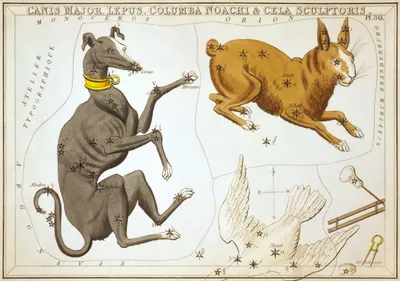
Canis Major
The same line the other way. Carry the Belt southeastward, down and to the left, and it points at Sirius — the brightest star in the night sky, at about magnitude −1.5, and bright mainly because it is close, 8.6 light-years off. Sirius sits at the top of the Big Dog; the rest of it trails down toward the horizon. Best placed at 9 p.m. in February, a month behind Orion.
 Canis Major - Wikipediahttps://en.wikipedia.org/wiki/Canis_Major
 - 9

Gemini
East of the Belt and the Hyades, which the article gives as the easiest route in, sit two bright stars of nearly equal brightness close together: Castor and Pollux, the twins. Pollux, orange at about magnitude 1.1, is the brighter; Castor, blue-white, is a system of six stars — the eye sees one. Prominent all winter and up the entire night in December and January.
 Gemini (constellation) - Wikipediahttps://en.wikipedia.org/wiki/Gemini_(constellation)
 - 10
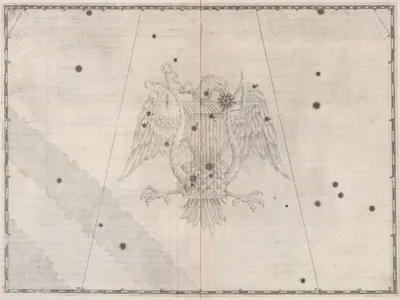
Lyra
When Orion is gone, switch anchors. Vega is nearly overhead at 9 p.m. in August and, after Arcturus, the brightest star of the northern hemisphere. It is the brightest corner of the Summer Triangle, three stars in three constellations. The lyre itself is a small parallelogram hanging below Vega — and just beside Vega, Epsilon Lyrae, the Double Double, splits in binoculars and splits again in a telescope.
 Lyra - Wikipediahttps://en.wikipedia.org/wiki/Lyra
 - 11
Cygnus
Deneb is the Summer Triangle's second corner, the one sitting in the Milky Way, and the article calls it the most distant first-magnitude star. It marks the swan's tail; the shape most people actually see is the Northern Cross. The article gives a culmination at midnight on 29 June, which puts it highest at 9 p.m. in mid-August and in the evening sky from early summer to mid-autumn. Albireo, the beak, splits in binoculars — orange beside blue-green.
 Cygnus (constellation) - Wikipediahttps://en.wikipedia.org/wiki/Cygnus_(constellation)
 - 12
Scorpius
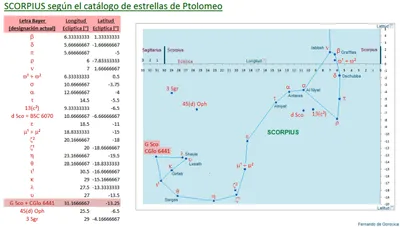
Red is the clue. Antares, the 'rival of Mars', is the reddish star low in the south at 9 p.m. in July, and once you have told Betelgeuse from Rigel you will pick it out without a pointer. From there the scorpion curls down toward the horizon in what the article calls a longshoreman's hook, ending at Shaula and Lesath, whose names both mean 'sting'. It lies in the southern celestial hemisphere, so find a clear southern skyline.
 Scorpius - Wikipediahttps://en.wikipedia.org/wiki/Scorpius
 - 13
Crux
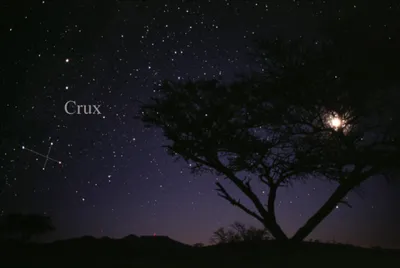
A trip south is the price of this one. The Southern Cross is four bright stars, each brighter than magnitude 2.8, inside the smallest of the 88 constellations, and south of the 34th parallel it never sets. The Pointers, Alpha and Beta Centauri, sit beside it and settle the argument with the larger, dimmer False Cross, which has none. From the tropics it shows April to June — at 25° N, around 10 p.m. at the end of April.
 Crux - Wikipediahttps://en.wikipedia.org/wiki/Crux
How this list was ranked
This list is ranked by ListWorld Other Desk, not by community vote.