The Best Card Games You Can Play with a Standard Deck
Every game here needs one standard 52-card pack and nothing else, and the ranking is open — vote it into whatever order you think is right. The scope is one pack at the game's normal player count, not one pack always: a couple of these call for a second deck once the table gets big. The test is what the article says you play with, which is why Old Maid still counts after it removes three queens. Euchre and Skat name a shortened deck, Canasta and Bezique a bigger one, Scopa an Italian one, and all of them are out — what's left reads Anglo-American, and there's no honest way around that. One rule cuts deeper than the deck test: an entry's lead has to state a player count, because that's the fact every item carries. Spades, Whist and Poker go for want of it. The number itself doesn't set the order; how much game you get for the trouble of starting one does.
Hearts is #1 on “The Best Card Games You Can Play with a Standard Deck”.
- 1
Hearts
Avoid winning tricks — that's the entire idea, and it takes about a minute to explain. The lead calls it an evasion-type game for four players that most variations stretch to between three and six, so three is the smallest number it names. The depth is shooting the moon, the article's word for the slam, which it dates to Britain in 1939.
 Hearts (card game) - Wikipediahttps://en.wikipedia.org/wiki/Hearts_(card_game)
 - 2
Gin Rummy
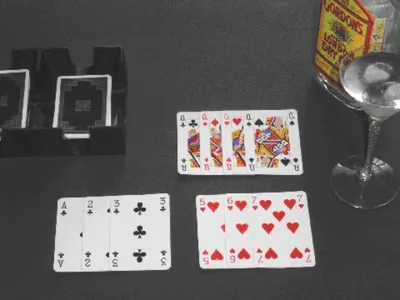
Two players, ten cards each, and every hand turns on when to stop drawing. Its lead describes a two-player variant of Rummy, and two is the only count it states. Knocking with ten or fewer points of deadwood ends the hand early — knocking with none is going gin, which the article says typically pays a 25-point bonus.
 Gin rummy - Wikipediahttps://en.wikipedia.org/wiki/Gin_rummy
 - 3
Cribbage
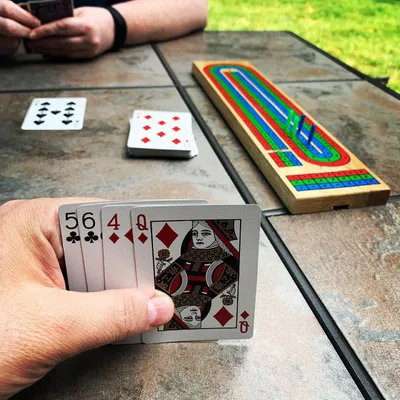
Scoring happens all the way through, which is why the board exists — though the article says scores can be kept on a piece of paper instead. Traditionally for two players, adaptable to three or four, so two is the smallest count its lead gives. Each player discards face down to form the crib, a spare hand the dealer uses later.
 Cribbage - Wikipediahttps://en.wikipedia.org/wiki/Cribbage
 - 4
Cassino
Building is what makes this one worth learning. The lead calls it an English card game for two to four players using a standard, 52-card, French-suited pack, so two is its smallest. A player builds by placing a hand card on a table card and announcing the total — put a 3 on a 2, call five, and the value of that build is fixed at five.
 Cassino (card game) - Wikipediahttps://en.wikipedia.org/wiki/Cassino_(card_game)
 - 5
Crazy Eights
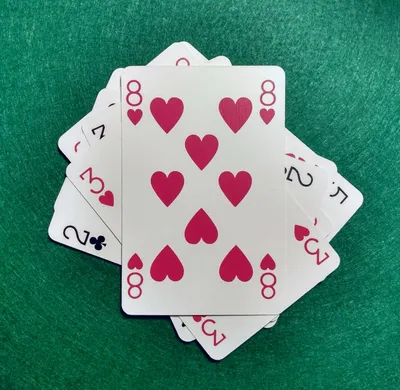
An eight played on anything changes the current suit — the rule the whole family takes its name from. Its lead calls this a card game for two to seven players and the best-known American member of the Eights Group, alongside Switch, Mau-Mau, Whot! and Uno. Two is the smallest count stated. Above five players it asks for a second deck.
 Crazy Eights - Wikipediahttps://en.wikipedia.org/wiki/Crazy_Eights
 - 6
Pontoon
Stick or twist against a banker, in the British house version of twenty-one. The lead states three to ten players, so three is its smallest, and the pack is a standard 52 cards without jokers. Hold an ace with a ten-point card when your second card arrives and you declare it at once — beat the banker that way and you can take over the deal.
 Pontoon (card game) - Wikipediahttps://en.wikipedia.org/wiki/Pontoon_(card_game)
 - 7
Thirty-One
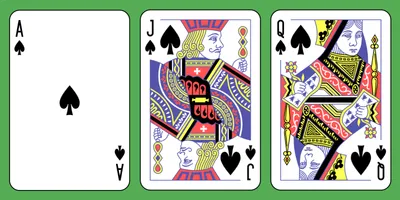
The target is 31, and each player gets a hand of three cards to reach it. Its lead calls it a gambling game played by two to seven people, so two is the smallest count stated. A player who believes their hand already beats one opponent may knock on the table instead of drawing and discarding — everyone else then gets one more turn.
 Thirty-one (card game) - Wikipediahttps://en.wikipedia.org/wiki/Thirty-one_(card_game)
 - 8
Kings in the Corner
Solitaire logic, played against other people. The lead calls it a multi-player patience or solitaire-style game for two to four players using a standard 52-card pack, so two is the smallest it states. What gives the game its name is the king: hold one at any time and you may place it in one of the empty corners.
 Kings in the Corner - Wikipediahttps://en.wikipedia.org/wiki/Kings_in_the_Corner
 - 9
Klondike
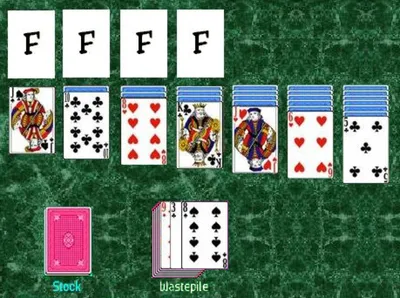
Best known version of the patience family, and its lead says exactly that. The count is one player, the deck a standard 52 cards without jokers. A tableau of seven fanned piles is laid from left to right, each pile holding one more card than the last — and the remaining cards sit face down at the upper left as the stock.
 Klondike (solitaire) - Wikipediahttps://en.wikipedia.org/wiki/Klondike_(solitaire)
 - 10
Spit
Nobody waits for anybody. Both players attempt to play cards into the two spit piles as fast as they can, and the article says so plainly: there are no turns. Its lead calls this a shedding game for two players — two is the only count it gives. The infobox names the deck as a standard 52-card pack.
Spit (card game) - Wikipediahttps://en.wikipedia.org/wiki/Spit_(card_game) - 11
Go Fish
Ask an opponent for a rank; if they haven't got it, they tell you to go fish and you draw from the stock. The lead calls it a game for approximately two to five players, often played by children, so two is the smallest count stated. The deal is five cards each from a standard 52-card deck — seven when only two or three are playing.
 Go Fish - Wikipediahttps://en.wikipedia.org/wiki/Go_Fish
 - 12
Old Maid
Before the deal, three queens leave the pack, which strands the fourth as the Old Maid. Whoever is left holding that single queen at the end loses. One standard pack does it, or two if more than six play. Its lead calls it a 19th-century American game for two or more players, so two is the smallest count stated — though the body then says any number may play.
 Old maid (card game) - Wikipediahttps://en.wikipedia.org/wiki/Old_maid_(card_game)
 - 13
Contract Bridge
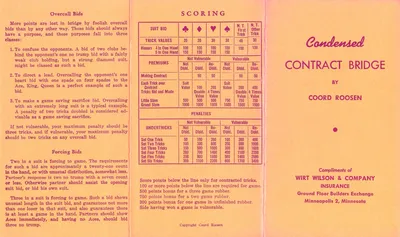
Most of what sits above this can be taught in a minute. This one takes a season — which is why it ranks down here rather than near the top. Its lead states four players in two competing partnerships, so four is the smallest count, on a standard 52-card deck. Once the contract is decided and the first lead made, the declarer's partner, the dummy, lays their cards face up and declarer plays both hands.
 Contract bridge - Wikipediahttps://en.wikipedia.org/wiki/Contract_bridge
 - 14
War
No decisions exist in this one, which is why it finishes last. The lead calls it a simple card game, typically played by two players using a standard playing card deck, and it gives Battle as the British name. Ties are the only event: both players place the next card face down and then another face up, and the owner of the higher face-up card wins the war and takes the table.
 War (card game) - Wikipediahttps://en.wikipedia.org/wiki/War_(card_game)
How this list was ranked
Readers rank this list by voting items up and down. Items are ordered by reader votes.