The Best Time-Travel Movies
The best time-travel movies ever made, ranked. Vote them up or down until the timeline reads the way you'd have it. One rule governs the door: somebody must actually travel, so memory films like Eternal Sunshine of the Spotless Mind and perception films like Arrival stay out, and Chris Marker's La Jetée misses only for being a 28-minute short. Within that rule everything counts: loops, closed paradoxes, relativity, a phone booth. Ordering is straight consensus weighted by rewatch value and by how seriously a film takes its own rules, so pictures that treat causality as a system (Primer, Looper) place above pictures that treat it as a plot key, and Back to the Future holds the top because it is the one film every argument about this genre ends up agreeing on. Terminator 2 appears for its time-war spine; its decade laurels live on our '90s list. Fourteen films, one mechanism, no dreams.
Back to the Future (1985) is #1 on “The Best Time-Travel Movies”.
- 1
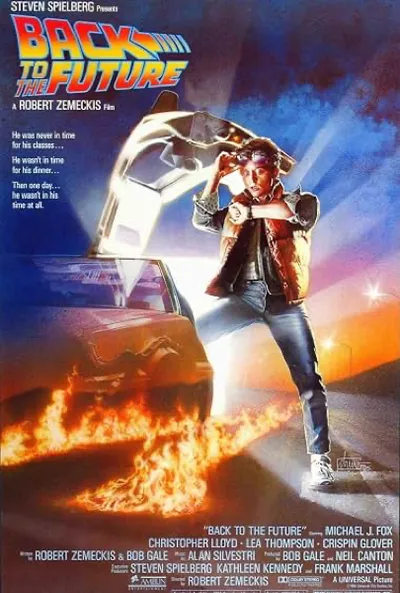
Back to the Future (1985)
Robert Zemeckis directed the 1985 machine every later loop movie borrows from: DeLorean, flux capacitor, 88 mph, a photograph that fades as causality frays. The clock tower climax, with lightning due at 10:04, a stalled engine and a torn cable, is still the cleanest ticking-clock finale the genre has produced. It sits at number one because nobody has ever made cause and effect this much fun.
Back to the Future1985 · Robert Zemeckis - 2
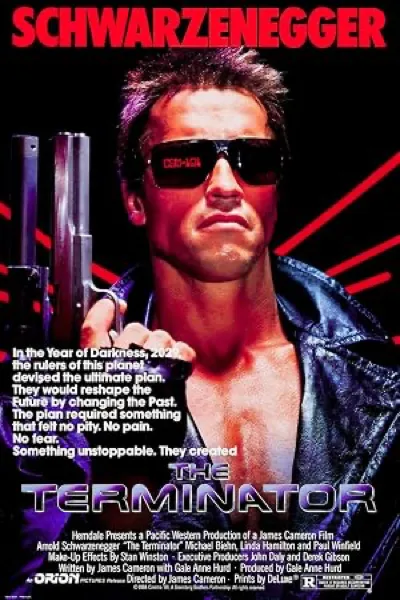
The Terminator (1984)
Before the sequels turned him into a franchise, James Cameron's 1984 original was a lean chase film built on a closed loop: the machine and the protector arrive together, and Kyle Reese fathers the son who will one day send him back. The Tech Noir club shootout, all neon and slow motion and a red laser dot, is where the premise turns physical. Still the best-argued paradox in mainstream film.
The Terminator1984 · James Cameron - 3
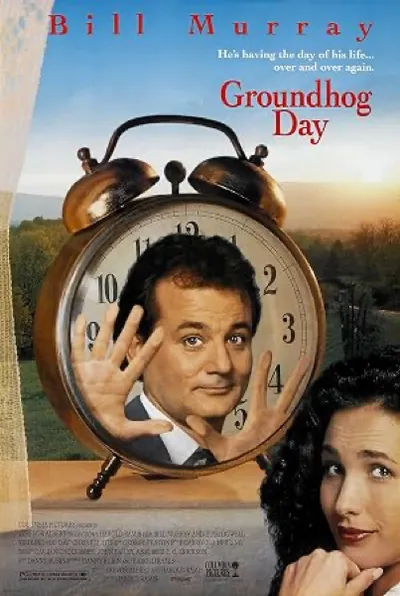
Groundhog Day (1993)
Harold Ramis keeps the machinery invisible, with no device and no rules and no explanation, just Punxsutawney on repeat until Phil Connors gets a single February 2nd right. Watch how the Ned Ryerson street-corner meeting mutates from annoyance to weapon to grace across the loops; the whole film's argument lives in that one recurring beat. In 1993 it quietly made the time loop a genre of its own.
Groundhog Day1993 · Harold Ramis - 4
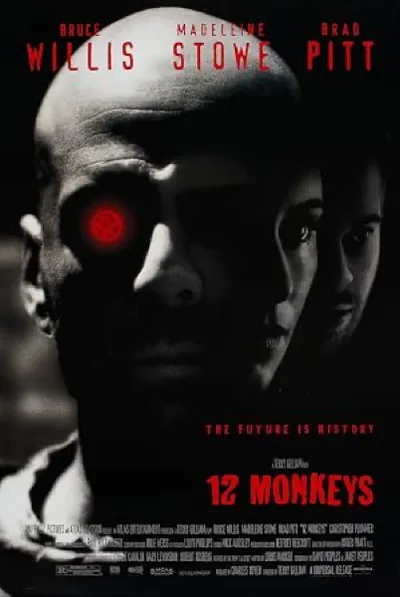
12 Monkeys (1995)
Terry Gilliam built his 1995 plague thriller out of Chris Marker's 28-minute photo-novel La Jetée and kept its cruelest idea: a man haunted since childhood by an image that turns out to be his own death. The airport finale, a boy watching a running man fall, closes the loop the whole film has been quietly drawing. Fatalist time travel, done better than anyone before or since.
12 Monkeys1995 · Terry Gilliam - 5
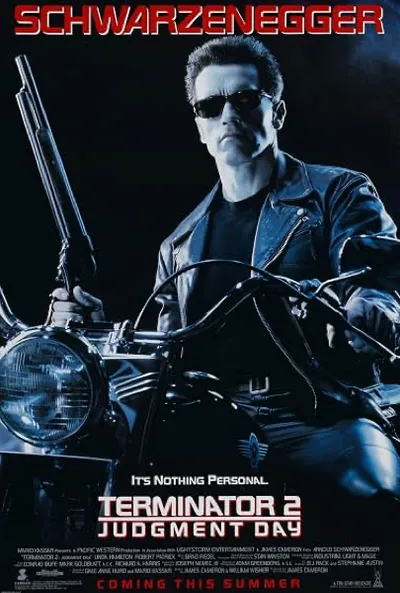
Terminator 2: Judgment Day (1991)
Cameron's 1991 sequel gets remembered for liquid metal, but its time-travel spine is the sharper trick: two machines sent to the same date, a war fought retroactively over one teenager's life. The opening 2029 future-war prologue, skulls under tank treads and plasma fire in the dark, shows the outcome both visitors were sent to rewrite. Its case for a changeable future deliberately flips the first film's fatalism.
Terminator 2: Judgment Day1991 · James Cameron - 6
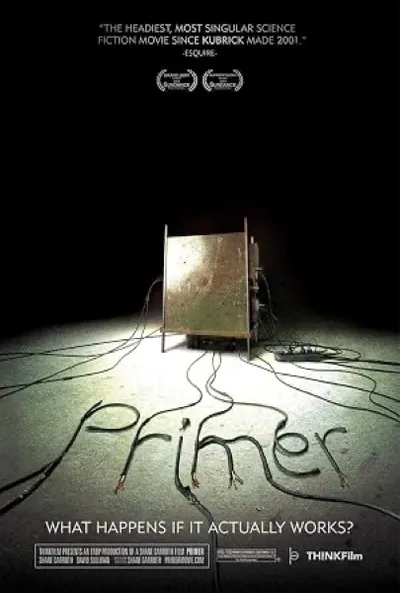
Primer (2004)
Seven thousand dollars, the production budget Wikipedia still lists, bought the densest time-travel film ever made. Shane Carruth's 2004 debut refuses to simplify: engineers in a garage discover the box by accident, then wreck a friendship managing recursive copies of themselves. The rooftop stakeout, two men watching their own doubles walk into the storage facility, is the moment the film's geometry becomes visible. Rewards a third viewing; requires a second.
Primer2004 · Shane Carruth - 7
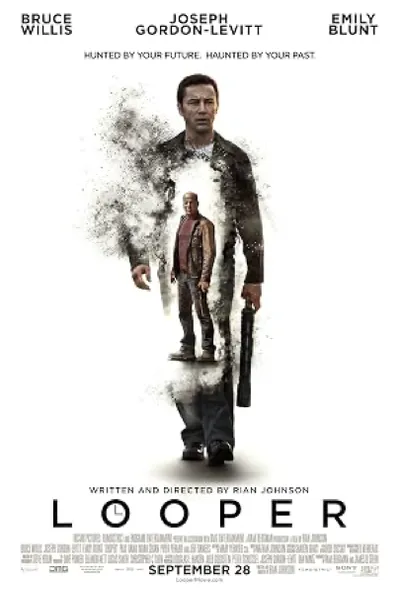
Looper (2012)
Rian Johnson treats time travel as a waste-disposal industry: the mob sends bodies back thirty years, and the 2012 film follows the man paid to shoot them. Its nastiest scene is pure mechanics, with Seth's older self watching words appear on his forearm, carved into the younger man across the timeline. Where its blockbuster peers use loops for spectacle, Johnson uses one to ask what self-interest even means.
Looper2012 · Rian Johnson - 8
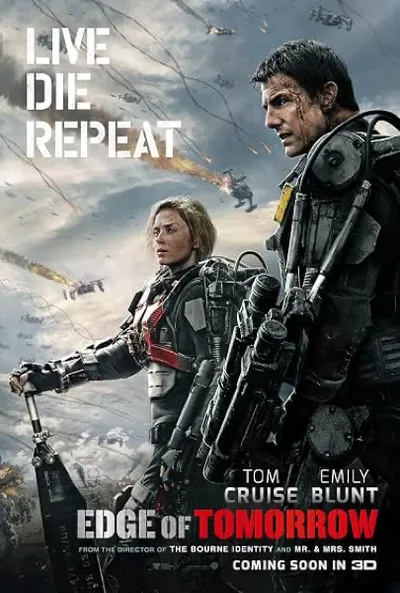
Edge of Tomorrow (2014)
Live, die, repeat was the marketing line, but the joke underneath Doug Liman's 2014 film is that resurrection looks like a training montage: nearly every reset ends with Rita shooting Cage in the head mid-drill and calling for another run. Tom Cruise playing a coward who must earn his own star image is the smartest casting choice of its decade. The loop as videogame respawn, finally done right.
Edge of Tomorrow2014 · Doug Liman - 9
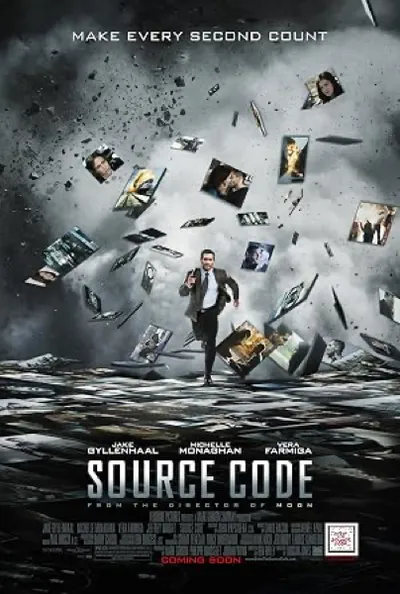
Source Code (2011)
Eight minutes is the whole canvas: Duncan Jones's 2011 thriller keeps re-running the same Chicago commuter train up to the moment it explodes, sending Colter Stevens back with a little more knowledge each pass. The freeze-frame at what should be the final kiss, with the mission clock expiring mid-moment, is the film's one flourish, and it earns it. A studio thriller with the discipline of a short story.
Source Code2011 · Duncan Jones - 10
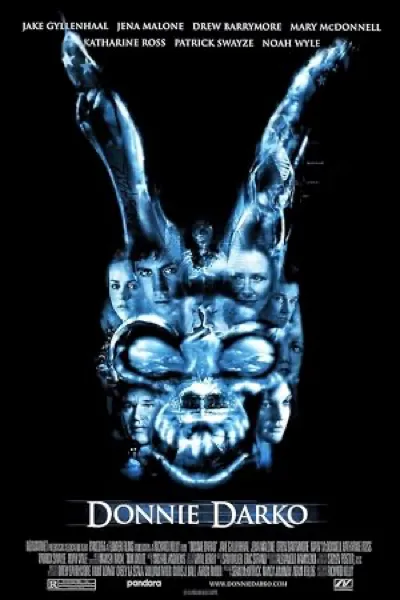
Donnie Darko (2001)
Somewhere between suburban satire and physics homework sits Richard Kelly's 2001 debut, in which a jet engine falls into a teenager's bedroom weeks before the plane it belongs to ever takes off. That falling-engine paradox is the whole mystery: honest time travel, wormholes and all, however dreamlike it plays. Kelly's tangent-universe rules reward the viewers who chase them; everyone else still gets the decade's best mood piece.
Donnie Darko2001 · Richard Kelly - 11
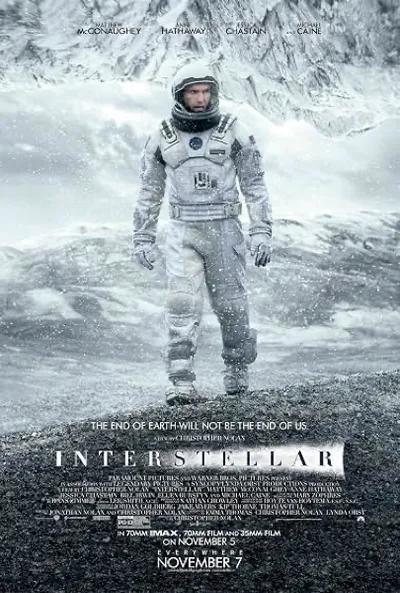
Interstellar (2014)
Relativity does the traveling here: Christopher Nolan's 2014 epic makes minutes on one planet cost decades on the ship, which is time travel by physics rather than paradox. Cooper returning from Miller's planet to twenty-three years of backlogged video messages, his children aging in a single sitting, is the harshest scene Nolan has shot. It counts for this list because the film weaponizes time itself, not memory or dream.
Interstellar2014 · Christopher Nolan - 12
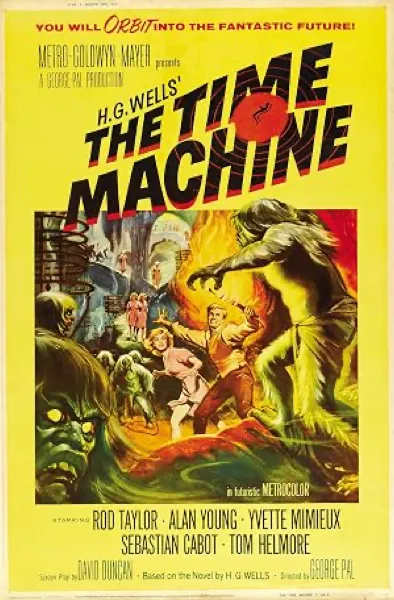
The Time Machine (1960)
George Pal's 1960 version of the H. G. Wells novel invented the images everyone still reaches for: a shop-window mannequin whose hemlines flicker through decades of fashion as the traveler accelerates, seasons strobing past the bay window. Rod Taylor sells the Victorian confidence, the Morlocks still unsettle, and every sleeker film above is downstream of that time-lapse grammar. Oldest entry here, and the reason the furniture exists.
The Time Machine1960 · George Pal - 13
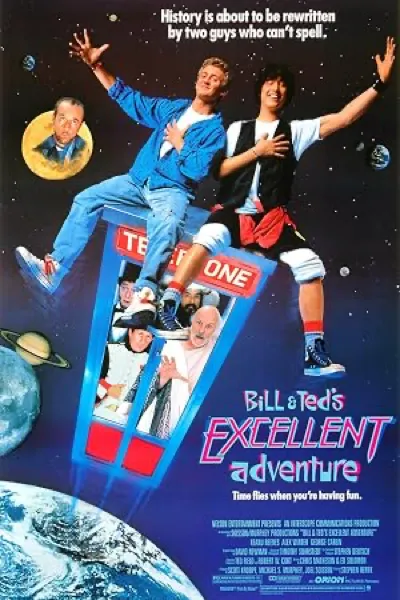
Bill & Ted's Excellent Adventure (1989)
Stephen Herek's 1989 comedy understands that a phone booth full of kidnapped historical figures is funnier than any paradox. Napoleon abandoned at a San Dimas waterslide park, running the Waterloo slide again and again, is the film's thesis in one image: history is wasted on historians. Least rigorous entry on the list, most quotable, and the closing history report almost justifies the whole genre by itself.
Bill & Ted's Excellent Adventure1989 · Stephen Herek - 14
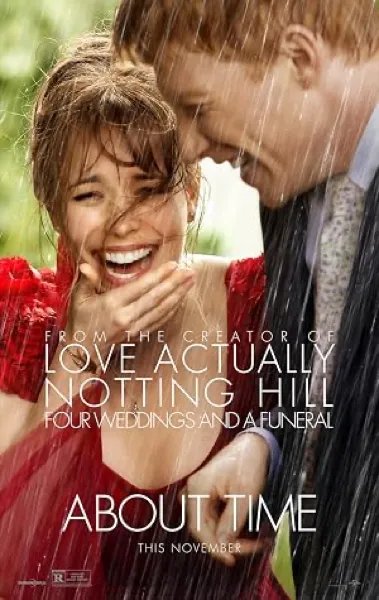
About Time (2013)
Richard Curtis smuggles a time-travel engine into a father-son weepie: the men of the family step into a dark closet, clench their fists, and revisit any moment they have lived. Rules get broken freely, children reshuffle and timelines wobble, and the 2013 film shrugs, because its point is the last game of table tennis with dad, chosen over one more rewrite. Soft science, hard feelings; it closes the list on purpose.
About Time2013 · Richard Curtis
How this list was ranked
Readers rank this list by voting items up and down. Items are ordered by reader votes.